
The four main liturgical colors are
1. White: It is the color of joy and purity and is used during the Christmas and Easter seasons, as well as for the feasts of Our Lord, the Blessed Virgin Mary, and other saints.
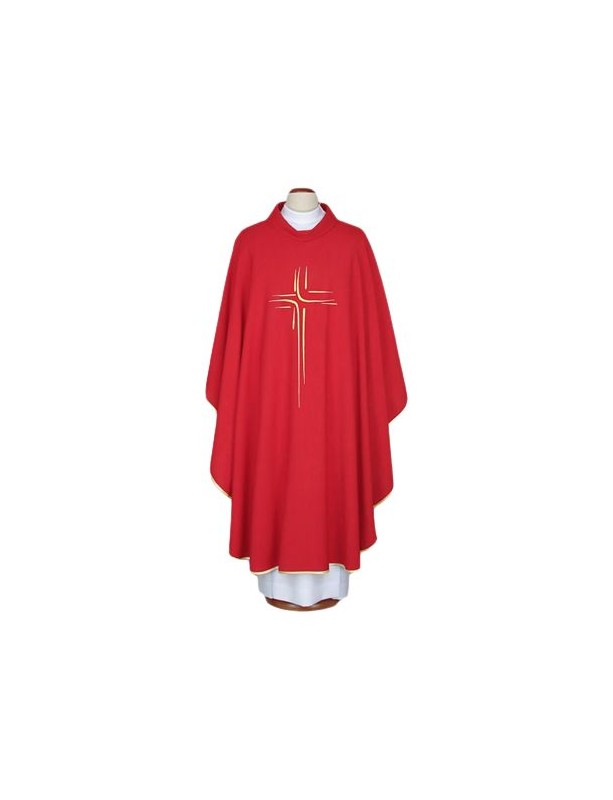
2. Red: It is the color of blood and fire and is used on Pentecost, the Feast of the Martyrs, and other occasions celebrating the Holy Spirit or the Sacrifice of the Martyrs.
3. Green: It is the color of growth and hope and is used during Ordinary Time, which is the part of the liturgical year that falls outside the major seasons.
4. Purple/Violet: It is the color of penance and preparation and is used during the seasons of Advent and Lent, as well as certain feast days that call for a spirit of penance and reflection.
.jpg)
What are the four colors of the Catholic Church?
The four colors of the Catholic Church are white, red, green, and purple/violet. These colors are used on different occasions and have specific meanings. White represents purity, joy, and resurrection and is used on solemnities and feasts of the Lord, the Blessed Virgin Mary, and the saints. Red represents the Holy Spirit, the blood of martyrs, and fire, and is used on Pentecost, feasts of martyrs, and celebrations of the sacrament of Confirmation. Green represents hope, growth and life and is used during Ordinary Time. Purple/Violet represents penance, preparation, and repentance, and is used during Advent and Lent, as well as on certain feast days that call for a spirit of penance and reflection.
What do purple paraments represent?
Purple vestments are often used in the Christian tradition during the seasons of Advent and Lent. The color purple/violet represents penance, preparation, and repentance. During Advent, purple is used as a symbol of the Church's preparation for the coming of Christ, and during Lent, it is used as a symbol of the Church's preparation for the celebration of Easter. The use of purple during these seasons invites the faithful to reflect on their own spiritual lives, to turn away from sin, and to prepare their hearts to receive Christ. In some cases, purple vestments may also be used on certain feast days that call for a spirit of penance and reflection.
What do white paraments mean?
In the Christian tradition, white vestments are often used to symbolize purity, joy, and the resurrection. White is used for solemnities and feasts of the Lord, the Blessed Virgin Mary, and the saints. It is also used during the Christmas and Easter seasons to celebrate the birth and resurrection of Jesus Christ. The color white represents the light of Christ, the purity of the Church, and the joy of salvation. The use of white vestments in worship invites the faithful to celebrate the glory and majesty of God, to give thanks for the gift of salvation, and to be inspired to live lives of holiness and righteousness.
What is the Marian liturgical color?
The Marian liturgical color is blue. Blue is often used in artwork and imagery associated with the Virgin Mary, as it is seen as a symbol of her purity, humility, and fidelity. Although blue is not an official liturgical color in the Catholic Church, it is sometimes used in Marian devotions and celebrations, such as the Feast of the Immaculate Conception and the Feast of Our Lady of Guadalupe. In some cultures and traditions, blue may also be used during the Advent season as a symbol of hope and anticipation for the coming of Christ.
What color is the altar cloth during advent?
The color of the altar cloth during Advent is usually either purple or blue. In many churches, purple is the traditional color for Advent because it represents repentance, fasting, and preparation. Recently, however, some churches have adopted the use of blue as an alternative color for Advent, as it symbolizes hope, expectation, and anticipation. The use of blue during Advent is also seen as a way to distinguish it from the penitential season of Lent, which also uses purple. Ultimately, the choice of color for the Advent altar cloth is at the discretion of each church or denomination.
When were the liturgical colors established?
The use of different colors for vestments goes back to the early Church, but the system of the Roman Rite was fixed in 1570, when Pope Pius V promulgated the Roman Missal. It set the main colors still in use today: white, red, green, violet, and black. Rose remained in use on the two joyful Sundays of Advent and Lent, and gold may be used instead of white on more solemn occasions. The current rules come from the General Instruction of the Roman Missal (GIRM), issued after the Second Vatican Council.
What do rose vestments mean?
Rose (often called pink) is one of the liturgical colors, though it is worn only twice a year. On Gaudete Sunday, the Third Sunday of Advent, and on Laetare Sunday, the Fourth Sunday of Lent, the celebrant may wear rose vestments. Both Sundays fall in the middle of a penitential season, and rose marks a pause of joy, because the feast of Christmas or Easter is near.
What is the liturgical color for funerals?
Black was the traditional color for funerals and for All Souls' Day. Since the reform of the Roman Missal in 1970, black is optional: at funerals the priest may also wear violet or white. White is often chosen for the funerals of children and in the Easter season, because it expresses the hope of the resurrection. On All Saints' Day the color is white, while on All Souls' Day black or violet may be used.
Do other churches use the same liturgical colors?
The Roman Rite is not the only tradition with liturgical colors. The Byzantine Rite and other Eastern Churches follow their own systems, and the Russian Orthodox Church may use up to nine different colors during the year. Many Lutheran and Anglican churches use a color scheme close to the Roman one, with white, red, green, and violet marking the same seasons.
See each liturgical colour brought to life – browse our green chasubles, red chasubles, purple chasubles, white chasubles and the full collection.
Season colours in depth: Advent vestments, Easter and Pentecost and green vestments in Ordinary Time.


