
No products
Altar Tablecloths
An altar tablecloth is a specially designed cloth that covers the altar in a church. It’s not just a decorative accessory—it’s a symbol of reverence, purity, and respect for the sacred space where the Eucharist and other key rituals are celebrated. In most Christian denominations, from Catholic to Anglican to Lutheran, the altar tablecloth is a must-have during services.

Why are altar tablecloths used in churches?
Altar tablecloths are used in churches to show reverence and respect for the altar, which is the focal point of Christian worship. Covering the altar with a cloth isn’t just tradition—it’s about honoring the sacred space where the Eucharist is celebrated and ensuring everything about the ceremony reflects dignity and devotion.
The Symbolic Meaning Behind Altar Tablecloths
Symbol of Christ and the Resurrection: The altar tablecloth is often seen as a symbol of the shroud that wrapped Jesus in the tomb. Pure linen, the preferred fabric, represents purity and the resurrection, directly connecting the altar to Christ's story.
Sign of Purity and Devotion: Using white altar cloths, especially during major celebrations like Christmas and Easter, highlights the themes of joy, life, and holiness.
Representation of the Faithful: Some traditions teach that the altar cloths symbolize the members of Christ—God’s faithful people—gathered around the altar.
Practical Reasons for Using Altar Tablecloths
Protecting the Altar: Altar tablecloths protect the altar from stains, oil, and moisture. They also absorb any accidental spills of the Precious Blood during Mass, preventing it from reaching the altar stone, a matter of deep reverence.
Maintaining Cleanliness: High-quality, absorbent fabrics like linen or cotton are chosen because they’re easy to clean and maintain, keeping the altar dignified at all times.
Enhancing the Ceremony: A well-dressed altar, with a fresh, embroidered tablecloth, adds to the beauty and solemnity of the liturgy, just like vestments do for the clergy.
Liturgical and Historical Importance
Ancient Tradition: The use of altar tablecloths dates back to at least the fourth century, and by the ninth century, it became customary to use three cloths for added protection and symbolism.
Liturgical Rules: In many churches, it’s a strict requirement to use altar tablecloths during Mass. Celebrating without them is only allowed in emergencies, like giving Communion to the dying.
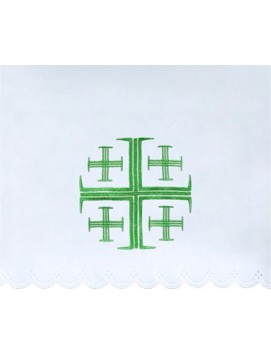
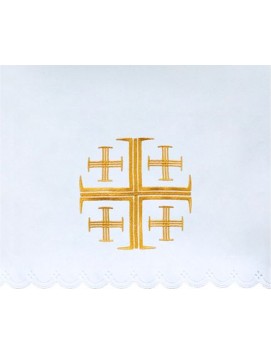
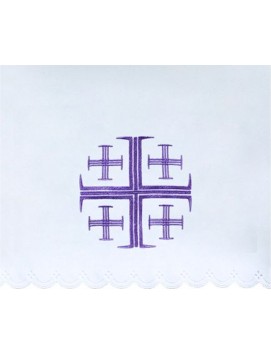
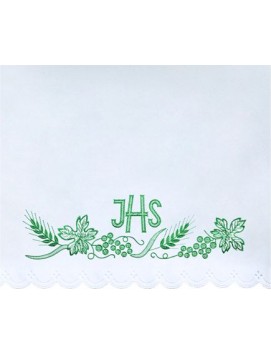
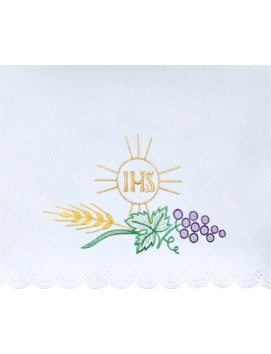
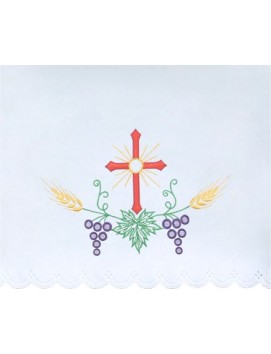
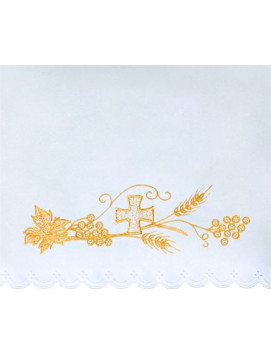
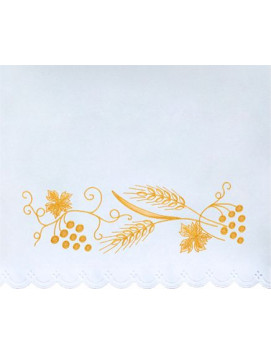
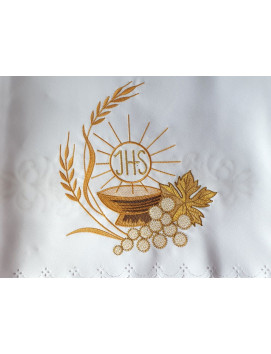
Seasonal Colors and Embroidery: While white is traditional, colored cloths reflect the liturgical calendar. Embroidered symbols—like crosses, chalices, or wheat—connect the cloth to the themes of the service.
What is the significance of the embroidery (cross, IHS, Marian symbols) on altar tablecloths?
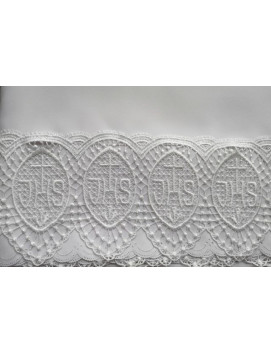
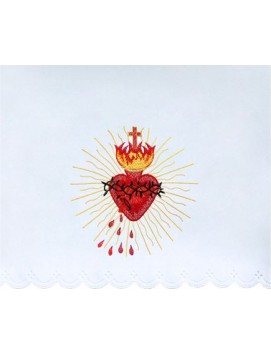
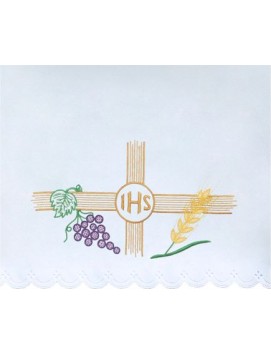
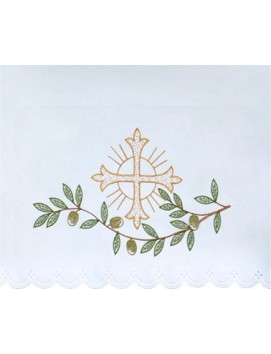
Embroidered symbols like the cross, IHS, and Marian motifs on altar tablecloths aren’t just decorative—they’re powerful statements of faith, tradition, and community. These symbols serve as visual reminders of the sacred mysteries celebrated at the altar and connect worshippers to centuries of Christian heritage.
Why Embroidery Matters on Altar Tablecloths
Expression of Faith and Devotion: Embroidery on altar tablecloths transforms a simple cloth into a meaningful work of art. Each motif—whether a cross, IHS, or Marian symbol—expresses deep reverence and devotion, elevating the atmosphere of worship.
Artistry Meets Worship: Historically, skilled artisans and church members poured hours of prayer and craftsmanship into these designs, viewing each stitch as an act of worship. Today, hand and machine embroidery continue this tradition, ensuring every altar cloth is unique and spiritually significant.
The Cross: Universal Symbol of Christianity
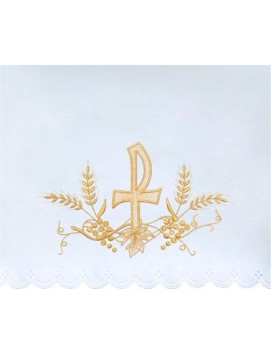
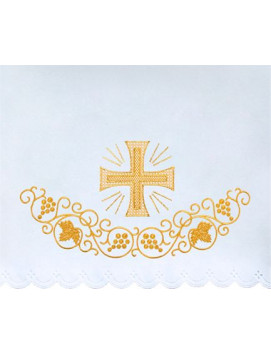
The cross is the most recognized Christian symbol, representing Christ’s sacrifice, redemption, and victory over death. Its presence on altar tablecloths centers the congregation’s focus on the core of Christian faith—Jesus’ death and resurrection.
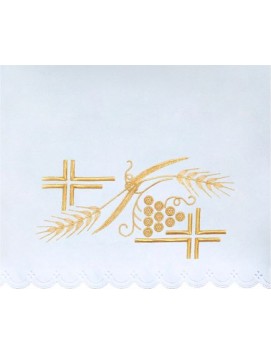
Embroidered crosses can be simple or ornate, often placed at the center or corners of the cloth, and sometimes surrounded by other liturgical symbols.
IHS: Christ’s Holy Name
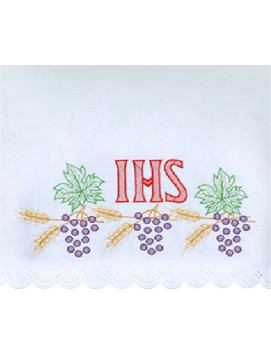
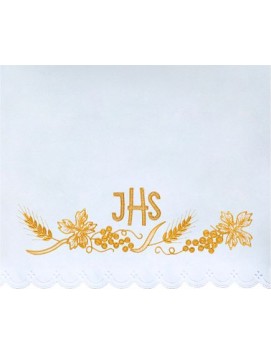
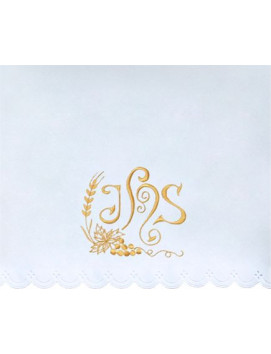
IHS is a Christogram, an abbreviation of Jesus’ name from the Greek “ΙΗΣΟΥΣ” (Iēsous). Over time, it’s also been interpreted as “Iesus Hominum Salvator” (Jesus, Savior of Mankind), though this is a later Latin interpretation.
Embroidering IHS on altar tablecloths is a bold statement: it’s all about Jesus. This symbol reminds everyone present that the altar is dedicated to Christ, and everything that happens there is in His name.
The IHS monogram gained popularity in the Middle Ages and is especially associated with the Jesuits, who use it as their emblem to signify their mission to spread the name of Jesus.
Marian Symbols: Honoring the Virgin Mary
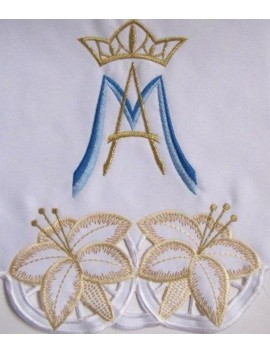
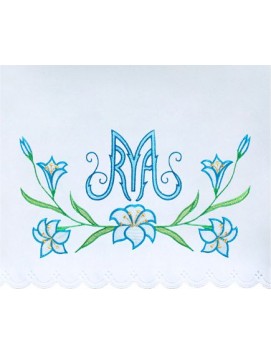
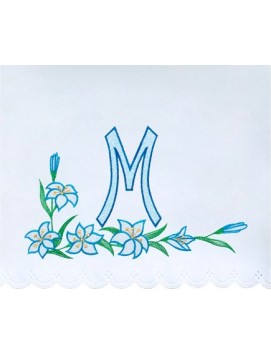
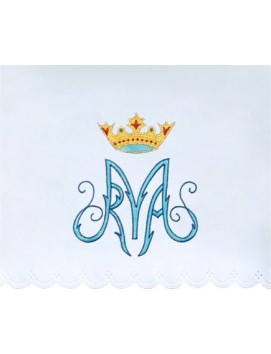
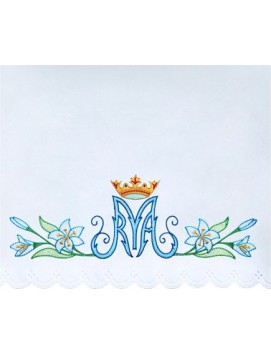
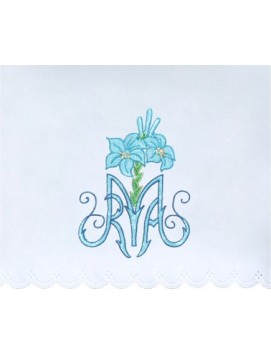
Marian symbols—like the intertwined “A” and “M” (Ave Maria), lilies, or blue-and-gold motifs—are embroidered to honor the Virgin Mary, especially during Marian feasts or in churches dedicated to her.
These designs reflect themes of purity, motherhood, and devotion, and add a gentle, nurturing aspect to the sacred space.
Marian embroidery is often done in blue and gold, traditional colors associated with Mary, and can be customized for special occasions or church dedications.
More Than Decoration: Spiritual and Communal Impact
Unity and Identity: The altar tablecloth symbolizes unity for the church community, especially when personalized with specific embroidery. It’s a shared object, used in every service, representing the congregation’s faith and worship.
Connection to Tradition: Embroidered altar cloths link today’s worshippers with the church’s rich liturgical history, preserving ancient symbols and passing them on to future generations.
Art as Worship: Every embroidered altar cloth is a testament to the idea that beauty and craftsmanship are acts of worship, turning the altar into a visual sermon that speaks to the heart and soul.
What is the history of altar tablecloths in religious traditions?
Altar tablecloths have a deep and ancient history, stretching back to the earliest days of organized worship. In Christianity, the use of altar cloth dates back to the 2nd century, when they symbolized the shroud of Jesus Christ and were made of white linen to represent purity and reverence. By the 4th century, altar cloths were commonly used, and by the 7th century, Pope Boniface III made their use mandatory in churches. The tradition of using multiple cloths—often three—on the altar began in the 9th century and became a standard in the Roman Rite.
The Evolution of Altar Tablecloths
Early Materials and Symbolism: Originally, altar cloths were crafted from linen or hemp, emphasizing purity. Over time, more luxurious materials like silk, gold, silver thread, and even embroidered jewels were introduced, especially in major basilicas.
Practical and Spiritual Reasons: The earliest altar cloths served both practical and symbolic purposes—protecting the altar from spills and stains, while also signifying the sacredness of the space.
Development of Varieties: Over the centuries, the number and types of altar linens expanded. By the Middle Ages, some churches used up to five different linens, each with a specific function, such as absorbing wine or oil, or providing a cushion for sacred vessels.
Changes in Requirements: While three cloths were once required, today most liturgical guidelines call for at least one white cloth, though traditions still vary between denominations.
Altar Tablecloths Beyond Christianity
The concept of covering sacred spaces with cloth isn’t exclusive to Christianity. In Judaism, the Bible describes the use of “cloths of service” in the Tabernacle, made from blue, purple, and scarlet linen, used by priests during worship in the time of the Exodus. After the destruction of the Temple, the focus shifted to the synagogue, where cloths still cover the Torah ark and the reading lectern, continuing the tradition of honoring sacred objects with fabric coverings.
Symbolism and Social Meaning
Respect and Care: Covering sacred objects with cloth is a universal sign of respect, not just in religious settings but also in civil ceremonies—think of how essential documents or symbols of authority are often veiled.
Community and Unity: The act of laying a cloth on the altar or table is a powerful gesture, signaling that what’s about to happen is special and worthy of respect. It connects people visually and spiritually, reinforcing the sense of community.
What materials are best for altar tablecloths?
The best materials for altar tablecloths are linen, cotton, hemp, and, in some cases, polyester blends. Each material brings its strengths to the table, and the right choice depends on your church’s needs, budget, and liturgical tradition.
Linen: The Gold Standard
Symbol of Purity: Linen is the traditional and most revered material for altar tablecloths. It’s been used since the church's earliest days, symbolizing purity and holiness.
Durability: High-quality linen lasts years and improves with age if cared for properly.
Absorbency: Linen is highly absorbent, perfect for catching spills during the Eucharist.
Aesthetic: It offers a crisp, elegant look that elevates any altar.
Cotton: Practical and Affordable
Easy Maintenance: Cotton is easier to wash and maintain than linen, making it a practical choice for everyday use.
Absorbency: While not as absorbent as linen, cotton still does a solid job.
Cost-Effective: Cotton is more budget-friendly and ideal for parishes with limited resources or daily services.
Hemp: Natural and Durable
Traditional Option: Like linen, hemp is a natural fiber with a long history in church use.
Strength: Hemp altar tablecloths are known for their durability and longevity.
Aesthetic: Hemp maintains its beauty over time and is an excellent canvas for hand embroidery.
Linen-Cotton Blends: Best of Both Worlds
Hybrid Benefits: Blending linen and cotton combines the elegance and absorbency of linen with the easy care and affordability of cotton.
Versatile: Great for churches that want tradition with a touch of practicality.
Silk and Fine Fabrics: For Special Occasions
Luxurious Touch: Silk and other delicate fabrics are reserved for major feast days and solemn celebrations.
Care Required: These materials are delicate and require special handling, so they’re not for everyday use.
Polyester and Blends: Modern Convenience
Low Maintenance: Polyester is wrinkle-resistant and easy to care for.
Durability: It stands up to frequent washing and daily use.
Not Traditional: While convenient, polyester lacks the symbolic purity of natural fibers and can’t match the crisp look of linen. Still, it’s a practical option for some churches, especially where budget or maintenance is a concern.
Quick Comparison Table
| Material | Symbolism | Durability | Absorbency | Maintenance | Best For |
|---|---|---|---|---|---|
| Linen | Purity, tradition | High | Excellent | Moderate | All services, traditional |
| Cotton | Simplicity | Good | Good | Easy | Daily use, budget |
| Hemp | Tradition | High | Good | Moderate | Embroidery, longevity |
| Linen-Cotton | Hybrid | High | Good | Easy | Versatile use |
| Silk | Luxury, festivity | Moderate | Moderate | Difficult | Major feasts |
| Polyester | Convenience | High | Fair | Very easy | Frequent washing |
How do I choose the right size altar tablecloth for my church?
Choosing the right size altar tablecloth for your church starts with three key measurements: the altar’s length, width, and the desired drop (how far you want the cloth to hang over the sides). The goal is a tablecloth that covers the entire altar surface with a uniform, elegant drop on all sides—typically between 20 and 30 cm (about 8 to 12 inches), but you can go longer for more formal celebrations.
Step-by-Step Guide to Measuring Your Altar
1. Measure the Altar’s Surface
Use a tape measure to get your altar's exact length and width. Make sure the tape is flat and taut for accuracy.
2. Decide on the Drop Length
For a classic look, aim for a drop of 20–30 cm (8–12 inches) on all sides.
You can extend the drop to the floor for solemn occasions or a more dramatic effect.
3. Calculate the Tablecloth Dimensions
Add twice the drop length to both the altar’s length and width.
Formula:
Tablecloth Length = Altar Length + (Drop x 2)
Tablecloth Width = Altar Width + (Drop x 2)
Example:
If your altar is 200 cm long and 90 cm wide, and you want a 25 cm drop:
Tablecloth Length = 200 + (25 x 2) = 250 cm
Tablecloth Width = 90 + (25 x 2) = 140 cm
4. Allow for Hems and Decorative Edges
Could you add a few extra centimeters or inches for hems and any decorative trim you plan to include?
Tips for a Perfect Fit
Symmetry matters: Make sure the drop is even on all sides for a professional appearance.
Don’t go too short: A tablecloth that’s too short looks unfinished and doesn’t do justice to the altar’s significance.
Avoid excess bulk: Too long a tablecloth can be cumbersome and impractical, especially if it drags on the floor.
Custom sizing: If your altar has unique dimensions, consider ordering a custom altar cloth for a perfect fit.
Standard Sizes and Custom Options
Many suppliers offer standard altar tablecloth sizes, such as 2 x 1.5 m, 2.5 x 1.5 m, and 3 x 1.5 m, but custom sizing is always an option for a tailored look.
Custom embroidery and trims can be added to personalize your altar cloth and reflect your church’s tradition.
What colors are appropriate for altar tablecloths during different liturgical seasons?
The color of your altar tablecloth isn’t just a style choice—it’s a powerful symbol that ties your congregation to centuries of Christian tradition. Each liturgical season has its color palette, and using the right color at the right time sends a clear message about its meaning.
White (or Gold): Joy, Purity, and Celebration
When to use: Christmas, Easter, major feast days (like the Annunciation and Ascension), and celebrations of saints who were not martyrs.
Why: White and gold symbolize purity, light, resurrection, and joy. They’re the go-to colors for the church calendar's most festive and sacred moments.
Green: Growth, Hope, and Ordinary Time
When to use: Ordinary Time—the longest season in the church year, between Epiphany and Lent, and between Pentecost and Advent.
Why: Green represents life, growth, and hope. It’s the color of spiritual development and daily Christian living - match your altar linens with green vestments.
Purple (or Violet): Repentance and Preparation
When to use: Advent and Lent.
Why: Purple stands for penance, preparation, and humility. It sets a reflective tone as the church prepares for Christmas (Advent) and Easter (Lent).
Red: The Holy Spirit, Martyrdom, and Passion
When to use: Pentecost, Palm Sunday, Good Friday, feasts of martyrs, and Confirmation.
Why: Red evokes the fire of the Holy Spirit and the blood of martyrs. It’s a bold color for moments of sacrifice, courage, and the outpouring of God’s Spirit.
Rose (Pink): Rejoicing in the Midst of Penitence
When to use: Third Sunday of Advent (Gaudete Sunday) and Fourth Sunday of Lent (Laetare Sunday).
Why: Rose is a softening of purple, signaling a break in the penitential season to rejoice and anticipate the coming celebration.
Other Colors: Special Occasions
Black: Sometimes used for Good Friday or funerals to symbolize mourning.
Blue: Used in some traditions for Advent, especially in Anglican and some Lutheran churches.
Quick Reference Table
| Liturgical Season | Altar Tablecloth Color | Symbolism |
|---|---|---|
| Advent | Purple (or Blue) | Repentance, preparation |
| Christmas | White (or Gold) | Joy, purity, celebration |
| Ordinary Time | Green | Growth, hope, life |
| Lent | Purple | Penance, reflection |
| Holy Week (Palm Sunday, Good Friday) | Red | Passion, sacrifice, Spirit |
| Easter | White (or Gold) | Resurrection, joy |
| Pentecost | Red | Holy Spirit, fire |
| Martyrs’ Feasts | Red | Sacrifice, courage |
| Gaudete/Laetare Sundays | Rose (Pink) | Joy in penitence |
| Funerals/Good Friday | Black (optional) | Mourning, solemnity |
Are there special altar cloths for Christmas, Easter, or other feasts?
Special altar cloths for Christmas, Easter, and other feasts are a long-standing tradition in many churches. These cloths are designed with specific colors, symbols, and embroidery to match the significance of each liturgical celebration. Using the right altar cloth for the proper feast isn’t just about decoration—it’s about honoring the season's meaning and helping the congregation connect with the celebrated story.
What Makes Altar Cloths for Feasts Different?
Colors: For Christmas and Easter, the altar cloth is typically white or gold, symbolizing joy, purity, and the glory of Christ’s birth and resurrection. During Advent and Lent, purple is used for preparation and penance. Red is chosen for feasts like Pentecost or Palm Sunday, and green is reserved for Ordinary Time.
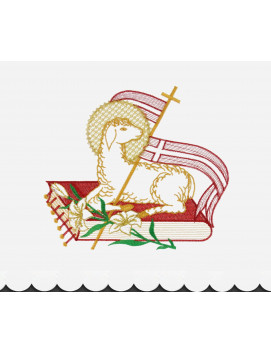
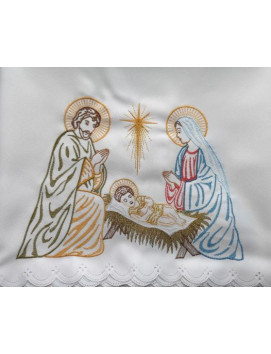
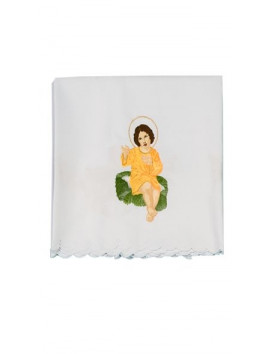
Embroidery and Motifs: Special altar cloths often feature feast-specific embroidery. For Christmas, you might see stars, angels, or nativity scenes. Easter altar cloths usually include lilies or symbols of resurrection and new life. Marian feasts use blue and white with Marian symbols, while other feasts might feature crosses, the IHS monogram, or the Lamb of God.
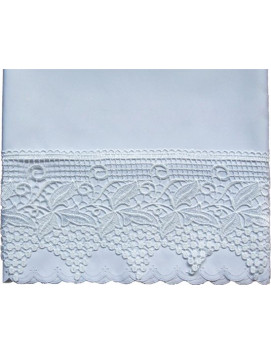
Quality and Fabric: Festive altar cloths are usually made from high-quality fabrics like linen, damask, or velvet, often adorned with gold thread, lace, or fringe for a more elegant and celebratory appearance.
Custom Options: Many suppliers offer custom altar cloths tailored to specific feasts, allowing churches to choose embroidery colors, motifs, and inscriptions that reflect the celebration.
Why Use Special Altar Cloths for Feasts?
Visual Focus: Changing the altar cloth for major feasts signals to the congregation that something significant is happening. It visually marks the shift in the liturgical calendar and draws attention to the altar as the center of worship.
Symbolic Meaning: The colors and symbols used on these cloths reinforce the theological themes of each season—joy and resurrection at Easter, hope and anticipation at Christmas, sacrifice during Holy Week, and so on.
Tradition and Reverence: Using special altar cloths upholds centuries-old traditions and shows reverence for the sacred mysteries being celebrated.
How to Choose the Right Altar Cloth for Each Feast
Match the Liturgical Color: Always align your altar cloth color with the liturgical season or feast—white/gold for Christmas and Easter, purple for Advent/Lent, red for Pentecost and martyrs, green for Ordinary Time, and blue or Marian colors for feasts dedicated to Mary.
Select Appropriate Motifs: Choose embroidery that reflects the feast—nativity for Christmas, lilies for Easter, Marian symbols for Marian feasts, etc.
Invest in Quality: Opt for higher-end fabrics and detailed embroidery for major feasts to elevate the sense of celebration and reverence.
What is the difference between an altar cloth, a frontal, and a frontlet?
Special altar cloths for Christmas, Easter, and other feasts are a long-standing tradition in many churches. These cloths are designed with specific colors, symbols, and embroidery to match the significance of each liturgical celebration. Using the right altar cloth for the proper feast isn’t just about decoration—it’s about honoring the season's meaning and helping the congregation connect with the celebrated story.
Altar Cloth: the Covering of the Mensa
What it is: The altar cloth is the cloth laid over the top of the altar—the mensa—the surface on which the Eucharist is celebrated, most often white linen. The chalice and paten rest on a corporal, which is spread on top of it.
Why it matters: It protects the altar table, helps absorb accidental spills, and expresses reverence for the sacrifice celebrated on it. Linen is preferred because it is absorbent, durable, and easy to launder to a crisp white finish.
Frontal (Antependium): the Panel at the Front of the Altar
What it is: The frontal—also called the antependium—is a decorative panel that hangs down over the front face of the altar, often reaching the floor or stopping just above it.
How it is used: It usually changes with the liturgical season, matching the vestment color—white or gold for Christmas and Easter, purple for Advent and Lent, red for Pentecost and martyrs, green for Ordinary Time.
Materials: Silk, damask, velvet, brocade, or heavy linen, decorated with embroidery or appliqué bands. Because the whole congregation sees it, the frontal is often the most ornate textile on the altar.
Frontlet (Superfrontal): the Band Along the Top Edge
What it is: The frontlet—often called the superfrontal—is a narrow band of fabric attached along the upper edge of the frontal or the front edge of the mensa, frequently finished with fringe, lace, or embroidery.
How it differs: While the frontal covers the front of the altar, the frontlet is only a decorative strip at its top edge. Many modern churches use a single altar cloth with an ornamental drop instead of a separate frontal and frontlet.
In short: the altar cloth covers the top, the frontal covers the front, and the frontlet trims the top edge of the front. When ordering, check which arrangement your church uses and measure the altar before choosing a size.
What is the price range for altar tablecloths, and what affects the cost?
Altar tablecloths come in a wide price range, typically around $70–$125 for simpler designs and standard sizes, and stretching up to $900 or more for large, custom, or elaborately embroidered cloths. Most quality altar tablecloths for regular use will fall between $100 and $400, depending on your choices.
What Affects the Cost of Altar Tablecloths?
Several factors determine what you’ll pay for an altar tablecloth:
1. Material
Linen: The gold standard—pure linen altar cloths are the most expensive, reflecting their durability, absorbency, and traditional value. Expect to pay $80–$400+ for linen, depending on size and finish.
Cotton: More affordable and practical, cotton altar cloths typically range from $100–$250 for standard sizes and designs.
Polyester or Blends: Synthetic or blended fabrics are the most budget-friendly, often starting at $70–$150, but may not offer the same look or longevity as natural fibers.
2. Size
Larger altar cloths use more fabric and take more time to produce, so they cost more. For example, a 320x160 cm embroidered altar cloth can reach $900, while smaller or standard sizes (like 190x90 cm) might be $125–$200.
3. Embroidery and Decoration
Simple, unadorned cloths are cheaper. Add embroidery—especially gold thread, Marian symbols, or custom motifs—and the price rises quickly. Embroidered altar cloths often cost $150 and can exceed $400 for intricate or multi-sided designs.
Custom embroidery, lace, or jewel applications can increase prices, especially for feast days or special occasions.
4. Customization
Custom altar cloths made to your exact measurements or with unique designs cost more than off-the-shelf options. Pricing for custom work can include fabric costs (e.g., $36–$79 per yard for premium materials) plus embroidery fees (often $20–$60 per motif).
5. Brand and Craftsmanship
Cloths made in Italy or by renowned liturgical artisans often command higher prices due to their craftsmanship, heritage, and attention to detail.
Real-World Price Examples
Standard polyester/cotton blend altar cloth: $70–$150
100% cotton altar cloth with simple embroidery: $150–$250
100% linen altar cloth with decorative embroidery: $250–$400
Large, multi-sided, or jewel-embellished altar cloth: $400–$900
Custom altar cloth (premium fabric + custom embroidery): $36–$79 per yard for fabric, plus $20–$60 per embroidered motif
How often should altar tablecloths be replaced?
The frequency of replacing altar tablecloths depends on two main factors: how often the altar is used and the current condition of the cloths. There’s no strict calendar rule—replacements are based on real-world wear and tear, not a set schedule.
Key Factors That Determine Replacement Timing
1. Frequency of Use
If your church holds services daily or several times a week, altar tablecloths will wear out faster. High-traffic altars need more frequent checks and replacements than those used only on Sundays or special occasions.
2. Condition of the Cloths
Please look at your altar tablecloths regularly for stains, fraying, fading, or irreparable wear. If a cloth is permanently stained, torn, or worn out even after cleaning, it’s time to replace it.
Cleanliness is non-negotiable—altar cloths should always be spotless and dignified.
3. Liturgical and Seasonal Changes
The top altar cloth is often changed more frequently, especially for major feasts or solemnities, to reflect the significance of the celebration.
Some churches keep several covers on hand to rotate in fresh, more ornate cloths for special occasions.
4. Maintenance Practices
Regular washing and proper care extend the life of altar tablecloths, but over time, even the best linens will need replacement.
Using a protective cover or undercloth when the altar isn’t used helps preserve the main altar cloth and reduces the need for frequent replacement.
Practical Guidelines
Monitor regularly: There’s no fixed timeframe; check your altar cloths every few weeks or after each primary liturgical season.
Replace as needed: When you see signs of damage, heavy staining, or loss of dignity, don’t wait—replace the cloth right away.
Have backups: Keep at least one spare set of altar cloths ready so you can make a quick switch when needed.
How do I care for and clean altar tablecloths?
Caring for altar tablecloths means respecting both their sacred purpose and the delicate fabrics they’re made from. Here’s how to do it right, step by step.
1. Pre-Cleaning: Handling Sacred Stains
Presoak with Reverence: If the altar cloth may have come in contact with consecrated elements, soak it first in clean water—ideally in a sacrarium (a special church sink)—to dissolve any remnants of the Eucharist. If you don’t have a sacrarium, soak in a separate basin and pour the water reverently onto the ground, not down the drain.
Inspect for Stains: Check for wax, wine, or oil stains. Treat wax stains with a wax remover or isopropyl alcohol, and avoid using heat, which can set stains permanently. For sacramental wine, follow our guide to removing wine stains from purificators and altar linens.
2. Washing: Gentle Is Best
Use Mild Detergents: Wash altar tablecloths with a gentle detergent or soap, avoiding harsh chemicals or bleach, which can damage fibers and embroidery.
Water Temperature: Use warm or cool water—never hot, as it can shrink linen or delicate fabrics.
Hand Wash or Delicate Cycle: Hand washing is safest for fine linens. If you use a machine, choose the delicate cycle and place the cloth in a mesh bag for protection.
Rinse Thoroughly: Make sure all soap is rinsed out completely, as residue can cause yellowing or scorching when ironing.
3. Drying: Preserve the Fabric
Air Dry: Lay the tablecloth flat on a clean, dry surface or hang it on a drying rack. Please avoid using the dryer, especially on linen, as it can cause shrinkage and wear.
Dry Damp for Ironing: Linens are easy to iron while slightly damp.
4. Ironing: Keep It Crisp
Iron Damp Linens: Use a hot iron (linen setting) with steam if needed. Iron on the reverse side to protect embroidery and decorations.
No Crease Ironing: Fold linens naturally after ironing, but don’t press hard creases—gentle folds keep the fabric in better shape.
5. Storage: Protect and Preserve
Fold Carefully: Store altar tablecloths folded neatly, with tissue paper between layers to protect embroidery.
Keep Dry and Dark: Place away from direct sunlight in a dry, dark area to prevent fading and mildew.
Rotate Cloths: Use multiple sets and rotate them to extend the life of each cloth.
6. Special Tips for Longevity
Avoid Bleach: Bleach breaks down fibers and ruins linen—use oxygen-based cleaners for tough stains.
Handle with Care: Linens are fragile, especially older or embroidered pieces. Always handle gently and avoid wringing or twisting.
Pray While Cleaning: Many traditions recommend accompanying the cleaning of altar linens with prayer, reflecting their sacred purpose.
Key Takeaways
How do I care for and clean altar tablecloths? Pre-soak with reverence, wash gently with mild detergent, air dry, iron while damp, and store carefully.
My advice: Respect the sacred and the fabric—gentle handling, proper washing, and mindful storage will keep your altar tablecloths beautiful and worthy of the altar for years to come.
If you care for altar tablecloths with attention and respect, you’ll protect their beauty and sacred role in your church. If you are also preparing the sacred vessels, explore our chalice linen sets — corporals, purificators, palls, and veils.
