
No products
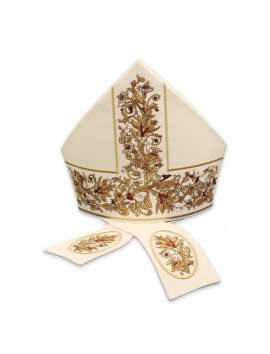
Mitres
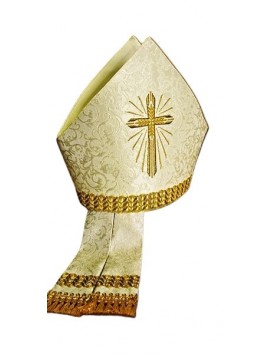
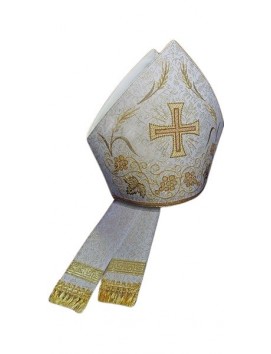
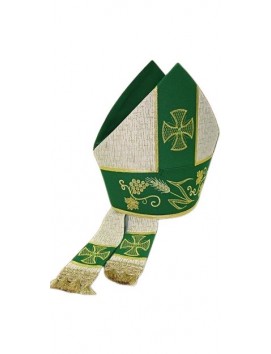
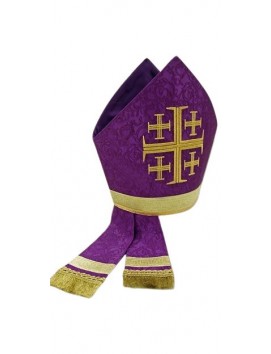
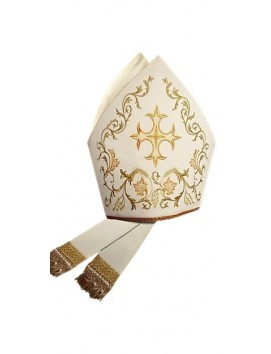
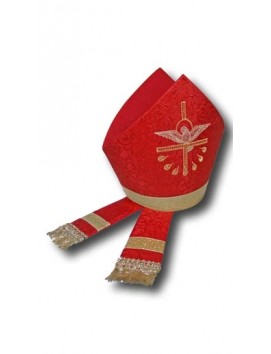
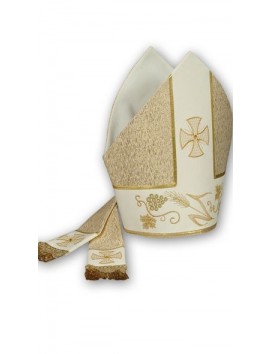
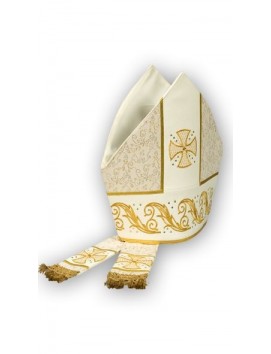
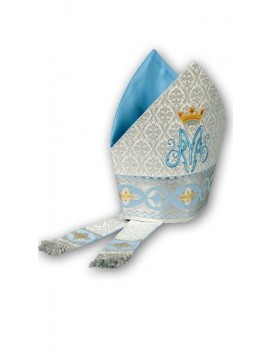
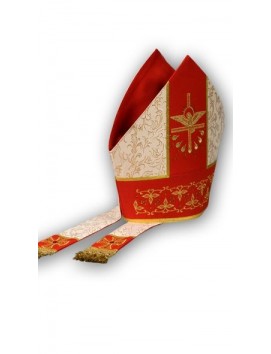
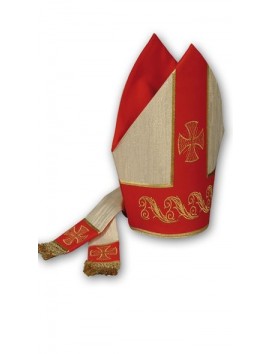
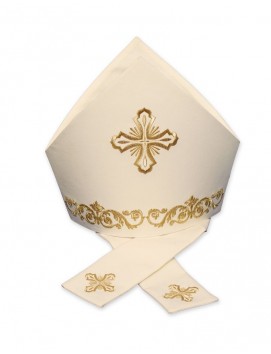
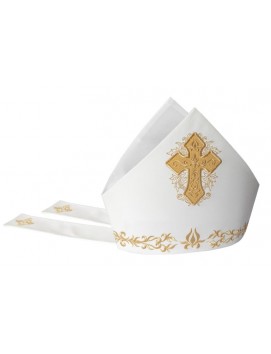
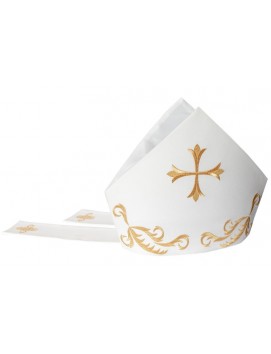
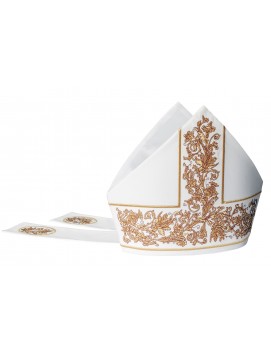
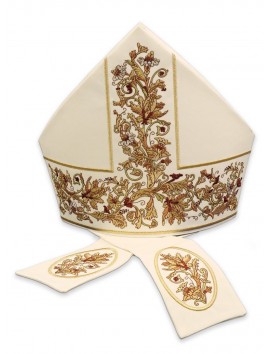
A clergy mitre is the traditional, ceremonial headdress worn by high-ranking Christian clergy—think bishops, abbots, and cardinals—in churches like the Roman Catholic, Anglican, and some Lutheran denominations. The mitre is instantly recognisable: it’s a tall, folding cap with two peaks and two strips (called lappets) hanging down the back. The mitre isn’t just a hat—it’s a symbol of authority, spiritual leadership, and centuries-old tradition.
When did the use of the mitre begin in Christian traditions?
The use of the mitre in Christian traditions began in Rome around the middle of the 10th century. Before this, the mitre wasn’t part of liturgical dress—it started as a non-liturgical head covering called the camelaucum, worn by the pope during solemn processions as early as the eighth century. It wasn’t until the 10th century that this headpiece transitioned from outdoor processions into the actual church service, eventually evolving into the liturgical mitre we recognise today.
How Did the Mitre Become a Liturgical Symbol?
Early Use: The camelaucum, a white, helmet-shaped cap, was worn by popes in processions. This was not yet the mitre, but it set the stage for its development.
10th Century Shift: By the mid-900s, popes started wearing this head covering during church services, not just processions. This marks the true beginning of the mitre’s use in Christian liturgy.
Spread Across the West: By the 11th century, the mitre began appearing outside Rome, gradually being adopted by other bishops and high-ranking clergy.
Official Recognition: The first solid written evidence comes from Pope Leo IX (1049–1054), who granted the mitre to Archbishop Eberhard of Trier as a sign of ecclesiastical authority.
General Adoption: By the 12th century, bishops across Western Christianity commonly wore the mitre, and its use at episcopal consecrations became standard practice.
Why Did the Mitre Become Important?
The mitre became a powerful symbol of authority and spiritual leadership in the church. It visually set bishops and other high clergy apart, representing their role as shepherds of the faithful. Over time, the mitre’s design evolved, growing taller and more ornate, especially during the baroque period.
Key Points to Remember
The mitre’s use in Christian traditions began in Rome in the 10th century.
It evolved from the non-liturgical camelaucum, first worn by popes in processions.
By the 11th and 12th centuries, the mitre spread throughout Western Christianity and became a standard symbol of episcopal office.
The first documented liturgical use was under Pope Leo IX in the mid-11th century.
The mitre’s design and significance continued to develop, becoming the iconic headpiece we recognise today.
What does the mitre symbolise in Christian liturgy?
The mitre is more than just a fancy hat. In Christian liturgy, the mitre symbolises spiritual authority, apostolic succession, and the presence of the Holy Spirit. When a bishop wears the mitre, it’s a public sign that he’s been entrusted with leadership and responsibility over his flock.
The Mitre’s Key Symbolic Meanings
Let’s get specific. Here’s what the mitre represents in Christian liturgy:
Authority and Leadership: The mitre instantly marks the wearer as a bishop or high-ranking clergy. It’s a visual sign of authority in the church hierarchy.
Apostolic Succession: The mitre connects today’s bishops to the apostles, symbolising an unbroken line of spiritual leadership.
Holiness and Dignity: The mitre’s shape and design reflect the dignity of the office. It’s not about ego—it’s about the sacred trust placed in the bishop.
The Holy Spirit: Many see the two peaks of the mitre as representing the “tongues of fire” from Pentecost, symbolising the Holy Spirit’s power and inspiration.
Teaching and Shepherding: The mitre signals the bishop’s role as a teacher and shepherd, guiding the faithful in truth and love.
Why Is the Mitre Important in Liturgy?
Public Witness: When a bishop puts on the mitre during Mass or special ceremonies, it’s a visible reminder of his unique role.
Liturgical Function: The mitre is worn at key moments—processions, blessings, and readings—highlighting the bishop’s active participation and leadership.
Unity and Tradition: The mitre ties today’s liturgy to centuries of Christian worship, reinforcing the church's unity across time and place.
Visual Symbolism of the Mitre
Two Peaks: Representing Old and New Testaments, wisdom and knowledge, or the dual nature of Christ.
Lappets: The two strips hanging down the back symbolise the Old and New Law, obedience and humility.
Colours and Decorations: Gold, white, and precious stones reflect the glory and beauty of God’s service.
Why is the mitre important for bishops and high-ranking clergy?
The mitre is crucial for bishops and high-ranking clergy because it’s the most visible and distinctive symbol of their spiritual authority and leadership within the Church. When a bishop puts on the mitre, everyone instantly knows who’s leading, teaching, and shepherding the congregation. It’s a badge of office, a sign that the wearer has been set apart for a sacred purpose.
The Mitre: More Than a Hat
Let’s break down exactly what makes the mitre so important:
Authority and Office: The mitre is the unique badge of the ordained ministry. Only bishops, cardinals, and some abbots get to wear it, making it a clear marker of ecclesiastical rank and responsibility.
Spiritual Leadership: The mitre isn’t just about hierarchy—it’s a sign that the bishop has the authority to teach, govern, and sanctify the faithful. It’s a public statement of trust and leadership.
Symbolic Meaning: The mitre’s shape, with its two peaks, represents the Old and New Testaments, reminding bishops of their duty to uphold and preach the complete revelation of God’s Word. The lappets (those strips hanging down the back) symbolise the spirit and letter of Scripture, calling bishops to balance wisdom and humility.
Connection to Tradition: The mitre links today’s bishops with centuries of Christian tradition. It’s a visible sign of apostolic succession, showing that the bishop stands in an unbroken line of spiritual leadership stretching back to the Church's earliest days.
The Mitre in Action
Liturgical Role: The mitre is worn during key moments of the Mass and other ceremonies. It’s removed during prayers to show humility before God but worn when the bishop is teaching or blessing the people, highlighting his unique role.
Ceremonial Significance: The mitre is blessed and placed on his head silently at a bishop's ordination. This decisive moment marks his new responsibilities and consecration to serve God’s people.
The Mitre’s Lasting Impact
Identity: The mitre makes spotting the bishop in any crowd easy. It’s a visual cue for the faithful, pointing to the person entrusted with guiding, teaching, and caring for the community.
Unity: By wearing the mitre, bishops visibly unite with the global Church and its traditions, reinforcing the continuity of faith and leadership across generations.
What materials are used to make a mitre?
The materials used to make a mitre are about luxury, durability, and visual impact. The most common fabrics are silk, velvet, brocade, damask, and cloth of gold. These materials give the mitre its signature look and feel, making it stand out in any liturgical setting.
Core Fabrics
Silk: The go-to choice for many mitres, silk offers a smooth texture and a rich, elegant appearance. White silk is especially popular for solemn occasions and certain liturgical seasons.
Velvet: Used for its deep colour and luxurious feel, velvet adds a sense of gravity and richness to the mitre.
Brocade and Damask: These patterned, often metallic-threaded fabrics are favoured for their intricate designs and durability. Brocade and damask are common in both Western and Eastern Christian mitres.
Cloth of Gold: For the most solemn celebrations, mitres are made from gold-laminated fabric or cloth of gold, sometimes interwoven with silver.
Embellishments and Decorations
Embroidery: Mitres are often decorated with goldwork, silk shading, and appliqué. Skilled artisans create detailed religious symbols, biblical scenes, and heraldic emblems, sometimes taking hundreds of hours to finish.
Precious Stones and Pearls: For the most part, ornate mitres, precious stones, pearls, and even metalwork are added, reflecting the dignity and importance of the office.
Lappets: The strips hanging down the back are usually made from the same fabric as the mitre and may be lined with red silk or decorated to match the main design.
Structural Elements
Stiffening Materials: To keep its tall, pointed shape, the mitre often contains stiffening materials like buckram or modern synthetic supports, hidden between the outer fabric and the lining.
Lining: The inside of the mitre is typically lined with high-quality fabric for comfort and durability.
Types of Mitres and Their Materials
Simplex Mitre: Made from plain white linen or silk, with minimal or no decoration and used for funerals, Lent, and Good Friday.
Auriphrygiata Mitre: Crafted from gold cloth or white silk with gold, silver, or colored embroidered bands and worn for sacraments and special occasions.
Pretiosa Mitre: The most ornate, using gold or silver laminated fabric, white silk, and red silk lapels, often enriched with precious stones and elaborate embroidery.
Why Do These Materials Matter?
Symbolism: The choice of fabric and decoration isn’t just about looks. Gold and silver symbolise purity and glory, while white represents holiness and celebration.
Tradition: Using luxurious materials honours the centuries-old tradition and the sacred role of the mitre in Christian liturgy.
Durability: High-quality materials ensure the mitre lasts through years of use and maintains its shape and beauty.
What are the different types of mitres (e.g., simplex, auriphrygiata, pretiosa)?
Three main types of mitres are used in Christian liturgy: the simplex, the auriphrygiata, and the pretiosa. Each type serves a unique purpose, is made from different materials, and is reserved for specific occasions. Let’s dive into what sets each one apart.
1. Simplex Mitre
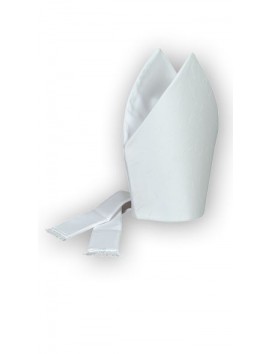
What it is: The simplex mitre (sometimes called the white mitre or linen mitre) is the most basic and unadorned form.
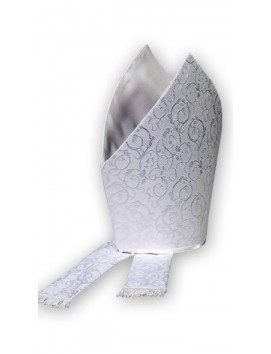
Materials: Made of plain white linen, silk, or damask, with no decoration except possibly a subtle woven pattern. Lappets (the strips hanging down the back) traditionally end in red fringes.
When it’s worn: Used for funerals, during Lent, on Good Friday, and by concelebrant bishops at Mass, Cardinals also wear a simplex mitre in the presence of the Pope.
Why it matters: The simplicity reflects humility and the occasion's solemnity.
2. Auriphrygiata Mitre
What it is: The auriphrygiata mitre is more ornate than the simplex but not the most elaborate.
Materials: Made from plain gold cloth or white silk interwoven with gold. It features gold, silver, or colored embroidered bands, but typically lacks jewels or heavy embellishments.
When it’s worn: Commonly used to celebrate sacraments and major processions.
Why it matters: The gold and embroidery represent festivity and honour, making it suitable for joyful or significant liturgical moments.
3. Pretiosa Mitre
What it is: The pretiosa (or precious) mitre is the most elaborate and luxurious type.
Materials: Crafted from gold or silver-laminated fabric, white or silver silk, and richly decorated with elaborate gold or silver embroidery, precious stones, pearls, and sometimes metalwork. The lappets are often lined with red silk.
When it’s worn: Reserved for the most solemn celebrations, principal Masses on major feast days (except during Lent), and other high occasions.
Why it matters: The pretiosa mitre’s splendour reflects the glory and solemnity of the Church’s most significant celebrations.
Quick Comparison Table
| Type | Materials & Decoration | Typical Use |
|---|---|---|
| Simplex | Plain white linen/silk, no decoration | Funerals, Lent, Good Friday, concelebrants |
| Auriphrygiata | Gold cloth/white silk, embroidered bands | Sacraments, processions |
| Pretiosa | Gold/silver fabric, jewels, rich embroidery | Solemn feasts, principal Masses |
How do mitres differ between Western and Eastern Christian traditions?
Mitres in Western and Eastern Christian traditions are worlds apart in style, symbolism, and who gets to wear them. Here’s what sets them apart:
Western Christian Mitres
Shape and Structure: The Western mitre, used in the Roman Catholic, Anglican, and some Lutheran churches, is tall and pointed with two peaks. It’s made from two stiffened panels sewn together, creating that classic “split” look.
Lappets: Two strips of fabric called lappets hang down the back, symbolising the Old and New Testaments or the letter and spirit of the law.
Materials and Decoration: Western mitres range from the plain white linen simplex to the gold-embroidered, jewel-encrusted pretiosa. They’re often made from silk, damask, or cloth of gold, and decorated with embroidery, gold thread, and sometimes precious stones.
Who Wears Them: In the West, mitres are reserved for bishops, abbots, cardinals, and privileged prelates. The rules are strict—only those with the proper rank can wear one.
Liturgical Use: The mitre is worn at specific moments during the liturgy and removed for prayers, emphasising humility before God.
Eastern Christian Mitres
Shape and Structure: The Eastern mitre, used in Orthodox and Eastern Catholic churches, is domed or crown-shaped—think of a royal crown rather than a pointed hat. It’s usually more rounded and often topped with a small cross.
No Lappets: Unlike the Western mitre, the Eastern version doesn’t have lappets. Instead, it’s often adorned with icons or religious images.
Materials and Decoration: Eastern mitres are lavishly crafted from gold or silver cloth, velvet, or brocade, and heavily decorated with embroidery, pearls, gemstones, and icons. The look is regal, reflecting the idea of the bishop as both spiritual and royal leader.
Who Wears Them: In the East, the mitre can be worn by bishops, archimandrites, and sometimes even priests who have received special honours. The rules are broader, and the mitre marks ecclesiastical dignity.
Liturgical Use: The Eastern mitre is worn throughout most liturgy, not just at select moments. It’s a constant sign of the bishop’s or priest’s office.
Key Differences at a Glance
Shape: Western = pointed and split; Eastern = domed and crown-like.
Decoration: Both are ornate, but Eastern mitres feature more icons and religious images.
Lappets: Only in the West.
Who Wears Them: Stricter in the West, broader in the East.
When Worn: Select moments in the West, almost always in the East.
Why Do These Differences Matter?
Tradition: The differences highlight the unique history and theology of each branch of Christianity.
Symbolism: The Western mitre emphasises teaching and authority; the Eastern mitre stresses spiritual royalty and the bishop’s role as an icon of Christ.
Identity: Each mitre instantly signals not just rank, but also the tradition and liturgical style of the wearer.
What are typical decorations (embroidery, jewels, etc.) found on mitres?
Embroidery: The Foundation of Mitre Decoration
Silk and Goldwork: Most mitres feature elaborate embroidery, often using silk threads for colour and gold or silver threads for shimmer. Needlepainting techniques create detailed images, sometimes depicting saints, biblical scenes, or symbolic motifs.
Religious Symbols: Embroidered designs often tell a story, like crowns, stars, angels, or scenes from the life of Christ or the Virgin Mary. Every detail is intentional, meant to reflect theological truths or honour a particular feast or saint.
Bands (Aurifrisia): Rich, embroidered bands, sometimes called aurifrisia, add structure and visual interest, especially on the auriphrygiata and pretiosa types of mitres.
Jewels and Pearls: Adding Splendour
Precious Stones: High-ranking mitres, especially the pretiosa, are often adorned with hundreds of precious and semi-precious stones—rubies, sapphires, emeralds, and more. Some historic mitres weighed several pounds due to the sheer number of stones.
Pearls are a favourite embellishment, adding a sense of purity and elegance. Medieval and baroque mitres could feature hundreds of pearls in intricate patterns.
Metal Disks and Filigree: Small gold or silver disks, filigree, and other metalwork elements are sometimes added for extra luxury and shine.
Icons and Religious Imagery
Eastern Mitres: In Eastern Christian traditions, mitres are often decorated with four icons—typically Christ, the Theotokos (Virgin Mary), John the Baptist, and the Cross—attached to the crown. These icons are sometimes surrounded by jewels and embroidery, making the mitre a liturgical and devotional object.
Western Mitres: While Western mitres focus more on embroidery and jewels, they may also feature painted or embroidered images of saints or biblical scenes.
Other Unique Decorations
Gold and Silver Lamination: Some mitres use gold or silver cloth as the base material, making the entire hat shimmer and stand out during ceremonies.
Feathers: Rarely, historical mitres were decorated with feathers for added grandeur, though this is less common today.
Lappets: The two bands hanging down the back (lappets) are often decorated to match the main mitre, sometimes with embroidery, fringe, or even additional jewels.
Why All the Decoration?
Symbolism: Every element—embroidery, jewels, icons—serves a symbolic purpose, reflecting the glory of God, the dignity of the office, and the rich heritage of Christian liturgy.
Tradition: Ornate mitres are part of the church’s visual language, connecting today’s ceremonies with centuries of sacred tradition.
Celebration: The most elaborate mitres are reserved for the most important feasts and ceremonies, visually marking the occasion's significance.
When is the mitre worn during liturgical ceremonies?
Bishops and certain high-ranking clergy wear the mitre at key moments during liturgical ceremonies. Its use is highly ritualized, and understanding the pattern helps you appreciate the rhythm and symbolism of the Mass.
Key Moments When the Mitre is Worn
Entrance Procession: The bishop wears the mitre as he enters the church and processes to the altar.
During the Readings (Except the Gospel): The mitre is put on before the bishop sits for the readings and remains on during the proclamation of the Old Testament and Epistle readings, but it’s always removed for the Gospel.
Homily: The bishop wears the mitre while delivering the homily (sermon).
Administration of Sacraments: The mitre is worn during the administration of sacraments within the Mass, such as confirmations or ordinations.
Receiving the Gifts: During the offertory, when the gifts are brought forward, the bishop puts on the mitre to receive them.
Final Blessing: The mitre is worn during the final blessing at the end of Mass.
Farewell Procession: The bishop wears the mitre as he processes out of the church at the end of the ceremony.
When is the Mitre Removed?
Prayers and the Gospel: The mitre is always removed for prayers (the Collect, Eucharistic Prayer, post-Communion prayer), during the proclamation of the Gospel, and for the people's prayers.
At the Altar: The bishop removes the mitre before approaching the altar for the Eucharistic Prayer and other solemn prayers.
During Confession and Intercessions: The mitre is not worn during the confession, intercessions, or any time the bishop leads the assembly in prayer.
Practical Flow of the Mitre During Mass
Worn: Entrance procession
Removed: At the altar, for opening prayers
Worn: Seated for readings (except Gospel)
Removed: For Gospel reading and prayers
Worn: Homily, receiving gifts, specific blessings
Removed: Before Eucharistic Prayer and at other key prayers
Worn: Final blessing and exit procession
Why Does the Mitre Come Off and On?
The pattern isn’t random—it’s deeply symbolic. The mitre is worn to highlight the bishop’s teaching, governing, and sanctifying roles, and removed as a sign of humility and reverence during prayerful moments. This rhythm keeps the focus where it belongs: on God during prayer and the bishop’s office during leadership actions.
How is a mitre stored or protected when not in use?
1. Mitre Cases: The Gold Standard
Custom Mitre Cases: The most common and effective way to store a mitre is in a custom-fitted mitre case. These cases are usually hard-sided, lined with soft fabric, and shaped to fit the mitre perfectly. They prevent crushing, bending, and exposure to dust or moisture.
Materials: Cases are often made of leather, sturdy plastic, or wood, with padded interiors to cushion embroidery, jewels, and delicate fabrics.
2. Dust Covers and Cloth Wraps
Protective Cloths: Before placing the mitre in its case, it’s often wrapped in a soft, breathable cloth—usually cotton or silk—to prevent abrasion and keep dust away from the surface.
Lappet Protection: The lappets (the strips hanging down the back) are sometimes wrapped separately or flat to avoid creasing.
3. Controlled Storage Environment
Temperature and Humidity: Mitres are best stored in a cool, dry place, away from direct sunlight, heat sources, or dampness. This protects silk, gold thread, and jewels from fading, tarnishing, or deteriorating.
Avoiding Pests: Storage areas are kept clean and sometimes treated to prevent moths or insects from damaging the fabric.
4. Handling and Maintenance
Clean Hands Only: Anyone handling a mitre should have clean hands or wear gloves to avoid transferring oils or dirt to the fabric and decorations.
Regular Inspection: Mitres are checked for wear, loose threads, or damage. Professional vestment conservators handle any repairs.
5. Transporting the Mitre
Travel Cases: When a bishop travels, the mitre is transported in its hard case, sometimes with extra padding or a secondary box for added security. This is crucial for keeping the mitre in pristine condition on the road.
Why Does Proper Storage Matter?
Preservation: Mitres are often works of art, with embroidery, jewels, and goldwork that can’t be easily replaced. Proper storage ensures they last for generations.
Symbolism: A damaged or dirty mitre undermines its role as a symbol of authority and sacred tradition.
Investment: Many mitres are valuable, both spiritually and materially. Protecting them is just good stewardship.
How does the Eastern mitre differ from the Western mitre?
The Eastern mitre followed a different path from the Western one. While the Western mitre developed from the Roman camelaucum into the tall, two-peaked shape described above, the Eastern (Orthodox and Eastern Catholic) mitre is domed or crown-shaped, recalling the Byzantine imperial crown of Constantinople. In Russia the crown-shaped mitre became standard for bishops and archimandrites in the 17th century, and today it is often topped with a small cross. The papal tiara, meanwhile, developed as a separate ceremonial headdress worn by the popes, so the mitre and the tiara represent two distinct lines of liturgical headwear.
Why is the heart’s mitral valve named after the mitre?
The mitral valve takes its name from the bishop’s mitre: its two leaflets were thought to resemble the two peaks of a bishop’s headdress. The name shows how deeply the mitre is woven into European language and anatomy, long after its origins in the liturgy of Rome.
For a quick overview of the mitre’s role, see our guide: What is a Mitre and When Does a Bishop Wear It?
Who wears a mitre? Bishops, archbishops, cardinals and abbots
In the Catholic Church the mitre belongs to the highest ranks of the clergy: the pope, cardinals, archbishops and bishops, as well as abbots of certain monasteries. A bishop wears it at solemn liturgical celebrations — pontifical Mass, ordinations, confirmations and processions, where the mitre accompanies the cope — while the small zucchetto and the square biretta serve for less solemn occasions.
Because the mitre marks the teaching office and spiritual authority of the wearer, it always accompanies the highest ranks in the hierarchy — for a closer look at how these ranks relate, see our guide: Is a Monsignor Higher Than a Bishop? A new bishop receives his mitre at his episcopal ordination, together with the other pontifical vestments described in our article on ordination vestments.
Anglican and Orthodox mitres
Mitres are worn beyond the Catholic Church. In the Anglican Communion bishops wear them at liturgical services — a practice revived in the 19th century and now common in many provinces. In the Eastern Orthodox and Eastern Catholic churches the mitre is the headdress of bishops; it is closed and crown-shaped, often decorated with icons and topped with a small cross, and in some traditions (notably the Russian) it is also granted to archimandrites and senior priests as a mark of honour. Although shapes and customs differ, the mitre carries the same meaning everywhere: it marks the teaching office and spiritual authority of the wearer.
Is it miter or mitre?
Both spellings are correct. Mitre is the traditional British spelling and the standard form in liturgical writing, while miter is the common American spelling. In church contexts the two words describe exactly the same headdress, so mitre hat and miter hat mean the same thing.
What is a bishop’s hat called?
A bishop’s ceremonial hat is called a mitre — the tall, pointed headdress with two peaks and two lappets worn at solemn liturgies. On other occasions a bishop may wear a zucchetto (a small skullcap) or a biretta (a square cap); see our guide Bishop Vestments: Zucchetto, Crozier, Pallium and Pectoral Cross, and our collection of birettas for clergy.
