
No products
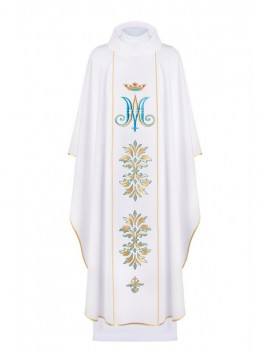
Marian chasubles
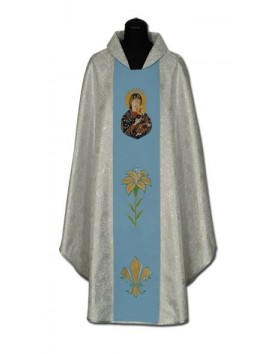
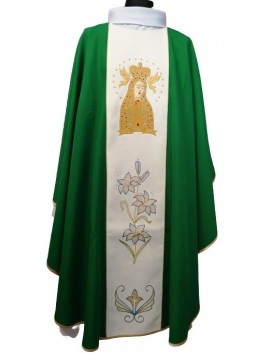
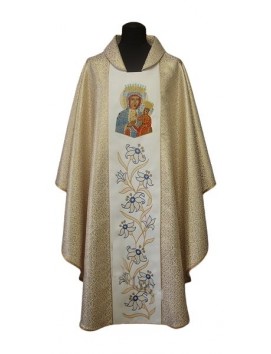
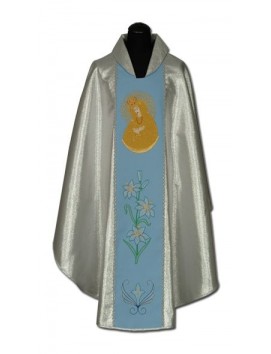
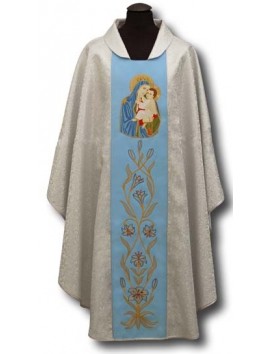
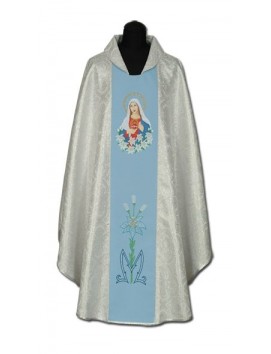
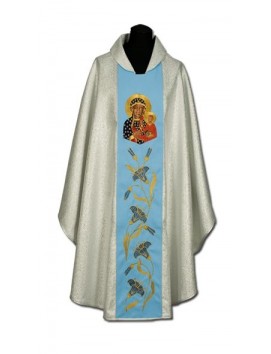
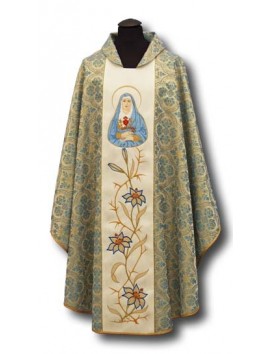
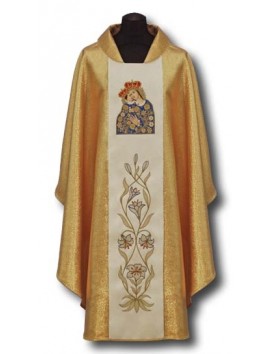
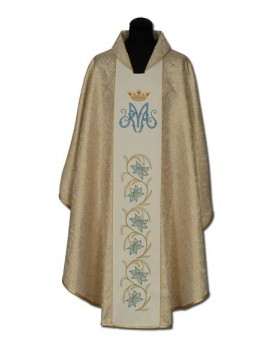
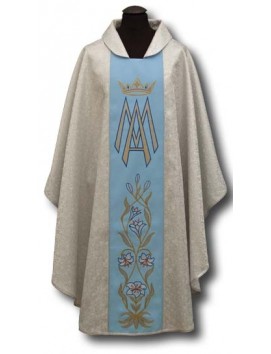
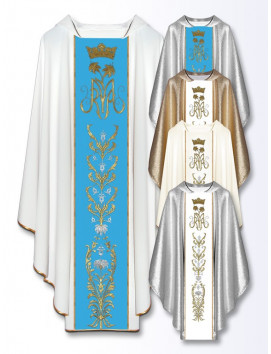
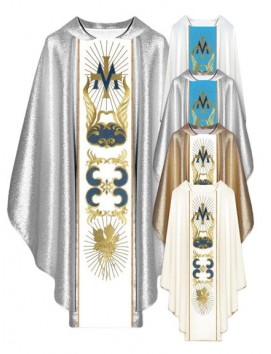
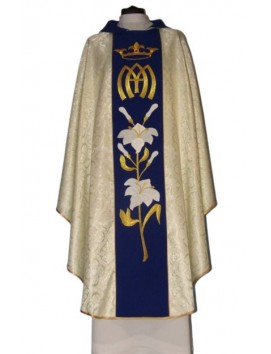
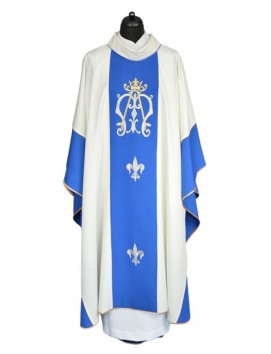
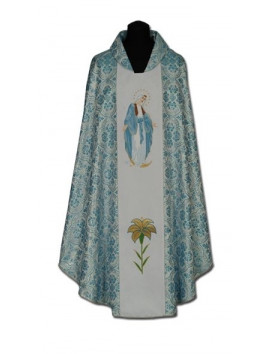
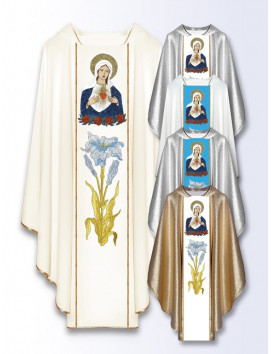
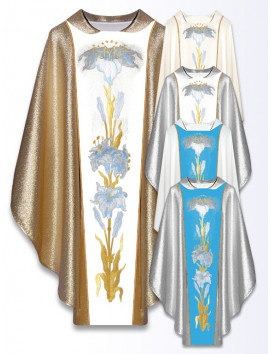
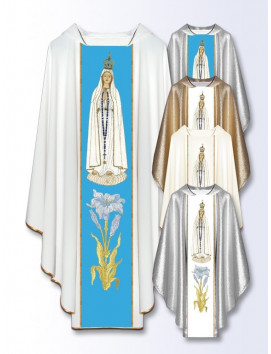
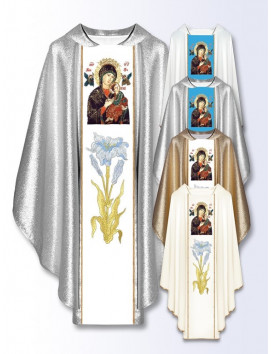
A Marian chasuble is a special type of liturgical vestment worn by priests, crafted explicitly for feasts and solemnities dedicated to the Virgin Mary. It stands out for its distinctive use of Marian colors-primarily blue and white-which represent purity, hope, and the unique role of Mary as Mother of God. You’ll often see these chasubles adorned with Marian symbols like roses, lilies, stars, the Immaculate Heart, the Rosary, or even detailed images of Mary herself.
A Marian chasuble is a special type of liturgical vestment worn by priests, crafted explicitly for feasts and solemnities dedicated to the Virgin Mary. It stands out for its distinctive use of Marian colors-primarily blue and white-which represent purity, hope, and the unique role of Mary as Mother of God. You’ll often see these chasubles adorned with Marian symbols like roses, lilies, stars, the Immaculate Heart, the Rosary, or even detailed images of Mary herself.
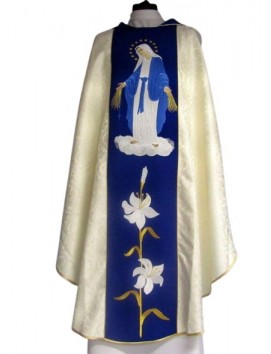
Embroidered chasuble of Mary Immaculate Embroidered chasuble of Mary Immaculate
Embroidered chasuble of Mary Immaculate Embroidered chasuble of...
$ 2421Review(s)

What does the Marian symbol mean?
The Marian symbol is all about visually expressing who Mary is, what she stands for, and her unique role in salvation history. These symbols aren’t random-they’re loaded with meaning, tradition, and spiritual power. Let’s get practical and break it down.
Core Marian Symbols and Their Meanings
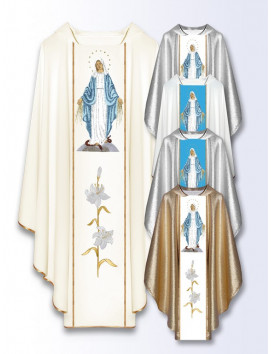
The Lily: The lily is the ultimate Marian symbol for purity, chastity, and virginity. You’ll see it in almost every Annunciation scene, and three lilies together highlight Mary’s triple virginity-before, during, and after Christ’s birth.
The Rose: Roses represent Mary’s love, sacrifice, and her title as “Queen of all virtues.” Red roses connect to Christ’s blood and sacrifice, while white roses point to her purity.
The Crown of Twelve Stars: This comes straight from the Book of Revelation. The twelve stars symbolize Mary’s queenship, eternal perfection, and her role as the woman “clothed with the sun”.
The Crescent Moon: The moon under Mary’s feet represents her victory over sin and her role as the new Eve. It’s a sign of feminine divinity and, historically, Christianity’s triumph over evil.
The Heart with Seven Swords (or Daggers): This symbol stands for the Seven Sorrows of Mary-the deep sufferings she endured as the Mother of Jesus. Each sword marks a specific sorrow, from Simeon’s prophecy to the Crucifixion.
The Marian Cross and “M” Monogram: The Marian Cross is a cross with the letter “M” beneath it, symbolizing Mary’s close connection to Jesus’ redemptive mission. It’s a powerful reminder of her presence beneath the Cross and her unique participation in salvation.
The Palm: The palm tree symbolizes Mary as the image of hope, justice, and the triumph of God’s salvation.
The Source (Fountain): Mary is often shown with a fountain, symbolizing her as the source of life and purity, and as the spiritual mother of all humanity.
The Pomegranate: This fruit represents fertility, unity, and Mary’s role as mother of the Church. Its many seeds reflect the growth and unity of the faithful.
Flower Symbols in Marian Tradition
Carnation: Symbolizes Mary’s pure love and maternal care for humanity. White carnations stand for purity, pink for motherly love.
Iris: Represents Mary’s faithfulness, wisdom, and hope. The iris is a visual cue to trust in God’s will, just as Mary did.
Columbine: Stands for innocence and the Immaculate Conception, reminding us of Mary’s gentle and pure-hearted nature.
Pansy: Associated with remembrance and loving thoughts, pansies reflect the affection and devotion believers have for Mary.
Colors and Clothing
Blue Cloak: Blue is Mary’s signature color, symbolizing eternity, protection, and her role as Queen of Heaven. Her cloak also represents shelter for the faithful.
White Tunic: White stands for purity and is often seen in Marian images, especially from the Spanish tradition.
Why Do Marian Symbols Matter?
They teach: Marian symbols are a visual catechism. They tell Mary’s story, her virtues, and her role in salvation history without a single word.
They inspire: These symbols invite us to imitate Mary’s purity, faith, and love.
They connect: Marian symbols unite believers across cultures and centuries, giving us a common language of devotion.
Why are Marian chasubles typically blue and white?
Blue: The Color of Heaven, Royalty, and Divine Grace
Heavenly Symbolism: Blue has long been associated with the heavens and the divine. It’s the color of the sky and sea-vast, infinite, and transcendent.
Mary’s Traditional Color: Historically, artists and the Church depicted Mary wearing blue to highlight her special role as the Queen of Heaven and the Mother of God.
Royalty and Sacredness: In ancient times, blue pigments like lapis lazuli were rare and expensive, reserved for royalty and sacred objects. Using blue in Marian vestments honors Mary’s exalted status.
Liturgical Privilege: Although blue is not a standard liturgical color in the Latin rite, the Church grants special permission for its use on Marian feasts or in Marian shrines, especially in countries like Spain and former Spanish territories.
White: Purity, Holiness, and Joy
Symbol of Purity: White represents Mary’s sinlessness and immaculate purity. It’s the color of light, innocence, and holiness.
Joy and Celebration: White is the liturgical color for major feasts like Christmas and Easter, symbolizing joy and victory. Marian feasts often use white to emphasize Mary’s role in salvation history.
Complement to Blue: White balances the deep, royal blue by highlighting Mary’s human virtues-her purity, grace, and holiness.
Together, Blue and White Tell Mary’s Story
Divine and Human: Blue points to Mary’s divine mission and heavenly queenship, while white reflects her human purity and holiness.
Visual Catechism: These colors teach the faithful about Mary’s unique role as Theotokos-the God-bearer-and inspire devotion.
Liturgical Impact: Wearing blue and white Marian chasubles during Mass or Marian celebrations visually elevates the feast, reminding everyone of Mary’s virtues and her closeness to God.
Quick Facts About Marian Chasuble Colors
Blue vestments require special permission in the Latin rite, but are common in Marian shrines and certain countries.
White is the standard color for Marian feasts and sacraments, linked to purity and joy.
Marian chasubles often combine blue fabric with white embroidery or vice versa, enhancing their symbolic power.
These colors connect worshipers to centuries of tradition, art, and prayer focused on Mary.
Why Does This Matter to You?
If you’re choosing a Marian chasuble for your parish or personal use, understanding why blue and white dominate helps you appreciate the more profound meaning behind the vestment. It’s not just about aesthetics-it’s about honoring Mary’s spiritual legacy and enriching the liturgical experience.
What are various images of Marian Chasuble?
Marian chasubles are instantly recognizable for their beautiful, symbolic imagery dedicated to the Blessed Virgin Mary. These images aren’t just decoration-they’re visual catechism, teaching and inspiring Marian devotion every time they’re worn.
Most Popular Images of Marian Chasuble
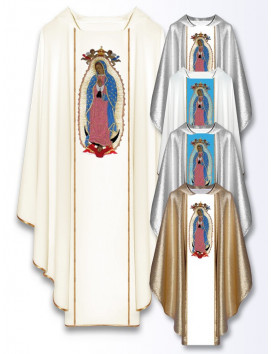
Photographic Images of Mary: Many Marian chasubles feature high-quality, sublimated photographic images of the Virgin Mary. Popular depictions include Our Lady of the Immaculate Conception, Our Lady of Perpetual Help, Our Lady of Fatima, Our Lady of Guadalupe, the Sacred Heart of Mary, Our Lady of the Rosary, and Our Lady of Częstochowa. These images are often printed directly onto the fabric, creating a vivid, lifelike presence on the vestment.
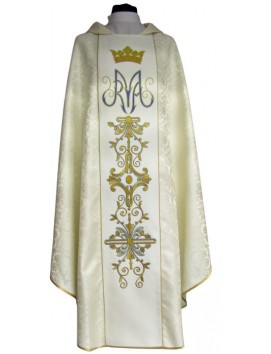
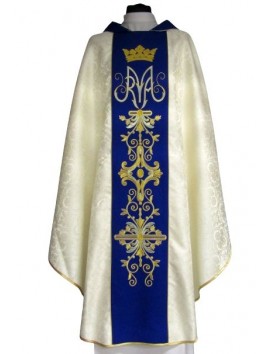
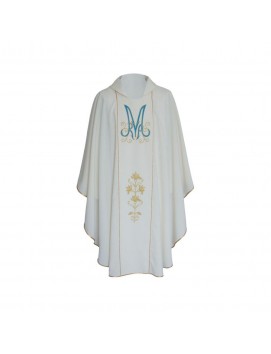
Embroidered Marian Symbols: Classic Marian chasubles showcase intricate embroidery with symbols like the Immaculate Heart, the Rosary, lilies, and the Marian monogram “AM” (Ave Maria). These symbols are deeply connected to Mary’s purity, maternal love, and her role as Queen of Heaven.
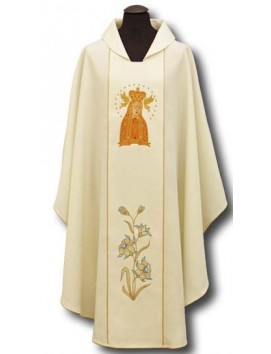
Floral Motifs: Roses and lilies are common, representing Mary’s purity, chastity, and spiritual beauty. These floral images are often woven or embroidered in gold, blue, and white threads for added richness.
Crowned Mary: Some chasubles depict Mary crowned as Queen of Heaven, often surrounded by stars or a halo, emphasizing her royal dignity and unique place in salvation history.
Scenes from Marian Apparitions: Images from famous apparitions-like Fatima, Lourdes, and Guadalupe-are featured on many Marian chasubles. These scenes connect the vestment to specific stories of Marian intercession and miracles.
Ave Maria Monogram: The stylized “AM” or “Ave Maria” monogram is a classic, elegant touch found on many Marian chasubles, sometimes paired with a crown or surrounded by rays of light.
Mystical Rose and Other Titles: Chasubles may include references to Mary’s traditional titles, such as “Mystical Rose,” “Mother of God,” or “Queen of Peace,” often illustrated with unique iconography or text.
Styles and Customization
Gothic, Roman, Semi-Gothic, and Monastic Styles: Marian images appear on all major chasuble styles, from the flowing Gothic to the classic Roman “fiddleback.” Each style brings a different visual emphasis, but the Marian imagery remains the focal point.
Custom Images and Memorial Labels: Many suppliers offer customization, allowing you to choose a specific Marian image, add memorial labels, or select unique embroidery to match your parish’s devotion or the liturgical season.
Color Choices and Their Meaning
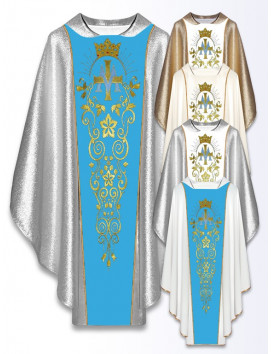
Blue and White: The most common colors for Marian chasubles, symbolizing purity, hope, and Mary’s role as the Mother of God.
Gold Accents: Gold embroidery and trim highlight the chasuble’s sacred purpose and Mary’s royal dignity.
Why Do These Images Matter?
Inspire Devotion: Every image or symbol is designed to draw the faithful closer to Mary and, through her, to Christ.
Teach the Faith: The visual language of Marian chasubles tells the story of Mary’s virtues, her apparitions, and her intercessory power.
Enhance Worship: These vestments transform Marian feast days and celebrations, making them visually and spiritually unforgettable.
What is the Spiritual significance of Marian chasubles?
Marian chasubles are a visual and spiritual tribute to the Blessed Virgin Mary. Every time a priest dons a Marian chasuble, he’s not just putting on a vestment-he’s making a statement of faith, honoring Mary’s unique role in salvation history, and inviting the whole congregation into deeper Marian devotion.
Why Marian Chasubles Matter Spiritually
Symbol of Purity and Holiness: Marian chasubles, especially those in blue and white, symbolize Mary’s purity, virginity, and immaculate nature. Blue has been associated with Mary since ancient times, representing her heavenly grace, while white stands for her sinlessness and joy.
Visual Catechism: The symbols on Marian chasubles-lilies, stars, crowns, the Immaculate Heart, and the Rosary-teach the faithful about Mary’s virtues and her role as Mother of God. Every symbol is a lesson in faith, hope, and love.
Reminder of Mary’s Intercession: Wearing a Marian chasuble during Mass or Marian feasts is a public appeal for Mary’s intercession. It’s a visible prayer, asking the Mother of God to guide, protect, and pray for the Church.
Connection to Major Marian Dogmas: Marian chasubles are often worn on feasts like the Immaculate Conception and the Assumption-celebrations that highlight Mary’s singular privileges and her place in the story of redemption. The chasuble itself becomes a sign of belief in these dogmas.
Inspiration for the Faithful: When a priest wears a Marian chasuble, it’s a call for everyone present to imitate Mary’s virtues-her humility, obedience, faith, and love. It’s a challenge to live with the same openness to God’s will.
Key Symbols and Their Spiritual Meaning
Lilies: Purity, innocence, and resurrection-reminding us of Mary’s spotless nature.
Stars: Light, hope, and guidance-Mary as the Star of the Sea, leading believers to Christ.
Immaculate Heart: Mary’s loving, maternal care for all humanity.
Crowns and Blue Robes: Mary’s queenship and her unique dignity as the Mother of God.
More Than a Garment-A Spiritual Experience
Elevates Worship: The Marian chasuble turns every Marian feast or Mass into a celebration of Mary’s spiritual motherhood and her ongoing presence in the life of the Church.
Unites the Church: These vestments connect today’s worshipers with centuries of tradition and the universal Church’s love for Mary.
Personal and Communal Devotion: For the priest, wearing a Marian chasuble is a personal act of devotion. For the community, it’s a shared experience of honoring the Mother of God.
What are some regional and stylistic differences of Marian chasuble?
Marian chasubles are not a one-style-fits-all vestment. Their look, fabric, embroidery, and even cut can vary widely depending on region and tradition. Here’s what sets them apart:
1. Stylistic Differences: Shape and Cut
Gothic Marian Chasuble:
Flowing, full cut with a rounded or pointed front and back.
Often features broad orphrey bands (decorative strips) with Marian symbols or images.
Popular for its comfort and dramatic drape, making it a favorite in many modern parishes.
Roman Marian Chasuble (Fiddleback):
Stiff, structured, and cut away at the sides for arm movement.
Richly decorated with embroidery, especially on the central orphrey.
Classic look, often chosen for traditional Latin Mass or solemn Marian feasts.
Semi-Gothic and Monastic Styles:
Blend features of Gothic and Roman cuts.
Slightly less full than Gothic, but not as rigid as Roman.
Seen as a middle ground for parishes wanting tradition with a bit more comfort.
2. Regional Differences: Materials, Motifs, and Embellishments
Italian Marian Chasubles:
Frequently use rich velvets, damasks, and brocades with bold, Renaissance-inspired patterns like pomegranates or floral themes.
Orphreys often feature figurative embroidery-images of Mary, Christ, saints, and angels surrounded by floral and Eucharistic symbols.
Northern Italian examples may have a rustic, folksy character, while Tuscan chasubles show off intricate Renaissance textile designs.
Central and Eastern European Marian Chasubles:
Known for elaborate, high-relief embroidery and vibrant color contrasts.
Blue and white dominate, but gold, silver, and even ecru are common for Marian feasts.
Motifs often include lilies, roses, and Marian monograms, sometimes paired with local saints or regional patterns.
French and Spanish Marian Chasubles:
French styles often use lighter fabrics and more restrained embroidery, with a focus on elegant orphrey placement.
Spanish chasubles may feature dramatic cuts and bold, gold-threaded embroidery, especially for Marian processions and feast days.
3. Ornamentation and Imagery
Embroidered Marian Symbols:
Common motifs: lilies (purity), roses (charity), crowns (queenship), Marian monograms ("AM" for Ave Maria), and stars (guidance).
Some chasubles depict full images of the Virgin Mary, Marian apparitions, or scenes from her life.
Color Choices:
Blue and white are the most iconic Marian colors, symbolizing purity and heavenly grace.
Gold and silver are used for solemnity and to highlight Marian feasts.
Some regions, like Italy and Spain, incorporate local textile traditions and color palettes.
4. Practical Features
Lining and Weight:
Some regions prefer unlined, lightweight chasubles for comfort in warmer climates, while others use heavy, lined versions for structure and durability.
Many Marian chasubles come with matching accessories like stoles, maniples, burses, and chalice veils.
How to choose the right style for your needs of Marian Chasuble?
Choosing the right Marian chasuble is about balancing symbolism, style, comfort, and context. Here’s how to break it down:
1. Understand the Liturgical Context
Feast Days and Seasons: Marian chasubles are typically worn on Marian feasts like the Immaculate Conception or Assumption. The style you pick should align with the solemnity of the occasion. For major feasts, ornate Roman or Gothic styles with rich embroidery work wonders. For more regular Marian celebrations, semi-Gothic or simpler designs can be perfect.
Church Architecture and Tradition: Is your church more traditional or modern? A Roman “fiddleback” chasuble fits classic, traditional churches, while Gothic or semi-Gothic styles work well in modern or mixed settings.
2. Pick the Style That Matches Your Comfort and Movement Needs
Roman Style: Structured and cut away at the sides for arm movement. It’s formal, regal, and perfect if you want a classic look with ease of use.
Gothic Style: Flowing, full, and dramatic. If you want a chasuble that moves with you and makes a statement, this is your go-to. It’s also great for warmer climates because it’s lighter.
Semi-Gothic and Monastic Styles: The middle ground. They combine comfort and tradition without being too heavy or too loose.
3. Consider Materials and Craftsmanship
Fabrics: Silk, brocade, velvet, and damask are traditional and give a solemn, elegant appearance. Modern blends like elano-wool offer durability and easier care.
Embroidery: Look for detailed embroidery featuring Marian symbols like lilies, roses, and the “Ave Maria” monogram. The quality of embroidery elevates the chasuble’s spiritual and aesthetic value.
4. Match Colors and Symbols to Your Devotion
Marian chasubles are traditionally blue and white, symbolizing purity and heavenly grace. Some may include gold accents for solemnity.
Choose symbols that resonate with your parish or personal devotion: lilies for purity, roses for love, or images of Our Lady of Guadalupe or Fatima.
5. Budget and Longevity
Marian chasubles range widely in price. Investing in high-quality fabrics and craftsmanship pays off in durability and reverence.
Consider if you want a set that includes a matching stole, maniple, and chalice veil for a cohesive look.
6. Seek Expert Advice When Needed
If you’re unsure, consult liturgical vestment experts or artisans. They can guide you on style, symbolism, and what fits your liturgical calendar and church environment best.
Quick Checklist: Choosing Your Marian Chasuble Style
What liturgical occasions will you use it for?
What style fits your church’s tradition (Roman, Gothic, semi-Gothic, monastic)?
How important is comfort and movement during Mass?
What materials and embroidery quality do you prefer?
Which Marian symbols and colors speak to your devotion?
What’s your budget and do you want a full matching set?
Have you consulted a sacred art expert or vendor?
What materials are used to make Marian chasubles?
When it comes to Marian chasubles, the materials aren’t just about looks-they’re about durability, comfort, and reverence. Here’s what you’ll find in the best Marian chasubles:
1. High-Quality Sacroline Fabric
What is it? Sacroline is a specialized liturgical fabric, often interlaced with gold thread for a subtle, sacred shimmer.
Why use it? It’s soft, lightweight, and drapes beautifully, making it both practical and elegant for Marian celebrations.
2. Natural Fiber Blends
Common blends: Viscose, linen, silk, and a touch of polyester for added strength.
Why use them? These blends offer breathability, softness, and a natural sheen, while the polyester ensures the chasuble keeps its shape and resists wrinkles.
3. Silk and Brocade
Silk: The gold standard for luxury and tradition. Silk Marian chasubles have a rich, luminous quality and are often reserved for major feasts.
Brocade: A woven fabric with raised patterns, often in silk or a silk-cotton blend. Brocade Marian chasubles are prized for their depth, texture, and ability to showcase intricate Marian symbols.
4. Damask
What is it? Damask is a reversible, patterned fabric that’s both sturdy and elegant.
Why use it? Damask is popular for Marian chasubles because it’s airy, crease-resistant, and holds color beautifully. It’s also easy to clean and maintain, making it a practical choice for frequent use.
5. Wool and Cool Wool
Cool wool: A lightweight, breathable wool fabric, often called “Frescolana.”
Why use it? Cool wool is soft, doesn’t crease, and offers comfort for year-round wear. It’s especially popular in Italian Marian chasubles for its durability and classic appearance.
6. Polyester and Modern Blends
Polyester: Used for its durability, stain resistance, and affordability.
Blends: Many Marian chasubles combine polyester with natural fibers for the best of both worlds-easy care and a traditional look.
7. Velvet and Bamboo (Specialty Fabrics)
Velvet: Adds a regal touch to Marian chasubles, often used for orphrey bands or decorative accents.
Bamboo: Sometimes blended with silk or wool for a soft, eco-friendly option that’s both breathable and luxurious.
8. Embroidery Threads
Gold and silver metallic thread: Used for Marian symbols, monograms, and decorative borders.
Silk and sateen thread: Add color, detail, and depth to Marian imagery and motifs.
Quick Tips for Choosing the Best Marian Chasuble Material
For elegance and tradition: Go with silk, brocade, or damask.
For durability and easy care: Choose polyester blends or cool wool.
For special Marian feasts: Opt for fabrics interlaced with gold or silver thread for extra reverence.
For comfort: Look for lightweight, breathable fabrics like cool wool or natural fiber blends.
How to care for Your Marian Chasuble?
1. Read the Care Label First
Every Marian chasuble comes with a care label for a reason. Always check the manufacturer’s instructions before you do anything else. Some fabrics can handle machine washing, while others demand gentle handwashing or dry cleaning.
2. Washing Your Marian Chasuble
Handwashing: For delicate fabrics, hand wash in lukewarm water with a mild detergent. Avoid scrubbing or wringing-just gently agitate and rinse.
Machine Washing: Some modern, easy-care chasubles can go in the washing machine on a gentle, warm or cool cycle. Always wash separately from other garments to prevent snags or color transfer.
Dry Cleaning: For silk, brocade, or heavily embroidered chasubles, dry cleaning is the safest bet. It keeps colors vibrant and prevents fabric damage.
3. Drying the Chasuble
Air Drying: Hang your Marian chasuble in a well-ventilated area, away from direct sunlight. This prevents fading and keeps the fabric from getting stiff.
Press Drying: For extra care, press the chasuble between two towels to absorb excess water before hanging it up.
Avoid Machine Dryers: High heat can shrink, warp, or damage delicate vestment fabrics. Skip the dryer and let it air dry naturally.
4. Ironing and Steaming
Ironing: Only iron if the care label says it’s safe. Use a low-heat setting and always place a pressing cloth between the iron and the chasuble to protect embroidery and delicate fabrics.
Steaming: A garment steamer is a great way to remove wrinkles without direct heat. Just keep it moving and don’t linger in one spot.
5. Storing Your Marian Chasuble
Cool, Dry Place: Store your chasuble on a padded hanger in a cool, dry closet. Avoid plastic bags-use a breathable garment bag to prevent moisture buildup.
Keep Away from Sunlight: Direct sunlight fades colors and weakens fabric over time. Always store your Marian chasuble in a shaded area.
Flat Storage for Heavy Embroidery: If your chasuble has heavy embroidery or beading, consider storing it flat to avoid stretching the fabric.
6. Handling Stains and Repairs
Spot Cleaning: Tackle stains immediately with a damp cloth and mild soap. Avoid bleach and harsh chemicals-they’ll ruin the color and fibers.
Professional Repairs: If you notice loose threads, embroidery, or damage, take your chasuble to a professional for repairs. Don’t DIY delicate fixes unless you’re experienced.
7. Extra Tips for Longevity
Rotate Use: If you have more than one Marian chasuble, rotate them to prevent excessive wear on a single vestment.
Mind the Accessories: Clean matching stoles, maniples, and veils using the same care method as your chasuble.
Are Marian chasubles suitable as gifts for clergy or collectors?
1. Why Marian Chasubles Make Great Gifts
Deep Spiritual Significance: Marian chasubles are more than just vestments-they’re a tribute to the Blessed Virgin Mary, making them especially meaningful for priests devoted to Marian feasts or collectors passionate about liturgical art.
Versatility: Available in a range of styles-Gothic, Roman, semi-Gothic, and monastic-Marian chasubles to suit different liturgical traditions and personal tastes.
Quality and Craftsmanship: Many Marian chasubles are crafted from premium materials like silk, damask, velvet, and wool, with exquisite embroidery featuring Marian symbols, flowers, and monograms.
Collectible Value: For collectors, Marian chasubles offer unique designs, limited editions, and historical motifs, making each piece a valuable addition to any liturgical collection.
2. When Are Marian Chasubles Appropriate as Gifts?
Priestly Ordination or Anniversaries: A Marian chasuble is a powerful way to mark milestones in a priest’s ministry, especially if he has a devotion to Mary.
Special Marian Feast Days: Gifting a Marian chasuble before the Immaculate Conception, Assumption, or other Marian celebrations gives the priest a timely and appropriate vestment for the occasion.
Collector’s Milestones: For collectors, a Marian chasuble with unique embroidery or a rare style is a standout gift that will be treasured for years.
3. What Should You Consider Before Gifting a Marian Chasuble?
Consult First: It’s best to consult the recipient, especially if gifting to a priest, to ensure the style, size, and liturgical needs are met. Vestments are personal and practical items-preferences matter.
Quality and Style: Choose high-quality fabrics and embroidery. Check if the chasuble comes with a matching stole or other accessories for a complete gift.
Customization: Many suppliers offer custom embroidery, Marian images, or even personalized dedications-making your gift even more special.
Care and Maintenance: Include care instructions or choose easy-care fabrics if the recipient prefers low-maintenance vestments.
4. Where to Buy Marian Chasubles as Gifts?
Specialist Liturgical Stores: Look for reputable vendors with a wide selection of Marian chasubles in different styles, fabrics, and price ranges.
Online Reviews: Check customer feedback to ensure quality and satisfaction with the product and service.