
No products
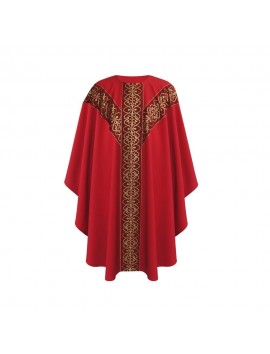
Semi Gothic chasuble
Semi Gothic chasuble is a liturgical vestment worn by priests, blending the classic Gothic style with modern comfort. It’s the go-to choice for clergy who want tradition without sacrificing ease of movement or style.
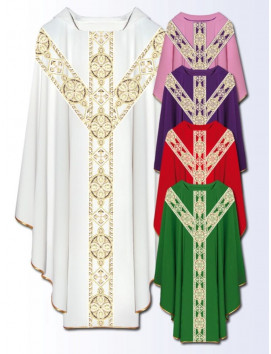
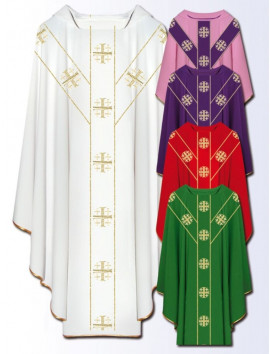
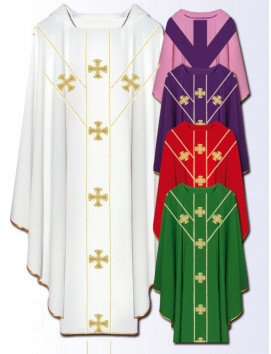
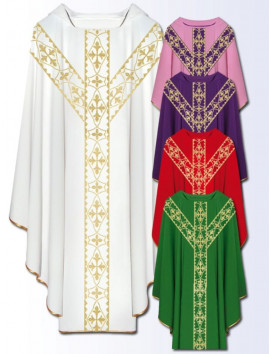
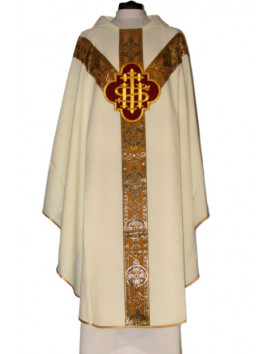

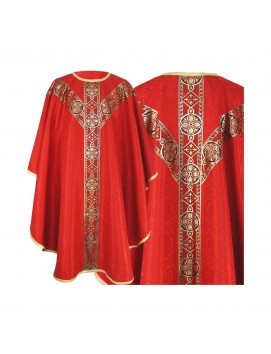
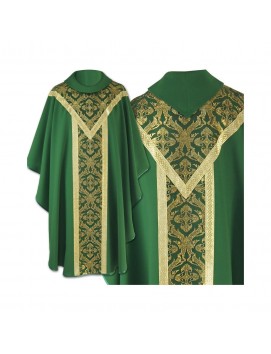
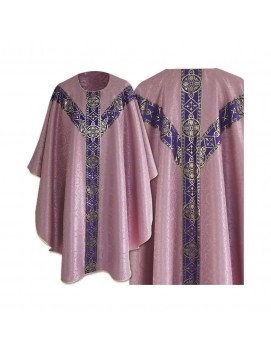
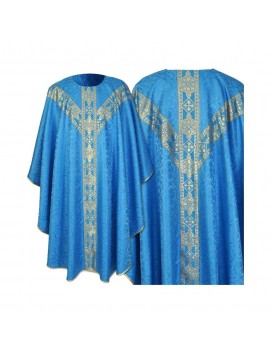
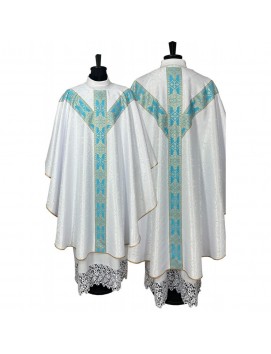
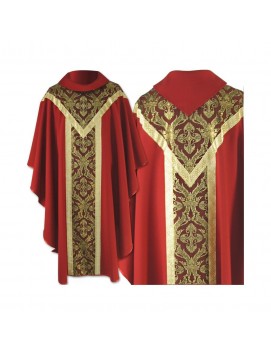
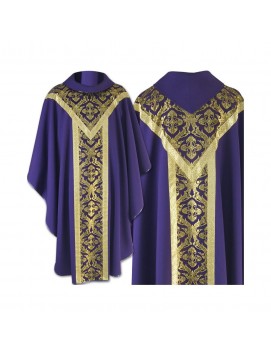
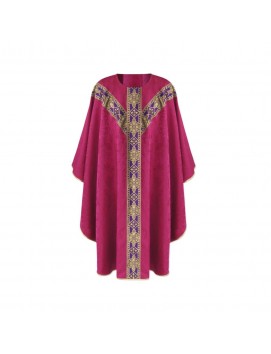
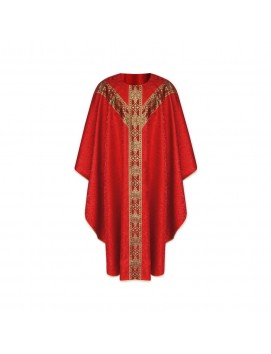
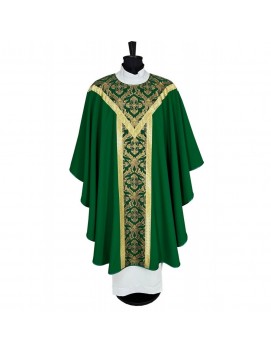
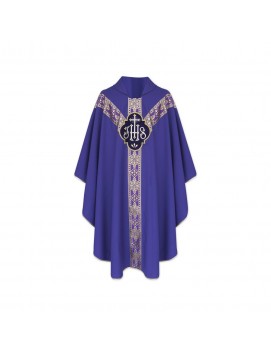
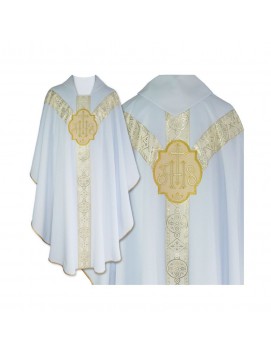
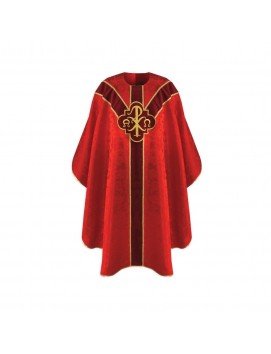
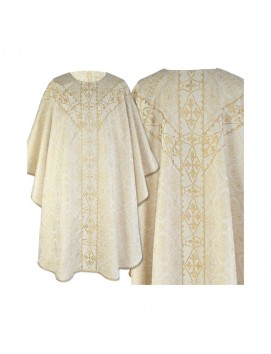
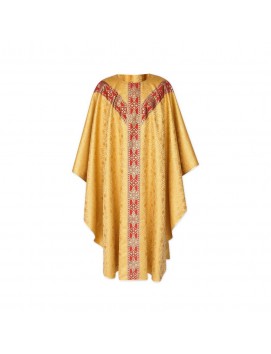
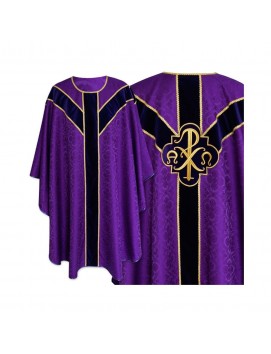
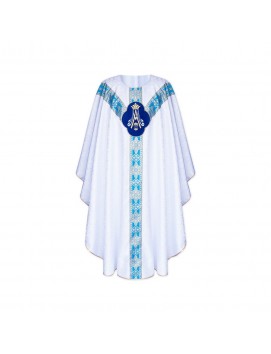
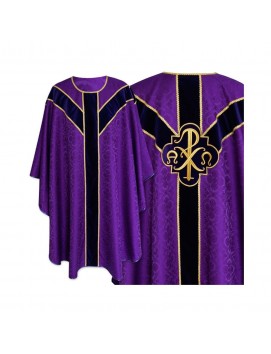
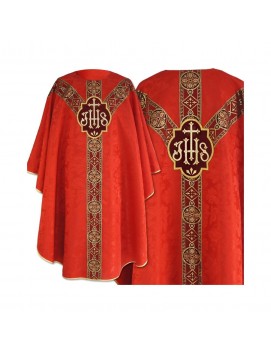
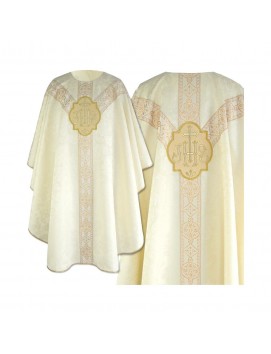
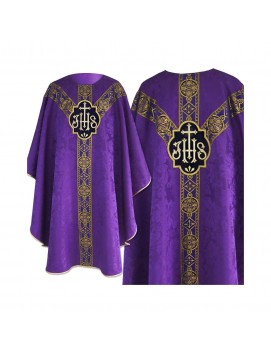
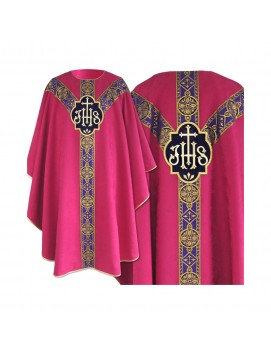
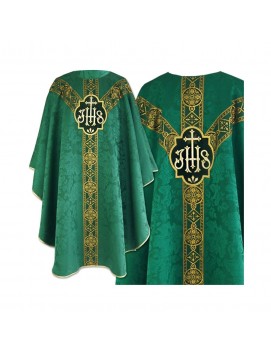
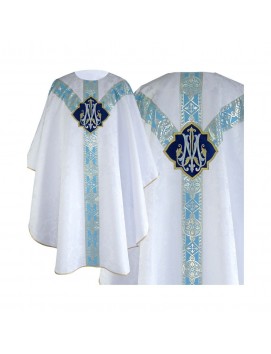
How does a Semi Gothic chasuble differ from Gothic and Roman chasubles?
Main Differences: Semi Gothic vs. Gothic vs. Roman Chasubles
Let’s get specific. Here’s how each style stacks up:
| Feature | Gothic Chasuble | Semi Gothic Chasuble | Roman Chasuble (Fiddleback) |
|---|---|---|---|
| Shape | Large, flowing, oval or bell-shaped; covers arms and body | Slightly shorter and narrower than Gothic | Short, stiff, tailored; resembles a violin/fiddle |
| Mobility | Maximum arm movement, very ample | Good movement, less fabric than Gothic | Most freedom for arms, but less coverage |
| Fabric | Lightweight, high-quality fabrics like damask | Lightweight, similar high-quality fabrics | Often heavy, stiff, ornate (silk, gold, brocade) |
| Decoration | Simple or ornate, often with orphreys, less embroidery than Roman | Identical to Gothic, can be ornate or plain | Highly ornate, heavy embroidery and gold |
| Coverage | Covers from shoulders to wrists, almost to the heels | Covers shoulders, shorter than Gothic, ample but not excessive | Minimal shoulder coverage, short front and back |
| Historical Use | Medieval roots, revived post-Vatican II | Modern adaptation blends tradition and comfort | Became popular in 16th-19th centuries |
Why Does This Matter?
If you’ve ever worn a chasuble for hours, you know comfort and movement are non-negotiable. Here’s what you need to know:
Gothic chasubles look majestic, but all that fabric can get in the way if you move around a lot.
Semi Gothic chasubles keep the classic look but trim the excess, so you’re not swimming in fabric. You get tradition but can still move, gesture, and serve without feeling restricted.
Roman chasubles are all about practicality, minimal fabric, ornate decoration, and maximum freedom for your arms. But some find them too stiff or formal for everyday use.
Quick Tips for Choosing the Right Chasuble
Go Gothic if you want maximum tradition and visual impact, and don’t mind the extra fabric.
Go Semi Gothic if you want the best of both worlds: tradition and comfort, with enough coverage to look classic but not so much you feel weighed down.
Go Roman if you want something lightweight and highly decorated, and value arm mobility above all else.
What is the historical significance of the Semi Gothic chasuble in the Church?
The Roots: From Ancient Rome to the Altar
The chasuble’s story starts in the Roman Empire. Back then, it was just a practical, conical poncho called the paenula or casula-basically, a “little house” that kept you dry and warm.
Early Christians adopted this garment for worship; by the Middle Ages, it was reserved exclusively for clergy. The chasuble became a symbol of the priest’s role as a spiritual leader and a visible sign of charity, covering the priest as charity covers a multitude of sins.
The Evolution: Why Styles Changed
Over the centuries, the chasuble evolved. The original complete, bell-shaped design was beautiful but bulky. As liturgical practices changed, like the introduction of the Elevation during Mass and the rise of private Masses, priests needed more freedom to move.
By the 13th century, the sides of the chasuble were shortened for practicality. In the 15th and 16th centuries, the Roman or “fiddleback” chasuble emerged: much narrower, stiffer, and easier to wear, but a significant departure from the original form.
The Semi Gothic Chasuble: A Return to Tradition
The Semi Gothic chasuble came about as a reaction to these extreme modifications. Church leaders like St. Charles Borromeo pushed back, insisting on preserving the ample, dignified style that had been handed down for centuries.
The Semi Gothic chasuble is the result: it’s less voluminous than the original Gothic but more flowing and traditional than the Roman style. It keeps the symbolic fullness of the ancient chasuble while offering enough comfort for modern liturgical use.
Why the Semi Gothic Chasuble Matters
Here’s why the Semi Gothic chasuble is historically significant:
It preserves continuity. The Semi Gothic chasuble honors the centuries-old tradition of the Church, maintaining a visual link to the early Christian community and the medieval Church.
It balances tradition and practicality. Unlike the restrictive Roman chasuble, the Semi-Gothic allows priests to move freely while still looking dignified and traditional.
It’s a symbol of reform and renewal. After the Second Vatican Council, there was a renewed interest in vestments that reflected both ancient tradition and modern needs. The Semi-Gothic chasuble became a favorite because it looked back to the roots of Christian worship while fitting the realities of today’s liturgy.
It embodies theological meaning. The chasuble is more than fabric-it represents charity, the priesthood of Christ, and the unity of the Church. With its ample cut, the Semi Gothic style makes this symbolism visible and influential.
What materials are used in making Semi Gothic chasubles?
The Top Materials for Semi-Gothic Chasubles
Here’s what you’ll find when you look for high-quality Semi Gothic chasubles:
Damask
This is the king of chasuble fabrics. Damask is a woven, patterned fabric that’s both beautiful and practical. It’s stain-resistant, crease-resistant, and stands up to regular washing and ironing. If you want a vestment that keeps its shape and color, damask is your go-to.Jacquard
Jacquard fabric is another favorite. It’s airy, crease-resistant, and easy to care for. Jacquard chasubles are perfect for frequent use and still look fresh after a long liturgical season. The color stays vibrant, and the fabric holds up to standard washing and ironing.Brocade
Want something with a little more shine and texture? Brocade is a decorative fabric, often woven with metallic threads. It’s used for orphreys (those decorative bands) and sometimes for the whole chasuble. Brocade adds a touch of luxury and is often paired with velvet for extra style.Silk or Silk Content Blends
Some premium chasubles use silk or silk-blend damask for a soft, elegant drape and a rich look. These are usually reserved for special occasions or high feast days.Velvet
Velvet is typically used for orphreys and decorative panels. It’s not the main fabric, but it gives a chasuble that high-end, classic finish. You’ll often see velvet embroidered with gold or metallic thread.Polyester and Metallised Yarn
Modern chasubles often blend polyester with metallised yarn. This combo makes the vestment lightweight, durable, and easy to clean, while still allowing for detailed embroidery and a bit of shimmer.
Why These Materials?
Durability: Damask, jacquard, and polyester blends stand up to frequent use and washing. You don’t want a vestment that falls apart after a few Masses.
Comfort: Airy, crease-resistant fabrics like jacquard and lightweight damask keep you cool and comfortable, even during long services.
Aesthetics: Brocade, velvet, and silk content fabrics bring elegance and tradition. These materials take embroidery well and look stunning in any liturgical color.
Easy Care: Most modern Semi Gothic chasubles are machine washable and easy to iron, so you spend less time on maintenance and more time on ministry.
What to Look For When Choosing a Semi-Gothic Chasuble
Check the fabric composition: Damask and jacquard are top choices for everyday use. Silk blends are best for special occasions.
Look for quality embroidery: Gold or metallic thread on velvet or brocade panels adds visual impact and tradition.
Consider lining: Some chasubles are lined for extra weight and drape. Unlined options are lighter and cooler.
Ask about care instructions: Most can be machine washed, but always confirm for specialty fabrics like silk or velvet.
Can Semi Gothic chasubles be used for all sacraments and celebrations?
Yes, Semi Gothic Chasubles Are Versatile
Semi Gothic chasubles are designed for flexibility and tradition. Here’s what matters:
Universal Usage: You can wear a Semi Gothic chasuble for any Mass, weekday, Sunday, solemnity, or feast. No restriction in Church law or custom limits this style to particular occasions. They’re entirely accepted for celebrating the Eucharist and all major liturgical events.
Sacraments and Special Occasions: Whether it’s a baptism, wedding, confirmation, ordination, or funeral, a Semi Gothic chasuble is appropriate. The key is matching the liturgical color to the occasion: white for weddings and baptisms, red for Pentecost or martyr feasts, purple for Advent and Lent, and so on.
Liturgical Seasons: Semi Gothic chasubles come in every liturgical color, making them suitable for every season - Advent, Christmas, Lent, Easter, Ordinary Time, and all the special feasts.
Why Semi Gothic Chasubles Work for Everything
Traditional Design: The Semi Gothic chasuble keeps the classic look, but is less bulky than the complete Gothic. That means you get tradition and comfort, and always look the part.
High-Quality Materials: Most are made from damask, jacquard, or other durable, crease-resistant fabrics. That means they hold up for frequent use and still look sharp, whether for daily Mass or a high feast day.
Liturgical Symbolism: The chasuble symbolizes charity and the priesthood of Christ. Style, the meaning of which doesn’t limit its use, comes from the vestment, not just its cut or decoration.
Practicality: Lightweight, easy to care for, and available in all the necessary colors-Semi Gothic chasubles are a practical choice for busy parishes and clergy who serve in multiple settings.
What to Watch For
Choose the Right Color: Always match the chasuble color to the liturgical calendar. This signals the specific sacrament or celebration, not the style itself.
Quality Matters: Invest in a chasuble that is durable and easy to maintain, especially if you’ll use it across many sacraments and celebrations.
Quick Recap
Yes, you can use Semi Gothic chasubles for all sacraments and celebrations.
They’re accepted for every Mass, sacrament, and liturgical season.
Just match the color to the occasion, and you’re good to go.
What is the standard size of a Semi Gothic chasuble?
The Standard Size of a Semi Gothic Chasuble
When you order a Semi Gothic chasuble, you’re usually looking at these standard dimensions:
Length: 130 cm (about 51.2 inches)
Width: 154 cm (about 60.6 inches)
This is the industry standard for most reputable vestment suppliers. You’ll see these numbers everywhere because they strike the perfect balance: long enough to look dignified, wide enough for that classic drape, but not so much fabric that you’re drowning in it.
Variations You Might See
Some chasubles come in slightly different sizes, depending on the manufacturer or specific design:
Length: Sometimes 127 cm (about 50 inches)
Width: Sometimes 158 cm (about 62.2 inches)
But here’s the deal: the difference is minimal. Whether 127 or 130 cm in length, or 154 vs. 158 cm in width, you’re still getting the distinctive Semi Gothic look and fit. These slight variations are just about tailoring or personal preference.
Custom Sizing Is Available
Most suppliers will customize your size if you’re taller, shorter, or want a different fit. All you have to do is ask. But for most people, the standard size is spot-on for comfort and appearance.
Why Does the Standard Size Matter?
Uniformity: Everyone on the altar looks coordinated.
Ease of Movement: The standard cut gives you enough room to move, gesture, and serve without restriction.
Aesthetics: You get that classic, flowing look without extra bulk.
Quick Tips Before You Order
Double-check the measurements: Always confirm the size before you buy, especially if you’re ordering for multiple clergy.
Ask about custom options: Most suppliers can accommodate if you need an exceptional fit.
Match your stole: Most Semi Gothic chasubles come with a matching stole, so you’re covered for a complete liturgical set.
How comfortable are Semi Gothic chasubles for long liturgical services?
What Makes Semi Gothic Chasubles Comfortable?
Semi Gothic chasubles are built for comfort and endurance. Here’s why they work so well for long liturgical services:
Lightweight Fabrics: Most Semi Gothic chasubles use high-quality, medium-weight fabrics like damask, cotton, or viscose. These materials are breathable, lightweight, and cool, even when moving around or the church is packed.
Smooth Drape: The design isn’t just about looks. A well-crafted Semi Gothic chasuble drapes smoothly, allowing you to move with poise and confidence, which means you’re not fighting your vestment every time you raise your arms or process down the aisle.
Unlined or Lightly Lined: Many options are unlined or only lightly lined, so you’re not weighed down. This is a big deal if you’re serving in a hot climate or during a lengthy celebration.
Functional Cut: The hybrid design of the Semi Gothic chasuble gives you enough fullness for tradition but trims the excess fabric that can get in the way. You get freedom of movement without sacrificing that classic, elegant look.
Comfortable Collar and Fit: The collar and body are designed to sit comfortably on your shoulders and neck, so you’re not dealing with chafing or awkward bunching during the service.
Key Comfort Features at a Glance
Breathable fabrics (damask, cotton, viscose)
Medium weight-not too heavy, not too flimsy
Smooth, elegant drape
Unlined or lightly lined for less bulk
Functional, non-restrictive cut
Comfortable, well-fitted collar
Real-World Comfort: What Priests Say
Priests and clergy who wear Semi Gothic chasubles regularly report that they’re a top pick for long services. Why? Because they’re:
Easy to move in
Cool and breathable, even under altar lights
Not prone to wrinkling or bunching up
Looks great from every angle, up close, and from the back pew
Pro Tips for Maximum Comfort
Pick the right size: Make sure your chasuble fits your body and is not too long or tight.
Choose the right fabric for your climate: Go for lighter fabrics in a warm area; heavier fabrics in a cooler climate.
Look for quality construction: Well-made seams and embroidery mean less irritation and a smoother fit.
How should I wash and care for my Semi Gothic chasuble?
The Basics: Washing Your Semi Gothic Chasuble
Check the Label First: Always read the care label on your chasuble. Manufacturers give you the best advice for your specific fabric and embroidery.
Machine Washable: Most modern Semi Gothic chasubles made from damask, jacquard, or woven fabrics are safe for a usual warm or cool machine wash cycle. Use a gentle or delicate cycle to protect the fabric and any decorative elements.
Hand Wash Option: If you want to be extra careful, hand wash your chasuble in cool or lukewarm water with a mild detergent. Don’t soak it too long - this keeps the fabric and embroidery in shape.
No Bleach or Fabric Softener: Skip harsh chemicals. Bleach and fabric softeners can damage the fibers and fade the colors. Stick to a mild detergent made for delicate fabrics.
Drying and Ironing Tips
Air Dry in the Shade: Hang your chasuble on a wide, fabric-covered hanger and let it air dry in a shaded area. Direct sunlight can fade the colors and weaken the fabric.
Avoid the Dryer: Never put your chasuble in a tumble dryer. The heat and tumbling action can ruin both the fabric and the embroidery.
Iron on Low Heat: If you need to iron your chasuble, use a low-temperature setting. Place a thin cloth between the iron and the vestment to protect the embroidery and decorative trim. Most high-quality fabrics, like jacquard and damask, are crease-resistant and easy to iron.
Storage and Long-Term Care
Hang, Don’t Fold: Always hang your chasuble on a wide hanger to keep its shape and prevent deep creases. Avoid folding, as creases can be tough to remove.
Use a Garment Cover: Store your chasuble in a breathable garment bag to protect it from dust and moisture. Avoid plastic bags that trap humidity and can cause mildew.
Keep It Dry: Store in a cool, dry place. Excess moisture can cause mildew or unpleasant odors.
Quick Stain and Damage Fixes
Treat Stains Fast: If you spill something, blot (don’t rub) the stain gently with a soft, damp cloth. Use cold water and avoid aggressive scrubbing to protect delicate embroidery.
Inspect Regularly: Check for loose threads, damaged embroidery, or weak seams. Repair minor issues quickly to prevent bigger problems down the road.
When to Use Professional Cleaning
Intricate Embroidery or Delicate Fabrics: If your chasuble has lots of metallic thread, velvet, or specialty trims, consider professional dry cleaning - ensure the cleaner has experience with liturgical garments.
Recap: How Should I Wash and Care for My Semi Gothic Chasuble?
Machine wash on a gentle cycle or hand wash with mild detergent.
Air dry in the shade; never use a dryer.
Iron on low heat with a cloth barrier.
Hang on a wide hanger and store in a breathable garment bag.
Please treat stains quickly and look over for damage regularly.
Use professional cleaning for intricate or delicate chasubles.
See how the semi-Gothic cut compares with all other styles in our full range of chasubles.