
No products
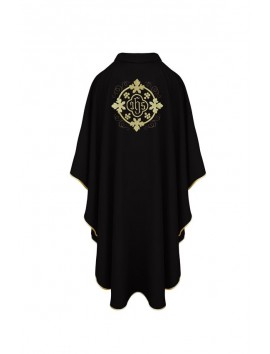
Black chasubles
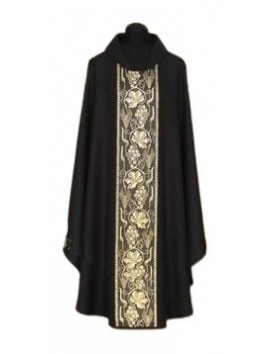
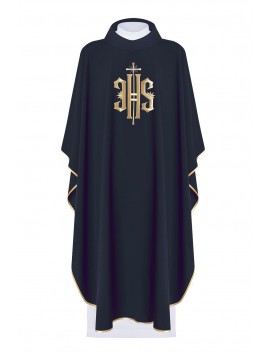
A black chasuble is a sleeveless outer vestment worn by priests during certain liturgical ceremonies, most notably funerals, Requiem Masses, and All Souls’ Day. The color black isn’t random. It’s chosen for its deep symbolism: mourning, penance, and the stark reality of death, but also the hope that comes from faith. In a world where white and purple have become more common for funerals, the black chasuble stands out as a bold nod to tradition and the emotional weight of loss.
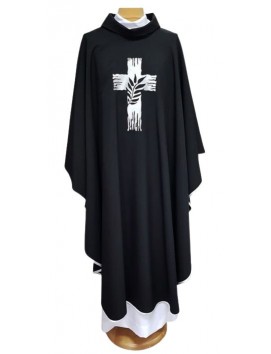
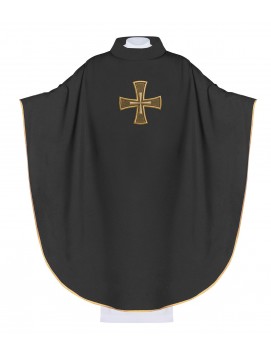
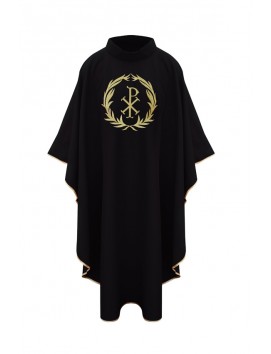
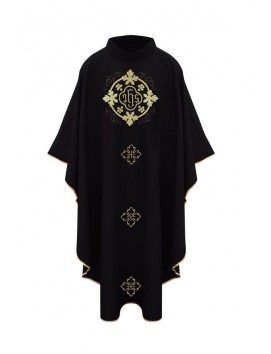
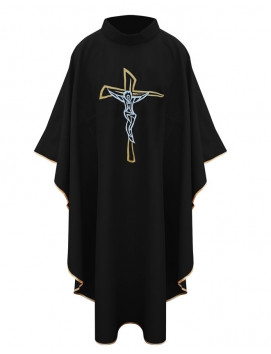
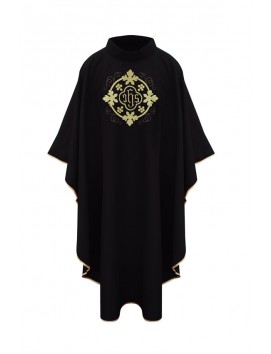
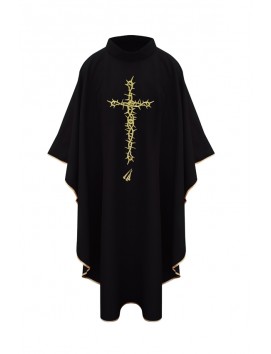
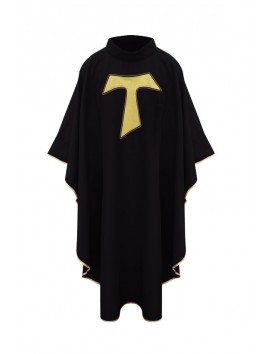
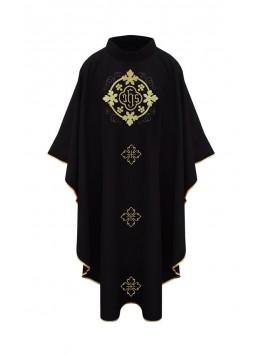
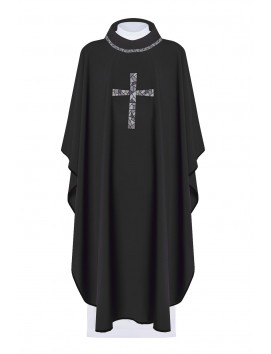
Chasuble with cross - black Chasuble with cross - black
Chasuble with cross - black Chasuble with cross - black
$ 2192Reviews

What does the color black represent in the Catholic Church?
Black in the Catholic Church is the color of mourning, penance, and the stark reality of death. When you see black vestments or altar cloths, it’s not just for show-it’s a visual cue that the Church is entering a time of deep reflection and solemnity. This isn’t about being gloomy; it’s about facing the hard truths of life and faith head-on.
Why Black? The Core Symbolism
Mourning and Sorrow: Black is traditionally worn during funerals and on Good Friday, marking moments of loss, grief, and remembrance. It acknowledges the pain of death and the sorrow that comes with it.
Penance and Repentance: Black signals when Catholics are called to reflect on their sins, seek forgiveness, and embrace humility. It’s a color that says, “Let’s get real about where we stand with God”.
Spiritual Darkness: Black also represents the absence of light, a metaphor for spiritual darkness or separation from God due to sin. It’s a reminder that, without Christ, we’re lost in the dark.
Contrast with White: In Catholic art and liturgy, black often contrasts with white (the color of purity and resurrection). This visual tension highlights the struggle between good and evil, life and death, and ultimately, the hope of redemption.
When Is Black Used in the Catholic Church?
You’ll see black show up in the Catholic liturgical calendar during:
Funerals: To honor the dead and support the grieving.
All Souls’ Day: A day dedicated to praying for all the faithful departed.
Good Friday: The day commemorating Christ’s death, emphasizing the gravity of sin and sacrifice.
Traditional Requiem Masses: Black vestments are a nod to centuries-old customs that connect the present Church with its rich past.
The More profound Meaning: Not Just Negativity
Here’s the twist: Black isn’t just about negativity. In Catholic symbolism, black also points to:
Potential for Renewal: Like seeds germinating in darkness, spiritual growth often starts in life's “black” moments.
A Call to Prayer: Black vestments remind us to pray for the dead, reflect on our mortality, and prepare our souls for eternity.
Balance: Using black in the liturgy balances the Church’s message-yes, there’s sorrow and death, but there’s also hope and resurrection. You can’t have Easter Sunday without Good Friday.
Quick Takeaways: What Does the Color Black Represent in the Catholic Church?
Mourning and remembrance
Penance and repentance
Spiritual darkness and humility
A call to prayer and reflection
A bridge between sorrow and hope
Why do priests wear black chasubles at funerals?
When a priest appears in a black chasuble at a funeral, it’s not just a fashion choice. Black chasubles at funerals are packed with meaning. Here’s what’s going on:
Mourning and Sorrow: Black is the universal color of mourning. In the Catholic Church, it’s a visual acknowledgment of grief and the reality of death. The black chasuble signals to everyone: “We’re here to mourn, to remember, and to pray for the soul of the departed”.
Penance and Humility: Black also stands for penance and humility. Funerals aren’t just about saying goodbye-they’re about recognizing our need for repentance and spiritual conversion. The black chasuble reminds us that life is short, and now’s the time to get right with God.
Prayer for the Dead: Wearing black at funerals isn’t about despair. It’s about hope through prayer. The Church teaches that our prayers help the souls of the deceased, especially if they’re in purgatory. The black chasuble is a call to action: pray for the dead, don’t just assume they’re in heaven.
Honoring Tradition: Black chasubles are part of a deep Catholic tradition. Even though white and purple are allowed, black connects us to centuries of Church practice. It grounds the community in the reality of loss while pointing toward the hope of resurrection.
When Do Priests Wear Black Chasubles?
You’ll see black chasubles most often at:
Funeral Masses
Requiem Masses (Masses for the Dead)
All Souls’ Day
The Office of the Dead
Sometimes, black is also used on Good Friday or during especially penitential moments, but funerals are where it stands out the most.
What Does the Black Chasuble Actually Symbolize?
Death and Mortality: It’s a stark reminder that life is temporary. The black chasuble says: “Let’s get real about death and what comes next”.
Hope in Resurrection: The Church never loses sight of hope, even in mourning. The black chasuble balances sorrow with the promise of eternal life. Some designs even include gold or white embroidery to symbolize that hope shines through the darkness.
Community and Healing: Mourning together is a big deal. Black vestments help everyone acknowledge their grief, the first step toward healing.
Quick Takeaways: Why Do Priests Wear Black Chasubles at Funerals?
To honor the reality of death and grief
To call the community to prayer and repentance
To uphold Catholic tradition and liturgical heritage
To point toward hope, even in the darkest moments
Are black chasubles required, or can other colors be used for funerals?
Catholic priests are not required to wear black chasubles at funerals. The Church officially allows three colors for funeral vestments: black, violet (purple), and white. This isn’t just a local custom; it’s written into the liturgical law and the General Instruction of the Roman Missal.
What Colors Are Permitted at Catholic Funerals?
Black: The traditional color for mourning and funerals, symbolizing sorrow, death, and the need for prayer and penance for the deceased. Black chasubles are still a valid and meaningful option, especially in parishes that want to emphasize the reality of death and the need for prayers for the dead.
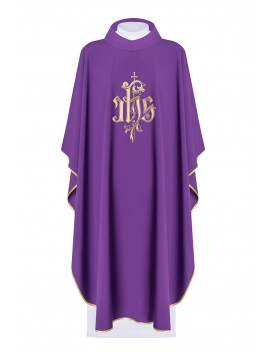
Violet (Purple): Most often associated with penance and mourning, violet is a common choice for funerals. It reminds everyone of the call to pray, do penance, and seek conversion during loss.
White: Increasingly popular, white vestments at funerals express hope in the resurrection, the joy of Christian baptism, and the victory of Christ over death. In many cultures, especially among Asian Catholics, white is also the color of mourning and is often requested for funerals.
What Does the Church Actually Say?
The Order of Christian Funerals states:
“The liturgical color chosen for funerals should express Christian hope but not be offensive to human grief or sorrow. In the United States, white, violet, or black vestments may be worn at the funeral rites and other offices and Masses for the dead” (#39).
So, the choice is flexible. The Church wants the color to balance Christian hope with respect for the reality of grief.
Who Decides Which Color Is Used?
The priest or parish usually decides, sometimes in consultation with the deceased's family.
Some priests have a personal preference; some parishes have a tradition.
Families can often request a specific color, especially if it holds cultural or personal meaning.
Why Are There Options?
Black: For those who want a traditional, somber tone focused on prayer for the dead.
Violet: For a penitential, reflective mood.
White: For a hopeful, resurrection-focused celebration.
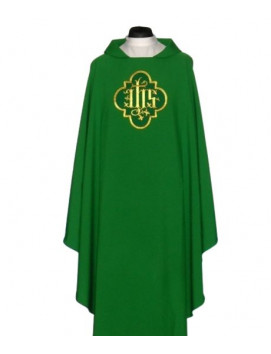
This flexibility lets the Church meet people where they are, whether they need comfort, hope, or a space to grieve. Black remains the exception in the Church’s palette - outside funerals and Good Friday, priests wear seasonal colors such as green chasubles during Ordinary Time.
Key Takeaways: Are Black Chasubles Required, or Can Other Colors Be Used for Funerals?
Black chasubles are not required for funerals; violet and white are also fully permitted.
The choice of color is about balancing Christian hope with respect for grief.
The priest or parish typically decides, but families can often request a preferred color.
Each color-black, violet, or white-carries its meaning and tradition.
What styles and designs are available for black chasubles?
When it comes to black chasubles, you’re not stuck with a one-size-fits-all approach. There’s a surprising amount of variety in cut and decorative detail. Here’s what you need to know:
Main Styles of Black Chasubles
Roman Chasuble: Classic, full, and flowing. The Roman style is the most traditional, often featuring ornate decorations and a more structured fit. If you want a vestment that screams “heritage,” this is it.
Gothic Chasuble: More fitted, with a wide, draping shape. Gothic chasubles are less ornate, focusing on simple geometric patterns or elegant lines.
Monastic Chasuble: Plain, unadorned, and intentionally austere. Monastic styles reflect the simplicity and humility of religious orders, perfect if you want to keep things minimal.
Design Features and Embellishments
Black chasubles don’t have to look boring. The design options range from understated to absolutely stunning:
Simple and Unadorned: Some black chasubles are intentionally plain, emphasizing the somber nature of mourning and penance.
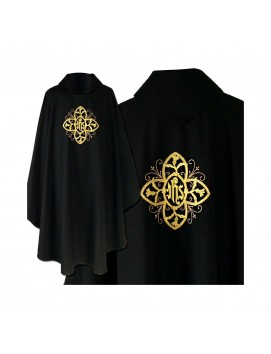
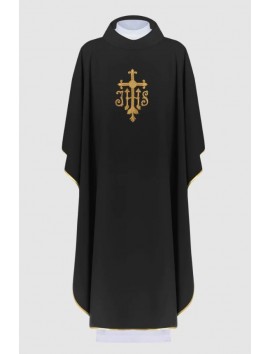
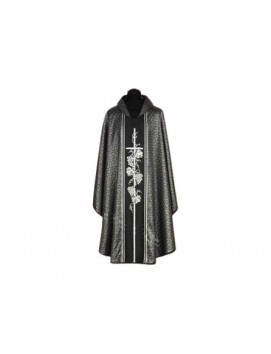
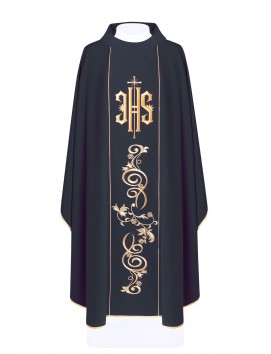
Embroidered Ornaments: Many feature silver, gold, or muted purples and grays embroidery. Common motifs include crosses, the Lamb of God, or floral patterns, each adding a layer of meaning to the vestment.
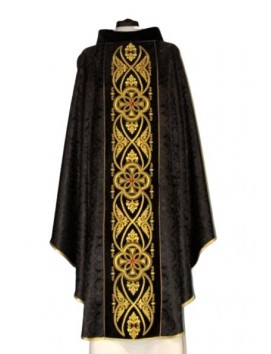
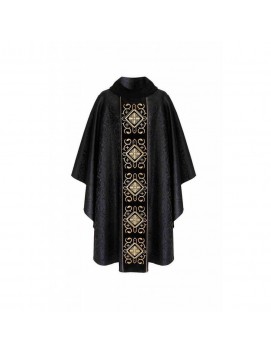
Velvet Orphreys: Decorative velvet bands, often machine-embroidered with gold crosses or other Christian symbols, add texture and visual interest to Gothic and Roman styles.
Contrasting Linings: Some chasubles are lined with colors like white or gold, giving a subtle pop of contrast and extra structure.
Materials Used
Wool Blends: Durable and comfortable, often mixed with synthetic fibers for easy care.
Silk or Velvet: Luxurious options for special occasions or high-formality liturgies.
Polyester: Affordable and practical for everyday use.
Sizing and Practical Features
Available in various lengths and widths to fit different body types and liturgical needs.
Many sets include a matching stole for a complete ensemble.
Easy-care fabrics are standard, making cleaning and maintenance a breeze.
Quick Comparison Table
| Style | Fit/Shape | Typical Decoration | Best For |
|---|---|---|---|
| Roman | Full, structured | Ornate embroidery, panels | Traditional liturgies |
| Gothic | Wide, flowing | Simple geometric, velvet bands | Modern or traditional settings |
| Monastic | Plain, loose | Minimal or no decoration | Simplicity, monastic communities |
Why Choose a Specific Style or Design?
Tradition: Roman and Gothic styles connect you to centuries of Catholic heritage.
Symbolism: Embroidery and motifs reinforce the liturgical message of mourning, hope, and resurrection.
Practicality: Easy-care fabrics and sturdy construction mean your chasuble will last years.
Key Takeaways: What Styles and Designs Are Available for Black Chasubles?
Black chasubles come in Roman, Gothic, and Monastic styles-each with unique fits and histories.
Designs are simple to richly embroidered, with options for every liturgical preference.
Materials include wool blends, silk, velvet, and polyester, balancing tradition and practicality.
Embellishments like gold crosses, velvet orphreys, and contrasting linings add meaning and beauty.
What is the symbolism behind the decorations on black chasubles?
Black chasubles are more than just garments-they’re packed with symbolism that goes way beyond the color itself. Here’s what you need to know about the decorations and what they represent:
The Core Symbolism of Black
Mourning and Sorrow: The black color on a chasuble is a direct nod to mourning, grief, and the reality of death. It’s a visual reminder that we’re here to remember, pray, and face the hard truths of life and mortality.
Hope and Resurrection: But the twist, black isn’t just about sadness. In the Catholic tradition, black also points to hope in the resurrection. The darkness of death is not the end; it’s a transition to eternal life. That’s why you’ll often see gold or silver accents, hinting at the light of Christ breaking through the darkness.
What Do the Decorations Mean?
The decorations on black chasubles aren’t just for show. Each design element carries profound meaning:
Crosses: The most common symbol, representing Christ’s sacrifice and the hope of resurrection. A gold or silver cross on a black background is a bold statement: Christ’s victory shines even in death.
Lamb of God: Sometimes you’ll see the Lamb, a symbol of Christ who takes away the world's sins. It’s a reminder of redemption and the promise of eternal life.
Saints or Biblical Scenes: Embroidered images of saints or scenes from Scripture serve as visual catechesis-teaching tools that inspire faith and contemplation.
Floral and Plant Motifs: These can symbolize new life, growth, and the hope that follows sorrow. Think lilies (purity, resurrection) or vines (connection to Christ).
Geometric Patterns or Orphreys: Bands and patterns, especially in gold or silver, aren’t just decorative-they symbolize the light of Christ, the richness of faith, and the dignity of the liturgy.
Why All the Embroidery and Ornamentation?
Visual Catechesis: The decorations are there to teach and remind. When words aren’t enough, symbols speak volumes.
Balance of Mourning and Hope: The mix of somber black with bright embroidery visually balances grief with the promise of resurrection.
Tradition and Identity: Ornate black chasubles connect us to centuries of Catholic tradition, grounding the community in shared beliefs and practices.
Quick Breakdown: What to Look For on Black Chasubles
Gold or silver crosses: Resurrection and victory over death.
Lamb of God: Redemption and hope
Saints or scriptural scenes: Inspiration and teaching
Floral/vine motifs: New life and connection to Christ
Geometric bands: Light, faith, and dignity
Key Takeaways: What Is the Symbolism Behind the Decorations on Black Chasubles?
The black color is about mourning, but the decorations point to hope, resurrection, and prayer work.
Every symbol-cross, lamb, saint, or flower serves as a visual reminder of Catholic beliefs about death and eternal life.
Embroidery and ornamentation aren’t just pretty-they’re packed with meaning, teaching, and tradition.
What are the guidelines for wearing black chasubles in different countries or dioceses?
The first thing you need to know: black chasubles are primarily reserved for funerals, Requiem Masses, and occasions of mourning in the Catholic Church. But are they required, optional, or even used at all? That depends on local guidelines, diocesan policies, and national bishops’ conferences.
Universal Church Guidelines
Black is an approved liturgical color for funerals, Masses for the dead, and violet (purple) and white.
The General Instruction of the Roman Missal allows for black, violet, or white vestments at funeral liturgies and All Souls’ Day.
Black symbolizes mourning, penance, and the reality of death, but also hope in the resurrection.
How Do Guidelines Differ by Country or Diocese?
Here’s where it gets interesting. The actual use of black chasubles varies widely:
United States
Black is rarely used. Most parishes opt for white (symbolizing resurrection and hope) or violet (signifying penance and mourning).
Black remains an option, but you’ll seldom see it unless a priest or family specifically requests it.
Some dioceses may have policies, but the national norm is white or violet.
United Kingdom & Ireland
White and violet are most common for funerals, with black vestments rarely seen in regular parish life.
Black may be used for All Souls’ Day or by clergy with a strong attachment to traditional liturgy, but it’s not the norm.
Diocesan guidelines generally permit black, but it’s “optional” and seldom chosen.
Continental Europe
Practices vary by country and even by diocese. In some places, black is still used for funerals and All Souls’ Day, especially in traditional parishes.
In others, white or violet has replaced black almost entirely.
Asia, Africa, and Latin America
Local culture and tradition play a significant role. Some Asian Catholic communities use white as a color of mourning, so white chasubles are often preferred for funerals.
In other regions, black may be used more frequently, especially with strong traditional customs.
Can a Priest Choose to Wear Black?
If local guidelines allow, the priest can choose black, violet, or white for funerals and Masses for the dead.
Some dioceses or bishops’ conferences may encourage or discourage black people based on local sensitivities and pastoral needs.
Are There Style or Design Rules?
The style (Roman, Gothic, Monastic) and embellishments are usually a matter of local custom or parish preference.
The main requirement is that the vestment be dignified and appropriate for the occasion's solemnity.
Quick-Glance: Guidelines for Black Chasubles by Region
| Country Black | Black Chasuble Status | Most Common Funeral Colors |
|---|---|---|
| USA | Optional, rarely used | White, Violet |
| UK/Ireland | Optional, very infrequently used | White, Violet |
| Continental Europe | Optional, varies by diocese | White, Violet, Black |
| Asia | Optional, often replaced by white | White, Violet |
| Latin America | Optional, some traditional uses | White, Violet, Black |
Key Takeaways: What Are the Guidelines for Wearing Black Chasubles in Different Countries or Dioceses?
Black chasubles are approved but optional for funerals and Masses for the dead in most Catholic dioceses worldwide.
Local and national guidelines shape actual use; white or violet is preferred in many places, and black is rarely seen outside traditional or special contexts.
Priests can choose black if permitted, but should always respect local customs and the needs of the grieving family.
Style and decoration are flexible, as long as the vestment is dignified and fits the solemnity of the liturgy.
See every style in our full range of Catholic chasubles for funerals and all liturgical seasons.