
No products
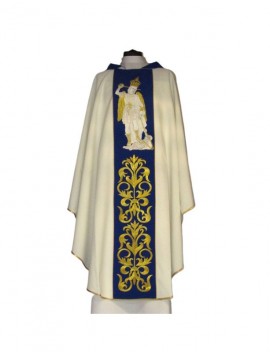
Chasuble with saints
A chasuble with a saint is a liturgical vestment worn by clergy, primarily during the celebration of the Eucharist, that features the image or symbol of a specific saint embroidered or woven into the fabric. This isn’t just about decoration. It’s a powerful way to honor the saints, connect the congregation to their stories, and visually reinforce the values and virtues they represent.
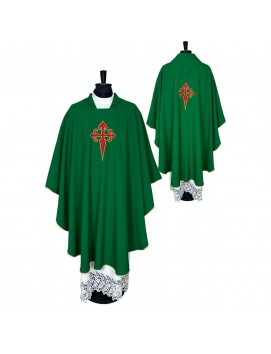
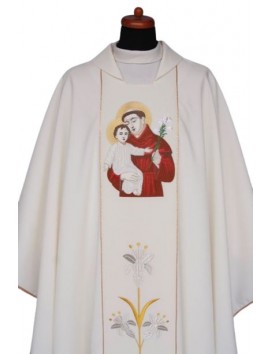
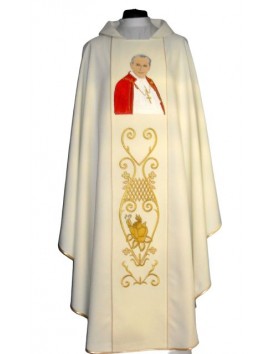
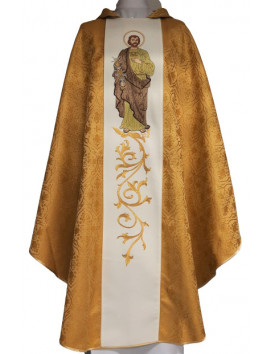
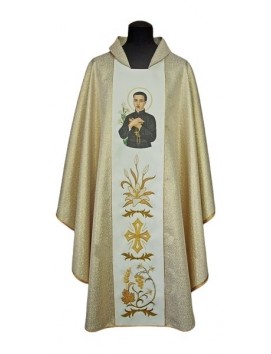
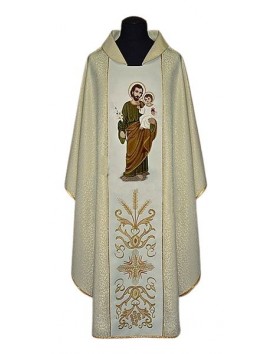
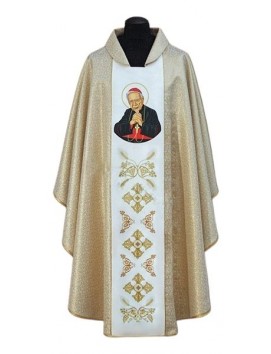
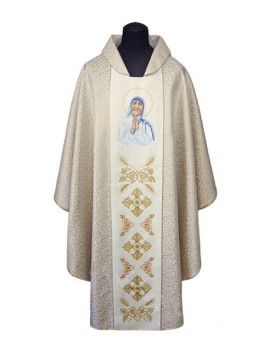
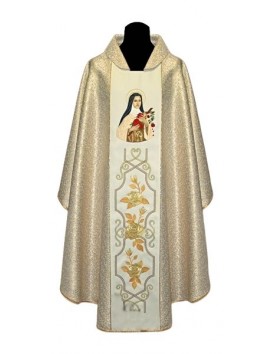
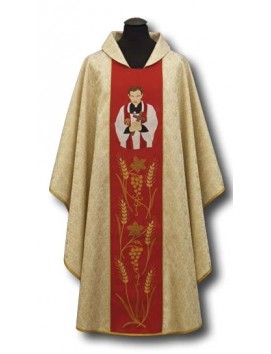
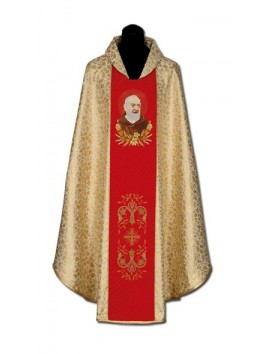
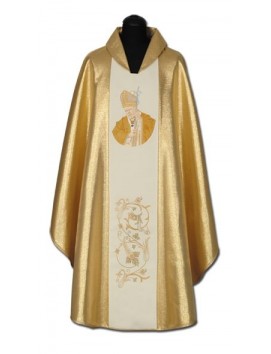
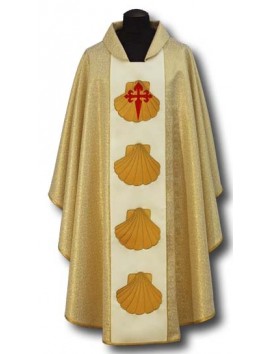
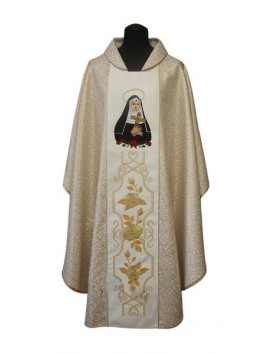
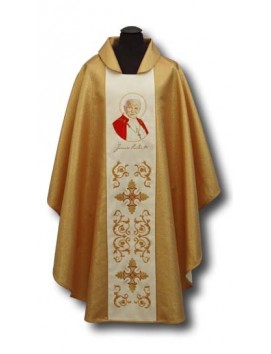
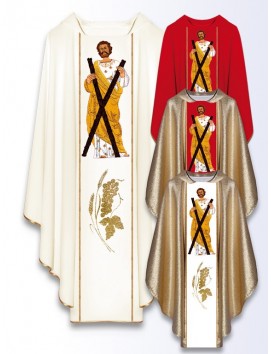
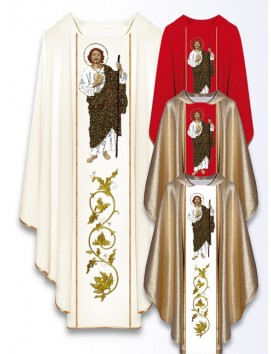
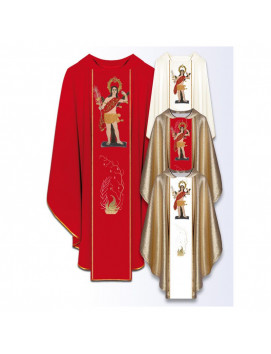
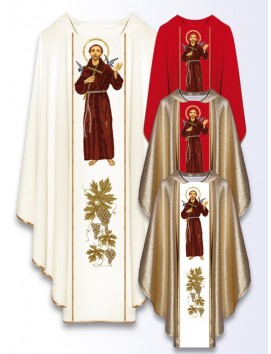
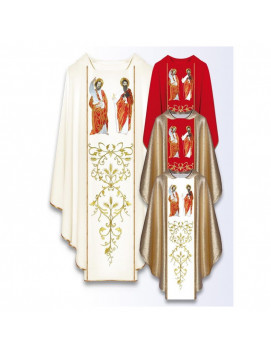
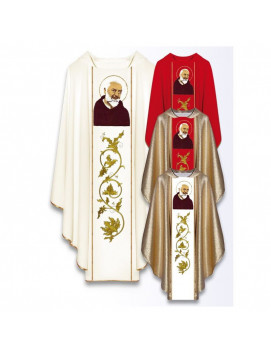
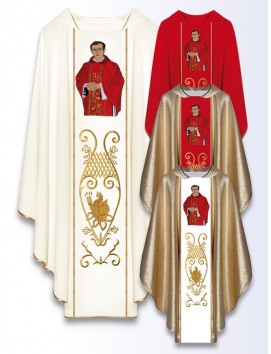
Which saints are most commonly depicted on chasubles?
When it comes to chasubles, certain saints appear again and again, each for their unique impact on the Church and their deep connection to Catholic devotion. Here are the most commonly depicted saints on chasubles and why they matter:
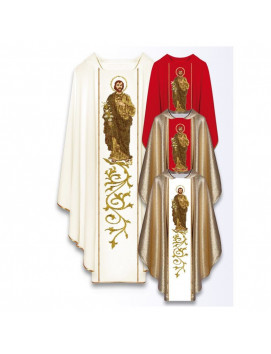
1. St. Joseph
Patron of the Universal Church, fathers, and workers.
Often shown with lilies (purity) or carpenter’s tools.
A favorite for parishes dedicated to St. Joseph or for celebrating his feast days.
2. St. John Paul II
Modern saint and beloved pope.
Recognizable for his papal vestments and gentle expression.
Frequently chosen for chasubles in Poland and worldwide, especially for youth and evangelization events.
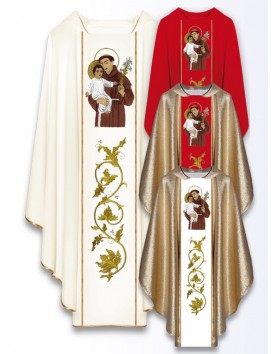
3. St. Anthony of Padua
Known as the miracle worker and patron of lost things.
Usually depicted holding the Christ Child or a lily.
Popular for his universal appeal and powerful intercession.
4. St. Therese of Lisieux (The Little Flower)
Patroness of missions and “doing small things with great love.”
Depicted with roses and a serene, youthful face.
A common choice for chasubles in parishes with a strong devotion to her “little way”.
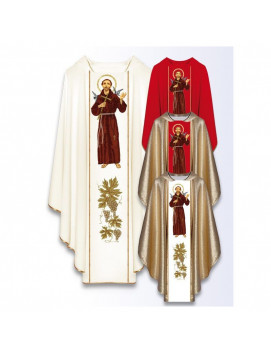
5. St. Francis of Assisi
Patron of animals, ecology, and peace.
Shown in a brown habit, often with birds or animals.
His humility and love for creation make him a popular saint for vestments.
6. St. Faustina Kowalska
Apostle of Divine Mercy.
Typically shown in her nun’s habit, sometimes with the Divine Mercy image.
Increasingly featured on chasubles, especially for Divine Mercy Sunday.
7. St. Clare of Assisi
Founder of the Poor Clares and companion of St. Francis.
Depicted with a monstrance or a lamp.
Her devotion and contemplative life inspire many communities.
8. St. Padre Pio
Modern mystic and stigmatist.
Shown in Capuchin habit, sometimes with stigmata.
Revered for his miracles and spiritual wisdom.
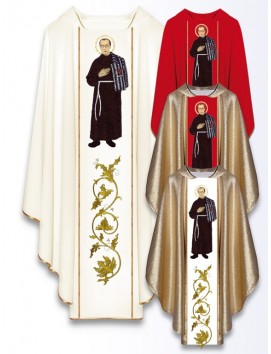
9. St. Maximilian Kolbe
Martyr of charity and patron of the media.
Often depicted with a Franciscan habit and glasses.
His sacrifice and courage make him a powerful symbol on chasubles.
10. St. Teresa of Calcutta (Mother Teresa)
Known for her work with the poor and dying.
Depicted in her blue-bordered sari.
Her compassion and service inspire many clergy and faithful.
11. St. Ambrose, St. Stanislaus Kostka, St. Nicholas, St. Rita, St. Anna, and St. James
These saints are also frequently featured, especially in regions where they are patrons or have strong local devotion.
12. Marian Chasubles
The Blessed Virgin Mary, under titles like “Mother of God Immaculate,” “Our Lady of Częstochowa,” and “Our Lady of Guadalupe,” is one of the most common figures on chasubles worldwide.
Why Are These Saints So Popular on Chasubles?
Universal Appeal: These saints are recognized and loved across cultures and countries.
Patronage: Many are patrons of parishes, professions, or causes, making them especially meaningful for specific communities.
Symbolism: Each saint’s image carries powerful symbols - lilies, roses, crosses, or specific attire - that communicate their virtues and story at a glance.
Liturgical Relevance: Their feast days and stories are woven into the liturgical calendar, making their depiction on chasubles both practical and inspiring.
How do I choose the right saint for a chasuble?
Choosing the correct saint for a chasuble is about blending symbolism, tradition, personal connection, and liturgical relevance. Here’s how to make the best choice:
1. Consider the Liturgical Context and Celebration
Match the Saint to the Occasion: If the chasuble is for a specific feast day, celebration, or parish event, choose a saint whose life or patronage aligns with the theme. For example, St. Joseph for a workers’ Mass, St. Anthony for a parish named in his honor, or a Marian image for Marian feasts.
Liturgical Colors Matter: The color of the chasuble should correspond to the saint’s feast. White for confessors and virgins, red for martyrs, green for ordinary time, and so on.
2. Reflect Your Community or Parish Identity
Patron Saint of the Parish: Many churches are dedicated to a specific saint. Featuring your parish’s patron on a chasuble strengthens community identity and devotion.
Regional or National Saints: Consider saints that are significant in your country or region. For example, St. Patrick in Ireland, St. Joan of Arc in France, or St. Francis in Italy.
3. Connect to Personal or Ministerial Mission
Profession or Ministry: Choose a saint who is a patron of your profession or ministry. St. Luke for doctors, St. Cecilia for musicians, St. Michael for police and military, or St. John Paul II for teachers and youth ministers.
Personal Devotion: If the chasuble is a gift or for personal use, select a saint whose story, virtues, or mission resonates with you or the recipient.
4. Symbolism and Aesthetics
Saint’s Symbols: The right saint should be depicted with symbols that are easily recognized and meaningful, like lilies for St. Joseph, roses for St. Thérèse, or keys for St. Peter.
Harmonize with Church Style: The design and imagery should fit your church-simple's simple architectural and artistic style for Romanesque, ornate for Baroque, etc.
5. Practical Tips for Choosing the Right Saint
Consult Your Community: Ask parishioners or clergy for input, especially if the chasuble will be used for public celebrations.
Check the Liturgical Calendar: Make sure the saint’s feast is celebrated in your local or universal calendar.
Work with Experienced Artisans: If you want custom embroidery, consult a vestment maker who understands liturgical norms and artistic tradition.
Quick Checklist: How to Choose the Right Saint for a Chasuble
Is the chasuble for a specific feast, parish, or ministry?
Does your parish have a patron saint or a strong local devotion?
Is there a saint connected to your profession or personal journey?
Are the saint’s symbols visually clear and liturgically appropriate?
Does the design fit your church’s style and the vestment’s color requirements?
Have you consulted your community or an expert in sacred art?
What materials and embroidery techniques are used for chasubles with saints?
High-Quality Materials for Chasubles with Saints
Velvet, Damask, and Brocade: These rich, textured fabrics are classic choices for chasubles with saints. Velvet brings depth and luxury, while damask and brocade offer intricate woven patterns that complement detailed embroidery.
Silk: Silk is the gold standard for elegance and tradition. It’s used for its sheen, drape, and ability to showcase vibrant colors, perfect for highlighting saintly images.
Wool and Wool Blends: Wool is durable, resists wrinkles, and is great for formal or traditional chasubles. A polyester or viscose blend adds strength and makes the chasuble lighter and easier to care for.
Linen: Lightweight and breathable, linen chasubles are ideal for warmer climates or summer use. Linen is often chosen for its comfort and natural feel, though it requires more maintenance.
Polyester and Modern Blends: Polyester is affordable, wrinkle-resistant, and easy to maintain. Many chasubles today use blends like poly/viscose or poly/cotton for a balance of tradition, comfort, and practicality.
Embroidery Techniques for Chasubles with Saints
Hand Embroidery: The most prestigious method, hand embroidery uses silk, cotton, or metallic threads to create detailed, saintly images and symbols. Techniques include satin stitch, stem stitch, chain stitch, and cross-stitch. Hand-embroidered chasubles with saints are true works of art, each one unique and crafted with devotion.
Gold work and Silver work: Embroidery with gold or silver threads adds richness and a sense of the sacred. Gold work is often used in saintly images for halos, borders, and highlights, giving the chasuble a regal, luminous effect.
Needlepainting (Thread Painting): This advanced technique uses fine, shaded stitches to create lifelike portraits of saints. Needlepainting can achieve incredible realism and depth, making the saint’s image truly stand out.
Machine Embroidery: Modern chasubles often feature machine embroidery for efficiency and consistency. Computerized embroidery machines can create complex and precise images, making it possible to produce detailed, saintly figures at a lower cost and faster turnaround.
Appliqué: Sometimes, saintly images are created separately and then sewn onto the chasuble as appliqués. This allows for more intricate or three-dimensional effects and can combine different fabrics and textures for added visual interest.
Key Details and Finishing Touches
Orphrey Bands: Often embroidered, decorative bands run down the chasuble's front and back and frame the saint’s image. These can be made from brocade, silk, or velvet and are a hallmark of high-quality vestments.
Medallions and Rosettes: The saint’s image may be set within a medallion or rosette, surrounded by floral or symbolic motifs, further enhancing the visual impact.
Liturgical Colors: Chasubles with saints are available in all liturgical colors - white, red, green, purple, gold- to match the Church calendar and specific feasts.
Quick Tips for Choosing Materials and Embroidery for Chasubles with Saints
For maximum elegance and tradition, look for silk, velvet, damask, or brocade with hand embroidery and gold work.
For durability and easy care, choose modern blends with machine embroidery.
For summer or warm climates, linen is a smart, breathable option.
Always check for high-quality finishing-lined interiors, reinforced seams, and detailed orphrey bands.
When should a chasuble with a saint be worn during the liturgical year?
Chasubles with saints are not just beautiful vestments - they carry deep liturgical and spiritual significance, and their use is tied closely to the Church’s calendar and celebrations. Let me break down exactly when and why you’d wear a chasuble with a saint during the liturgical year.
When Should a Chasuble with Saint Be Worn During the Liturgical Year?
1. Feast Days of the Depicted Saint
The most evident and essential time to wear a chasuble with a saint’s image is on that saint’s feast day. For example:
A chasuble with St. Joseph’s image is perfect for March 19th (St. Joseph’s Day) or May 1st (Feast of St. Joseph the Worker).
A chasuble featuring St. Thérèse of Lisieux is ideal for October 1st, her feast day.
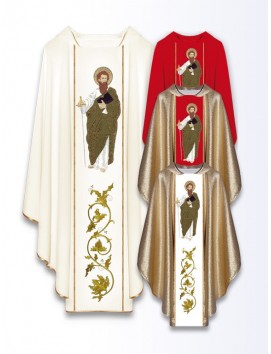
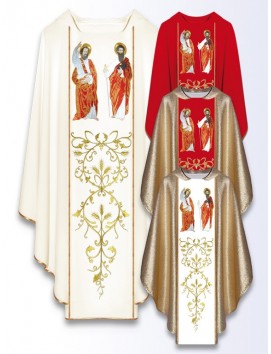
Saints Peter and Paul chasubles shine on June 29th, their solemn feast.
Wearing a chasuble with the saint on their feast day visually highlights their importance and invites the faithful to reflect on their life and virtues.
2. Parish Patronal Feasts
If your parish is named after a particular saint, wearing a chasuble featuring that saint during the parish’s patronal feast is a powerful way to connect the community’s identity with its spiritual heritage. This might happen once a year or on special anniversaries.
3. Special Liturgical Celebrations and Solemnities
Chasubles with saints are also fitting for solemn Masses, ordinations, or special celebrations where the saint’s example or patronage is especially relevant. For instance:
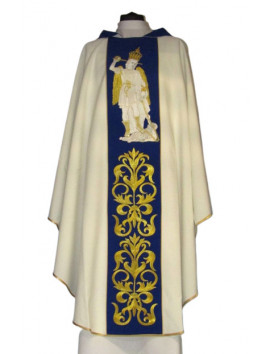
A St. Michael chasuble during a Mass honoring the Archangels.
A St. Anthony chasuble during a blessing of lost items or a community event, invoking his intercession.
4. Marian and Saintly Devotions
Some chasubles depict saints closely linked to Marian devotion or popular devotions, like St. John Paul II or St. Faustina Kowalska. These can be worn during Marian feasts or Divine Mercy Sunday to deepen the spiritual atmosphere.
5. Liturgical Colors and Seasons
While the saint’s image is central, the chasuble’s color must also correspond to the liturgical season or celebration:
White or Gold: Used for saints who were not martyrs, symbolizing purity and joy (e.g., St. Joseph, St. Thérèse).
Red: For martyrs and apostles, symbolizing their sacrifice (e.g., St. Peter, St. Paul).
Green: Ordinary Time, when no specific feast is celebrated.
Purple: Advent and Lent, times of penance and preparation.
Black or Violet: Occasionally for funerals or All Souls’ Day.
6. Special Occasions and Personal Devotion
Sometimes, priests wear chasubles with saints for personal devotion or when celebrating Masses connected to a particular ministry or cause related to that saint. For example, a priest devoted to St. Francis might wear a Franciscan-themed chasuble during community outreach events.
Quick Summary: When to Wear a Chasuble with Saint
On the feast day of the saint depicted.
During the parish patronal feast or anniversary.
At special solemnities or liturgical celebrations linked to the saint.
For devotions connected to the saint or related spiritual themes.
Always matching the liturgical color to the season or feast.
How do I care for and clean a chasuble with saint embroidery?
1. Always Check the Care Label First
Every chasuble with saint embroidery comes with a care label. Please read it before you do anything else. The manufacturer’s instructions are your best guide for safe cleaning and storage.
2. Spot Clean Whenever Possible
Prevention is key. Could you try to avoid soiling your chasuble in the first place? If you do get a small stain, gently blot (don’t rub) the area with a soft cloth and cold water. Use a mild detergent for tougher stains, but avoid bleach or harsh chemicals that can damage the fabric and embroidery.
3. Hand Wash for Delicate Embroidery
If your chasuble with saint embroidery needs a thorough cleaning and the care label allows it, hand wash in cool or lukewarm water with a mild detergent. Don’t soak it for too long, and never scrub the embroidery.
If you must use a washing machine, select the delicate cycle, use cold water, and place the chasuble in a laundry bag to protect the embroidery.
4. Dry Carefully - Never Under Direct Sunlight
After washing, avoid twisting or wringing out the chasuble. Instead, lay it flat on a clean towel and gently press out excess water, or roll it in a towel and press lightly.
Air dry the chasuble in a shaded, well-ventilated area. Direct sunlight can fade both the fabric and the embroidery threads.
5. Iron with Caution
If you need ironing, you can use a low-heat setting. Always place a pressing cloth between the iron and the embroidery, or iron the chasuble inside between two pieces to protect the threads and fabric.
6. Store Properly to Prevent Damage
Hang your chasuble on a wide, fabric-covered hanger to maintain its shape. Use a breathable garment bag to protect it from dust and moisture.
Store in a cool, dry, dark place - never in direct sunlight, and avoid humid environments to prevent mildew.
If you must store it folded, line drawers with soft fabric and avoid stacking heavy items on top.
7. Professional Cleaning for Intricate or Heavily Embroidered Chasubles
Consider professional dry cleaning for chasubles with extensive or delicate saint embroidery, but only with cleaners experienced in handling liturgical vestments. Please always let them know about the embroidery and fabric type.
8. Regular Maintenance and Inspection
Check your chasuble regularly for loose threads, snags, or small stains. Address any minor repairs promptly to prevent bigger problems down the line.
Are chasubles with saints suitable as gifts for clergy or collectors?
Why Chasubles with Saints Make Great Gifts
Deep Spiritual Significance: Chasubles embroidered or printed with saints connect the wearer and the community to the Church's rich heritage. They serve as a visual reminder of the saint’s virtues and intercession, making the gift spiritually powerful.
Symbol of Honor and Respect: Giving a chasuble with a saint’s image honors the clergy’s vocation and dedication. It’s a gift, acknowledging their role in leading the faithful and their devotion.
Collector’s Appeal: For collectors, these chasubles are treasured pieces of liturgical art. Many feature intricate hand embroidery, high-quality fabrics like silk or damask, and detailed saint imagery, making them valuable and unique additions.
Versatility: Available in various styles - Gothic, Roman, semi-Gothic- and colors to match the liturgical calendar, chasubles with saints fit many tastes and liturgical needs.
When to Gift a Chasuble with Saint
Ordination or Anniversary: Marking milestones in a priest’s ministry with a chasuble featuring their patron saint or a saint they admire adds personal meaning.
Feast Days and Special Celebrations: Presenting a chasuble before a saint’s feast day or a parish celebration creates a timely and relevant gift.
Collector’s Milestones: A chasuble with exquisite saint embroidery or rare designs is a standout addition for those who collect liturgical vestments.
What to Consider Before Buying
Style and Size: Make sure you know the recipient’s preferred chasuble style (Gothic, Roman, etc.) and size for comfort and liturgical appropriateness.
Quality of Materials and Embroidery: Choose chasubles made from high-quality fabrics like silk, damask, or brocade with detailed, durable embroidery. Hand-embroidered saints add extra value.
Liturgical Colors: Ensure the chasuble’s color matches the saint’s feast day or the recipient’s liturgical usage.
Customization Options: Many vendors offer personalized embroidery or dedications, making your gift even more special.
Care Instructions: Include guidance on caring for and cleaning the chasuble to preserve its beauty and longevity.
See all chasubles with saints and other designs in the full collection.