
No products
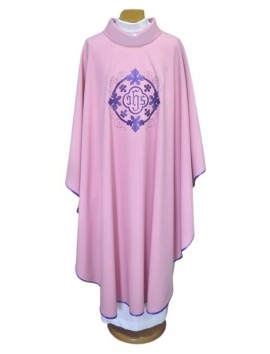
Pink chasubles
A pink chasuble is a special liturgical garment Catholic priests wear during Mass. It’s not your everyday vestment—it’s reserved for two unique Sundays each year: Gaudete Sunday (the third Sunday of Advent) and Laetare Sunday (the fourth Sunday of Lent). These are the only times you’ll see pink (technically called “rose”) break up the usual liturgical colors.
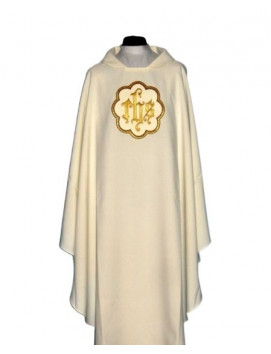
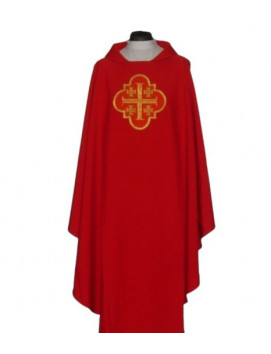
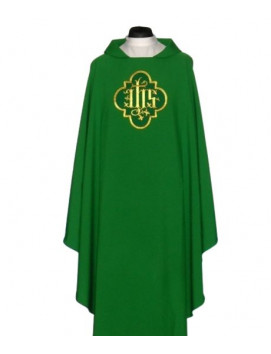

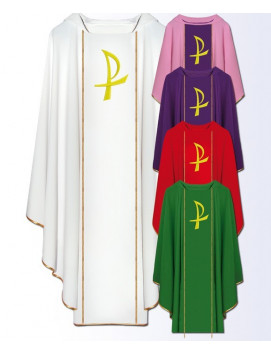
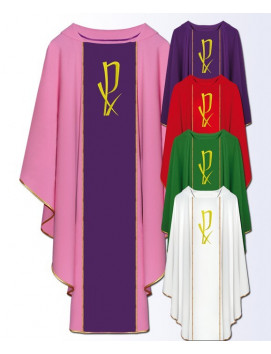
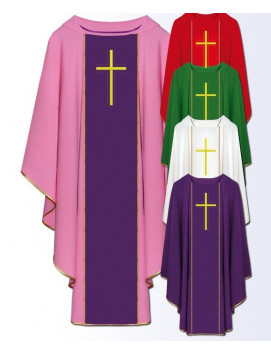
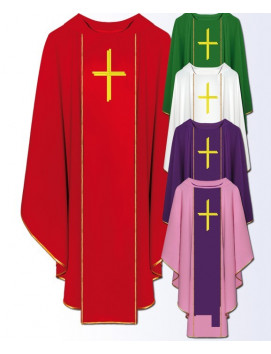
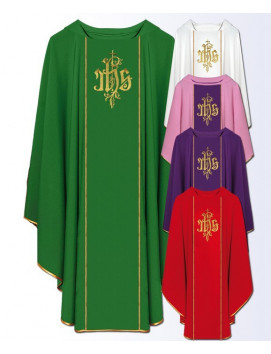
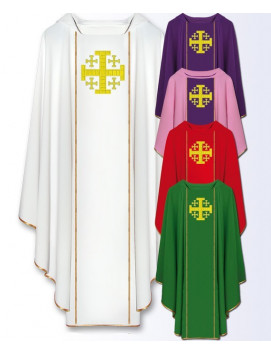
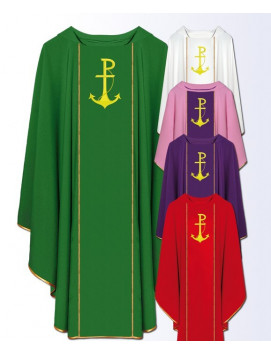
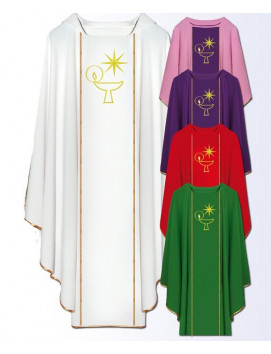
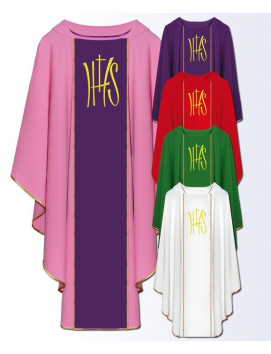
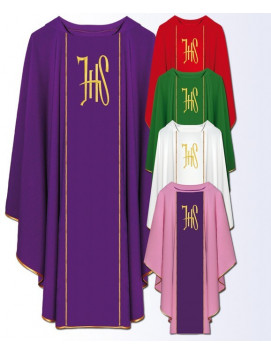
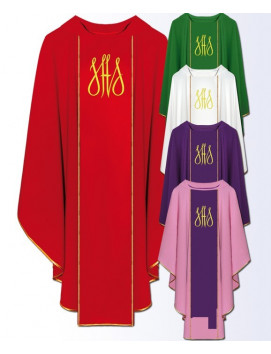
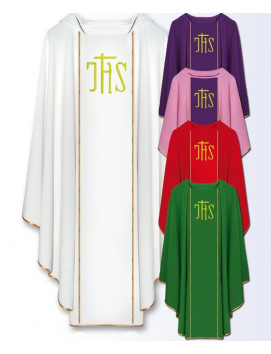
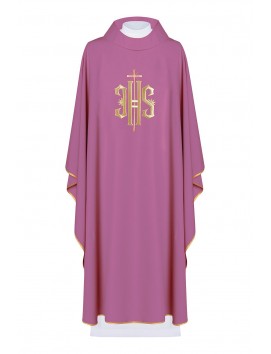
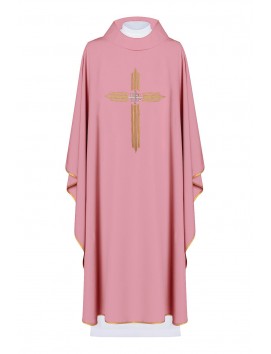
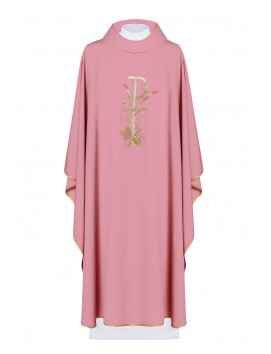
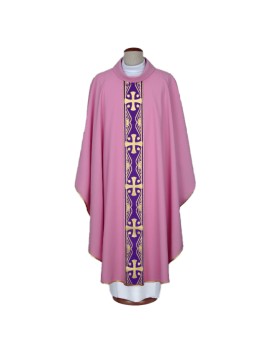
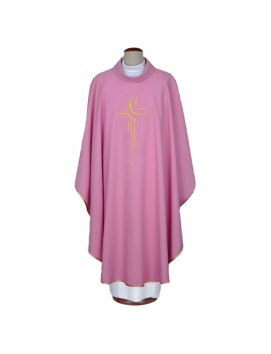

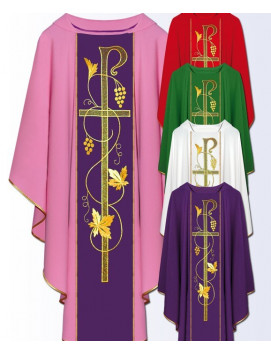
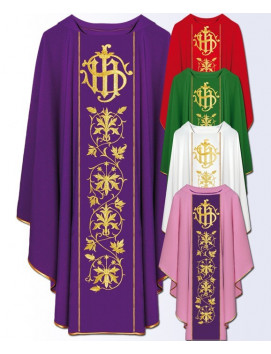


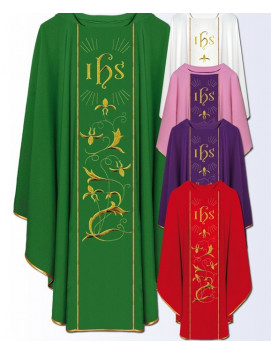

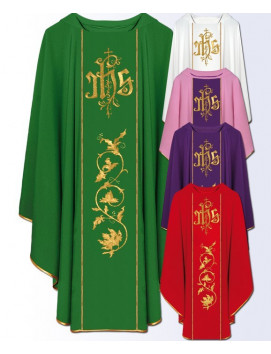
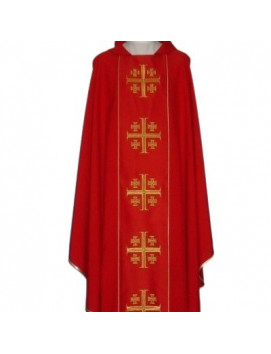
What is the meaning and symbolism behind the color pink/rose in the liturgy?
Pink—technically called “rose” in the liturgy—isn’t just a random pick. It’s loaded with history, symbolism, and purpose. Here’s what you need to know:
Why Rose, Not Pink?
Rose is the official term. The Church doesn’t list pink as a liturgical color. Rose is rooted in history, tradition, and the practical availability of dyes back in the day. Pink as we know it didn’t even exist until artificial dyes came along in the 19th century.
Rose is complex. It’s not just red plus white. Rose is a nuanced blend—think of the subtlety and depth of a real rose flower. It’s brighter than purple but not as bold as red, symbolizing a unique moment in the liturgical calendar.
When Is Rose Worn?
Gaudete Sunday (Advent): Third Sunday of Advent.
Laetare Sunday (Lent): Fourth Sunday of Lent.
These days, rose liturgical vestment marks a “joyful pit stop” in otherwise somber seasons.
What Does Rose Symbolize?
Joy and Hope: Rose vestments are a visual shout-out that joy is coming. They break up the penitential vibe of Advent and Lent, signaling that the end—of—Christmas or Easter is near.
Lightening of Penance: Rose is purple, lit with hope. It’s a sign that the darkness is lifting, and celebration is on the horizon.
Love and Anticipation: Rose reminds the faithful of God’s love and the anticipation of Christ’s birth or resurrection.
Positivity and Serenity: In color psychology, rose brings a sense of positivity and calm, which is precisely what these Sundays are about—taking a breath, feeling uplifted, and remembering the bigger picture.
Historical and Scriptural Roots
Ancient Tradition: The use of rose dates back to the 11th century. Popes would bless a golden rose on Laetare Sunday, symbolizing joy and Christ’s triumph even in suffering.
Scripture Connection: Both “Gaudete” and “Laetare” mean “rejoice.” The message is clear: there’s a reason to celebrate even in tough times.
Why Not Just Use Pink?
Depth of Meaning: Pink is a modern, simple mix. Rose is ancient, complex, and loaded with meaning, just like the joy it represents. It’s not about cheap happiness but deep, lasting joy rooted in faith.
Liturgical Precision: The Church is intentional with every color. Rose is a rare, powerful symbol, used only twice a year to make its message unforgettable.
On which days are pink chasubles used, and why?
Pink chasubles are worn on just two days each year:
Gaudete Sunday: This is the third Sunday of Advent.
Laetare Sunday: This is Lent's fourth Sunday.
That’s it. Twice a year. That’s why you rarely see them.
Why Are Pink Chasubles Used on These Days?
Here’s the deal:
Both Advent and Lent are seasons of penance. The usual color is purple, which signals preparation, reflection, and even a bit of spiritual heaviness.
Gaudete and Laetare Sundays break the pattern. These days, the Church hits pause on the somber mood and injects a shot of joy and hope.
Pink (rose) chasubles are the visual cue. They tell everyone: “Rejoice! The big celebration—Christmas or Easter—is almost here.” The word “Gaudete” literally means “rejoice” in Latin, and so does “Laetare”.
The Deeper Symbolism
Joy in the midst of penance: Pink chasubles symbolize joy and hope, a lightening of the penitential purple. They’re a reminder that even when life is tough, there’s a reason to look forward and celebrate.
Anticipation: These Sundays are like a halftime break, a moment to catch your breath and remember why you’re preparing in the first place.
Quick Facts About Pink Chasubles
Not just any pink: The official term is “rose,” and it’s a lighter shade of violet, not bubblegum pink.
Used only twice a year: That’s what makes them special and instantly recognizable.
Symbolizes joy and hope: A burst of optimism in the middle of serious seasons.
Why Does This Matter?
If you’re in the pews and see a pink chasuble, now you know: it’s not a fashion statement. It’s a bold, ancient tradition that shouts, “Joy is coming!” The Church wants you to feel the approaching feast's anticipation, hope, and excitement.
Why are pink chasubles worn only on certain Sundays?
Pink chasubles are reserved for Gaudete Sunday (the third Sunday of Advent) and Laetare Sunday (the fourth Sunday of Lent). These aren’t random picks—they’re intentional, rooted in centuries of tradition, and packed with meaning.
Here’s Why:
Both Advent and Lent are seasons of penance. Most of the time, you’ll see purple vestments, signaling preparation, reflection, and a bit of spiritual heaviness.
Gaudete and Laetare Sundays are “breaks” in these seasons. On these days, the Church tells everyone: “Rejoice! The end is near, and the feast is coming.” The Latin words “Gaudete” and “Laetare” both mean “rejoice”.
Pink (rose) chasubles are the visual cue. They’re not just for show. The lighter color stands out, signaling a pause in the somber mood and a burst of hope and joy.
They symbolize joy and anticipation. Pink chasubles remind us that there’s a reason to celebrate even during tough times—the big feasts of Christmas and Easter are just around the corner.
Why Not Use Pink More Often?
It’s about contrast. If you wore pink every week, it would lose its punch. The rarity of rose vestments makes their appearance memorable and instantly meaningful.
Liturgical tradition matters. The Church uses color to teach, signal, and help people feel the rhythm of the seasons. Rose is a lighter shade of violet, not just any pink, and it’s chosen to reflect joy without losing the spirit of penance.
Is there a difference between pink and rose chasubles?
Rose vs. Pink: What’s the Real Difference?
Liturgical Tradition: The Church doesn’t list pink as a liturgical color. Rose is the term you’ll find in the rubrics and official documents. Pink, as we know it today, didn’t even exist as a common dye until the 17th century, and didn’t catch on until artificial dyes became widespread in the 19th and 20th centuries.
Color Composition: Rose is a lighter, joyful version of violet (purple), created by mixing red, white, and sometimes a hint of blue. Pink is just red and white—no blue, no complexity. Rose is meant to be a tempered, soft shade that lightens the penitential purple, symbolizing joy and hope during Advent and Lent.
Symbolism: Rose chasubles symbolize a break in penance, a moment of joy and hope as Christmas or Easter approaches. On the other hand, pink is not an official liturgical color and doesn’t carry the same depth of meaning in this context.
What About the Shades?
Rose: Consider it a lightened violet, sometimes called “dusty rose” or “rosacea.” It’s not bubblegum pink. The shade can vary, but it should always reflect a joyful, yet dignified, tone.
Pink: If it looks too bright, pastel, or like something you’d see at a birthday party, it’s probably not what the Church intends. Rose should never be garish or distracting—it’s about subtlety and symbolic richness.
Why Does This Matter?
Liturgical Precision: Using the right color isn’t just about aesthetics—it’s about conveying the correct message. Rose vestments are rare, used only on Gaudete and Laetare Sundays, to mark a shift from penance to joy.
Visual Cue: The rose chasuble stands out as a signpost in the liturgical year, reminding everyone that, even in the middle of sacrifice, joy is on the horizon.
What are the historical origins of the pink/rose chasuble?
The pink or rose chasuble didn’t just appear out of nowhere. Its roots run deep in Church history, tied to symbolism, practicality, and centuries of liturgical development.
Ancient Beginnings: From Cloak to Chasuble
Roman Roots: The chasuble itself started as a typical Roman outer garment—a cloak called a paenula or planeta. By the 7th century, it became known as the chasuble or “casula,” meaning “little house,” because it covered the whole body like a tent.
Liturgical Colors: For centuries, all vestments were white. Color entered the liturgical scene gradually, with red, green, black, and purple gaining prominence by the 12th and 13th centuries.
The Rise of Rose: Symbolism and Papal Influence
Pope Innocent III (early 1200s): He was pivotal in codifying liturgical colors. He linked Rose to Laetare Sunday, when the Pope blessed a golden rose—a symbol of joy and hope as Easter approached.
Golden Rose Tradition: This papal blessing became so central that rose vestments were adopted to match the day's festive mood. The rose symbolized Christ’s joy and triumph while suffering, connecting the color to Advent (Gaudete Sunday) and Lent (Laetare Sunday).
Standardization: The 1570 Roman Missal
Pope Pius V’s Missal: By the late 16th century, the Roman Missal officially set the rules: green for Ordinary Time, white for feasts, red for martyrs, purple for penance, black for funerals, and rose for Gaudete and Laetare Sundays. This was when rose became a fixed part of the liturgical palette.
Why Rose, Not Pink? Rose is a lightened violet, symbolizing joy breaking through penance. As we know it today, pink wasn’t even possible until modern dyes. Rose was chosen to stand out, but not clash with the penitential purple.
Theological and Emotional Symbolism
Joy in the Midst of Penance: Rose vestments are a visual cue that pleasure is on the horizon even in seasons of waiting and sacrifice. They’re a reminder that after Advent’s waiting comes Christmas, and after Lent’s penance comes Easter.
Rare and Special: Used only twice a year, these vestments mark a “pause” for rejoicing, making their appearance instantly meaningful.
What materials and designs are available for pink chasubles?
Top Materials Used for Pink Chasubles
Polyester: The go-to for durability and low maintenance. Polyester pink chasubles are wrinkle-resistant, affordable, and easy to care for—perfect for busy parishes or anyone who wants a vestment that lasts without fuss.
Silk: If you want luxury, silk is the answer. Silk pink chasubles have a rich sheen and drape beautifully, making them ideal for special occasions. They’re more delicate and require careful cleaning, but the visual impact is unmatched.
Wool: Wool chasubles offer warmth, structure, and a traditional look. Fine-suiting wool, wool crepe, or gabardine is popular for a formal and classic feel.
Jacquard and Brocade: These fabrics feature woven patterns—think floral motifs, crosses, or symbolic designs. Jacquard and brocade pink chasubles are often chosen for their elegance and depth, with intricate textures that stand out in any liturgical setting.
Linen: While less common, linen is breathable and lightweight, making it a good option for warmer climates. Just know it wrinkles more easily and needs extra care.
Blends (Viscose, Cotton, Synthetic): Many modern pink chasubles use blends for the best of both worlds—comfort, durability, and affordability.
Popular Designs for Pink Chasubles
Traditional Styles: Classic cuts with minimal decoration, focusing on clean lines and subtle elegance. Perfect if you want to keep the focus on the liturgy.
Ornate Embroidery: Many pink chasubles feature hand or machine embroidery—think gold thread, crosses, grapes, wheat, or Marian symbols. These designs add layers of meaning and visual richness.
Floral and Nature Motifs: Jacquard and brocade fabrics often showcase roses, vines, or ears of wheat, tying the vestment’s look to themes of joy, hope, and renewal.
Gradient and Color Effects: Some modern pink chasubles use thermosublimation or dye techniques to create gradients from ecru to pink, adding a contemporary twist to the traditional palette.
Gold Trim and Accents: Gold borders, orphrey bands, and fringe are common, giving the chasuble a festive, celebratory look—perfect for Gaudete and Laetare Sundays.
Customizable Options: Many suppliers offer custom embroidery, sizing, and fabric choices, so you can design a pink chasuble that fits your church’s unique style and tradition.
Quick Tips for Choosing the Right Pink Chasuble
Consider the liturgical setting: Go ornate for big celebrations or classic for everyday reverence.
Think about climate and comfort: Silk and wool for cool churches, linen or polyester blends for warmer spaces.
Match your budget: Polyester and blends are affordable; silk and brocade are investment pieces.
Look for quality craftsmanship: Hand embroidery and premium fabrics make a difference in appearance and durability.
How should I choose the right pink chasuble for my church or personal use?
1. Match the Liturgical Season and Symbolism
Pink (or rose) chasubles are for Gaudete Sunday in Advent and Laetare Sunday in Lent. Their use is rooted in tradition and signals a shift from penance to joy and hope.
Make sure the shade of pink aligns with liturgical norms—rose is the official color, not bright or pastel pink.
2. Prioritize High-Quality Materials
Please be sure to look for fabrics that balance comfort and durability. Popular options include brocade, velvet, silk, linen, and premium polyester.
Lightweight, breathable materials are best for longer services, while richer fabrics like silk or brocade add a sense of occasion.
3. Focus on Design, Motif, and Craftsmanship
Choose a design that fits your church’s aesthetic—classic, modern, ornate, or understated.
Embroidery, appliqués, and symbolic motifs (crosses, lilies, wheat) can enhance the vestment’s meaning and beauty.
Pay attention to neat, durable stitching and finishing for longevity.
4. Ensure the Right Fit and Comfort
The chasuble should not restrict movement. It must fit the priest’s height and build, so consider custom sizing if required.
Comfort is key—ensure the vestment allows free movement and doesn’t distract from the liturgy.
5. Harmonize with Church Decor
The pink chasuble should complement your church’s interior and other liturgical items for a cohesive look.
6. Set Your Budget and Balance Quality
Prices vary based on fabric, design, and brand. Set a clear budget but prioritize quality and durability for long-term value.
Investing in a well-made chasuble pays off over the years of use.
7. Buy from Trusted Sellers and Consider Customization
You can choose a reputable supplier known for quality craftsmanship and reliable service.
Many vendors offer custom embroidery, sizing, and design options to match your needs.
Quick Checklist for Choosing the Right Pink Chasuble
Liturgical appropriateness: Is it the right shade and used for the right Sundays?
Material quality: Is it comfortable, durable, and suitable for your climate?
Design and motif: Does it fit your church’s style and add spiritual value?
Fit and comfort: Is it tailored for the clergy's build?
Budget: Are you getting the best quality within your price range?
Supplier reputation: Are you buying from a trusted, experienced vendor?
How do I care for and store a pink chasuble to ensure its longevity?
1. Follow the Care Label—Every Time
Always check the care instructions that come with your pink chasuble. Different materials (silk, polyester, brocade, linen) have different needs. Don’t guess—read the label first.
2. Clean Gently and Avoid Harsh Chemicals
Hand wash with cool or lukewarm water and a mild detergent for delicate fabrics and embroidery.
If machine washing is allowed, use a gentle cycle and place the chasuble in a mesh laundry bag for extra protection.
Never use bleach or harsh chemicals—they’ll wreck the color and fibers.
Opt for professional dry cleaning or spot clean with a soft cloth and mild soap for intricate embroidery or gold thread.
3. Dry with Care
Air dry your pink chasuble away from direct sunlight to prevent fading.
You can hang it on a padded or wide hanger to keep its shape and avoid shoulder bumps.
Skip the dryer—heat can shrink or damage the fabric.
4. Iron with Caution
If ironing is needed, use a low temperature and a pressing cloth to protect embroidery and delicate fabrics.
Some fabrics are best left unironed; lay the chasuble flat and place a clean, heavy object on top overnight to remove creases.
5. Store Properly to Prevent Damage
Hang, don’t fold. Folding causes permanent creases and weakens fabric over time.
Use a breathable garment bag or cloth cover to protect from dust and moisture—never store in plastic, which traps humidity and encourages mildew.
Store in a cool, dry, dark place—sunlight fades colors, and humidity can cause mold.
Could you ensure storage is free of bugs, mice, and other pests?
6. Spot Clean Stains Immediately
If you spill anything, blot gently with cold water—don’t scrub, which can damage embroidery.
7. Regular Professional Maintenance
Have your pink chasuble professionally cleaned at least once or twice a year, especially if it’s heavily embroidered or frequently used.
Regularly check for loose threads, tears, or damaged embellishments and repair them quickly to prevent bigger issues.
8. Please don’t Eat or Drink While Wearing It
Sounds obvious, but it’s the easiest way to avoid stains and unnecessary cleaning.
Quick Checklist: How to Care for and Store a Pink Chasuble
Read and follow the care label.
Hand wash or use gentle cycle, never bleach
Air dry, avoid sunlight, and dryers.
Iron on low, use a pressing cloth.
Hang on a wide, padded hanger.
Store in a breathable garment bag in a cool, dry, dark place
Spot clean stains ASAP.
Get professional cleaning for delicate or embroidered chasubles.
Inspect and repair regularly
Browse all liturgical colours in our complete range of chasubles.