
No products

Cintures – Altar Server & Clergy Cinctures
Cinctures (also spelled cintures) are liturgical cords worn around the waist over the alb or cassock. They hold the alb and stole in place and are worn by priests, deacons, acolytes and altar servers in the liturgical colour of the day. Our cinctures are handmade in Poland from braided cotton and cotton cord, in white, red, green, purple and gold. Choose a 3 m (118.1 in) or 4 m (157.5 in) length for altar servers and clergy, or a priest's cincture in the colour that matches the season.

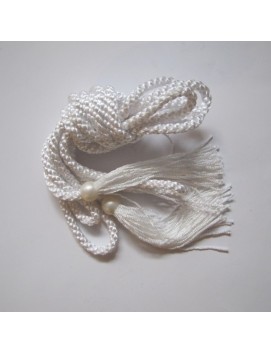
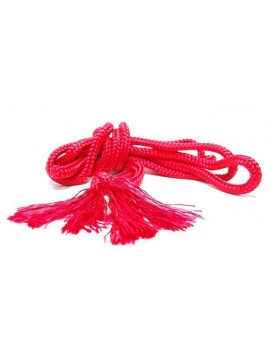
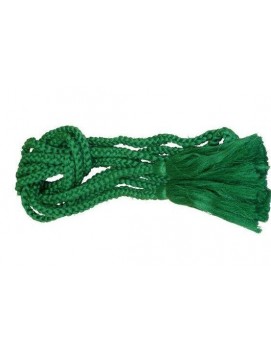
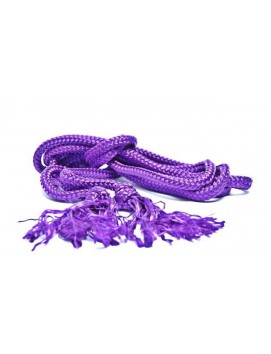
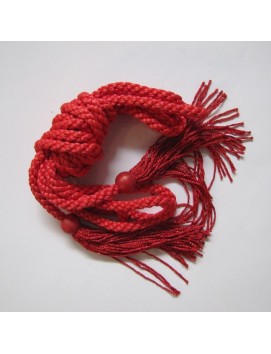
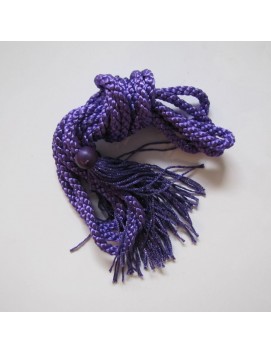
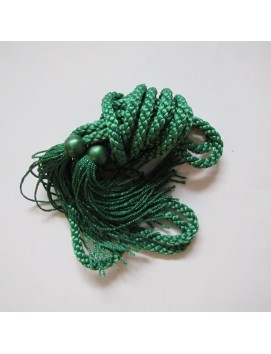
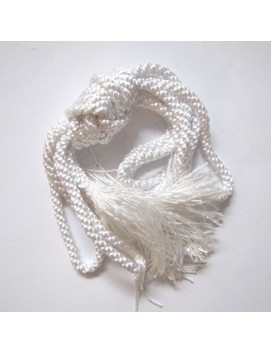
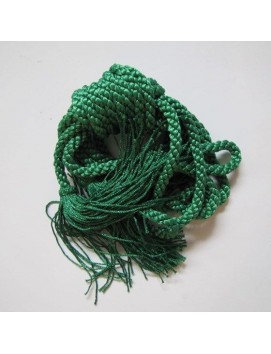
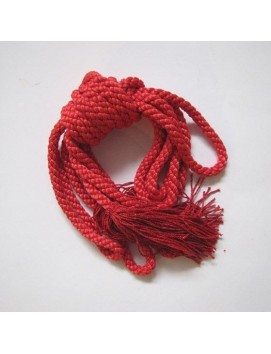
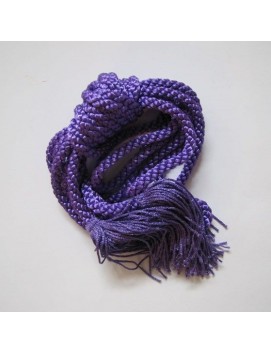
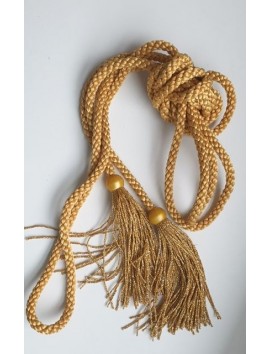
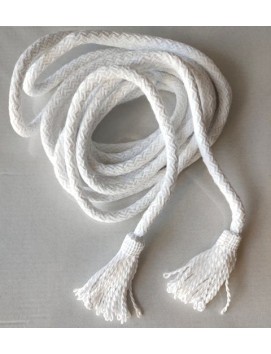
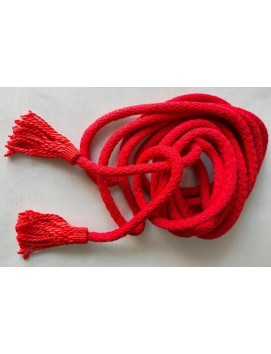
A cincture is one of the simplest and most practical liturgical vestments: a cord or band tied around the waist over the alb or cassock. It keeps the alb closed, holds the stole in place and completes the vesting of priests, deacons, acolytes and altar servers. The articles below explain what a cincture is, how it is used, how to tie it and how to choose the right length and color.
What Is a Cincture? Definition and Liturgical Role
The word cincture comes from the Latin cingulum, meaning a belt or girdle. In liturgical use it is a cord, rope or band worn around the waist over the alb. It is not the same garment as the stole, which is worn around the neck, or the fascia, which is a wide sash worn by bishops and some priests with choir dress. The cincture is worn by ordained clergy and by altar servers; in the Roman Catholic Church it is part of the vesting for Mass and other liturgical celebrations. It is also used in Anglican, Lutheran and Methodist traditions, with local variations in custom and terminology.
Cincture Symbolism: Chastity, Purity and Readiness
The cincture carries a practical meaning and a symbolic one. Practically, it gathers the alb at the waist so that the vestment does not impede movement. Symbolically, it is associated with chastity and purity, with discipline and self-control, and with readiness for service. The gesture of tying the cincture before Mass is a small act of preparation: the minister sets aside ordinary concerns and takes up the work of the liturgy. For altar servers, learning to tie a cincture neatly is part of learning to serve with care and attention.
Types of Cinctures: Rope, Braided, Band and Fascia
There are several common types of cincture. A rope cincture is a twisted or braided cord, usually cotton, about 1–1.5 cm thick. A braided cincture is plaited from several strands, which makes it softer and more decorative. A band cincture is a flat fabric band, often worn with choir dress. The fascia is a wider sash associated with bishops and higher prelates; it is a distinct garment with its own conventions. Our range focuses on braided cotton and cotton cord cinctures in the liturgical colors, in 3 m (118.1 in) and 4 m (157.5 in) lengths.
Cincture Colors and the Liturgical Calendar
The color of the cincture normally follows the liturgical color of the day. The table below summarizes the most common associations; local custom and the rubrics of the celebration always take precedence.
| Color | Typical use | Meaning |
|---|---|---|
| White | Christmas, Easter, feasts of the Lord and Our Lady, saints' days | Purity and joy |
| Red | Pentecost, Good Friday, Passion, feasts of martyrs | Love, sacrifice and the Holy Spirit |
| Green | Ordinary Time | Hope and growth |
| Purple | Advent and Lent | Penance and preparation |
| Rose | Gaudete and Laetare Sundays, where used | Joy in the midst of penance |
| Black | All Souls and funerals, where permitted | Mourning and prayer for the dead |
| Gold | Solemnities, often in place of white | Solemnity and glory |
Our cinctures are available in white, red, green, purple and gold. If you are unsure which color to choose, match the cincture to the chasuble or alb used for the celebration.
How to Tie a Cincture: Girth Hitch, Monk's Knot and Benedictine Knot
The most common method for altar servers is a simple hitch sometimes called a Girth Hitch. It is adjustable and easy to release after Mass.
- Find the middle of the cincture and place it at the front of the waist, over the alb.
- Bring both ends around the back and cross them.
- Bring the ends to the front and pass each end under the loop that sits at the waist.
- Pull both ends down evenly to tighten the hitch.
- Adjust the cincture so that it sits flat and the ends hang at the same length.
A monk's knot or a Benedictine knot can be used for a more decorative finish. These are decorative knots rather than a liturgical requirement; practice on a spare cord before using them at Mass. Whichever method you use, the cincture should be neat, secure and comfortable, with the ends hanging evenly.
Cincture Sizes: 72, 81, 120, 144 and 150 Inches
Cinctures are sold in several lengths. The right length depends on the wearer's height, waist size and the number of times the cord is wrapped. The table below gives the common market sizes as a reference.
| Length | Typical wearer | Notes |
|---|---|---|
| 72 in / 183 cm | Children and young altar servers | Short length, fewer wraps |
| 81 in / 206 cm | Youth and smaller adults | Common altar server size |
| 120 in / 305 cm | Adults | Approximately 3 m |
| 144 in / 366 cm | Priests and taller wearers | Approximately 4 m |
| 150 in / 381 cm | Larger or taller wearers | Check the number of wraps |
Our cinctures come in 3 m (118.1 in) and 4 m (157.5 in). The 3 m length suits most altar servers and adults; the 4 m length gives more room for taller wearers and for decorative knots. If you are between sizes, choose the longer cincture and wrap it twice.
How to Care for a Cincture
Cotton cinctures are durable but should be treated gently. Hand wash in cool water with a mild soap, do not bleach, and rinse thoroughly. Do not wring the cord; press it between towels and dry it flat, away from direct sunlight. Iron on a low setting with a cloth between the iron and the fabric if needed. Store the cincture rolled or flat rather than hanging it by the ends, which can stretch the cord over time.
FAQs About Cinctures
Who wears cinctures?
Cinctures are worn by clergy and altar servers as part of their liturgical attire. In the Roman Catholic Church they are used with the alb by priests, deacons, acolytes and altar servers.Can cinctures be worn by all denominations?
Cinctures are most commonly associated with Roman Catholic, Anglican, Lutheran and Methodist traditions. Their use and terminology vary by denomination and local custom.What do the different colors of cinctures signify?
The color normally follows the liturgical season: white for Christmas and Easter, red for Pentecost and martyrs, green for Ordinary Time, purple for Advent and Lent, and black for funerals where permitted. Gold is often used on solemnities.What is the purpose of a cincture?
It gathers the alb at the waist, keeps the stole in place and symbolizes chastity, purity and readiness for service.Why does a priest wear a cincture?
The cincture is part of the vesting for Mass. It completes the alb and is tied as an act of preparation for the liturgy.What is another word for a cincture?
It is also called a girdle, a liturgical belt or, in Latin, a cingulum. The spelling cinture is a common variant.Can anyone wear a cincture?
In liturgical settings the cincture is worn by ordained clergy and by altar servers. It is not a general fashion accessory, although a cord belt can be used outside the liturgy as a plain belt.
Conclusion
Choosing a cincture is mostly a question of length, color and material. A braided cotton cincture in the color of the day is a practical choice for altar servers, while a priest's cincture in white, red, green, purple or gold can complete the vestments for Mass. Browse our white braided cincture, our cotton cincture for albs or our priest's cincture, and see the full range of altar server albs if you are assembling a complete vestment set. For more background, read our guide to altar server albs and our article on what an alb is and who wears it.