
No products
Related reading on Marian stoles
- Why do priests wear a stole?
- What is the color of Marian vestments?
- How to choose a stole: length, fabrics and styles
- Add elegance to your church ceremony with the Marian chasuble
Browse our related collections: all clergy stoles, Marian chasubles and deacon stoles.
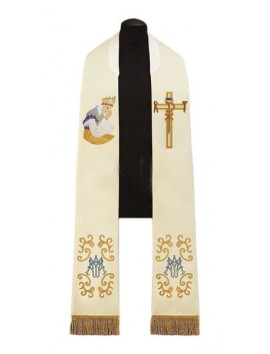
Marian stole
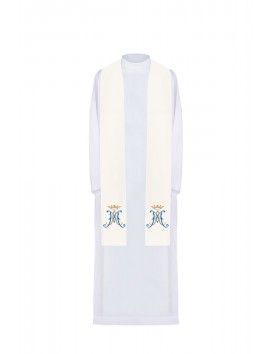
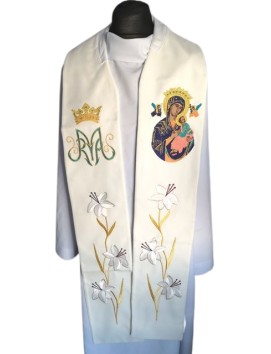
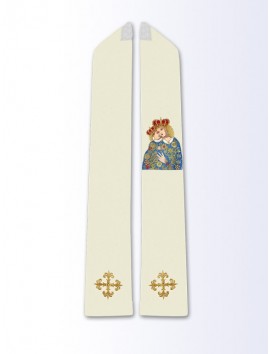
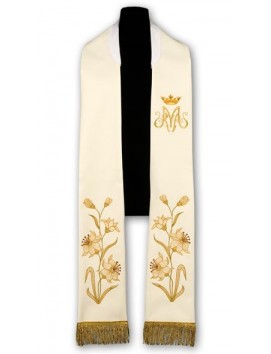
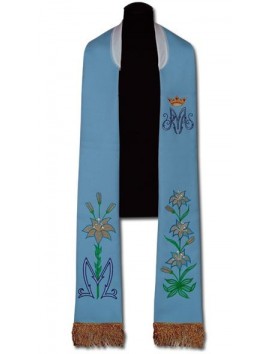
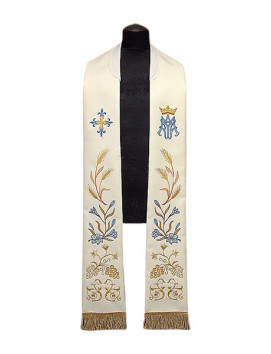
A Marian stole is a liturgical vestment worn by clergy, specifically designed to honor the Virgin Mary. It stands out because of its distinctive Marian symbols—crowns, lilies, or the Marian monogram—and its signature colors, usually blue and white, representing purity and devotion to Mary.


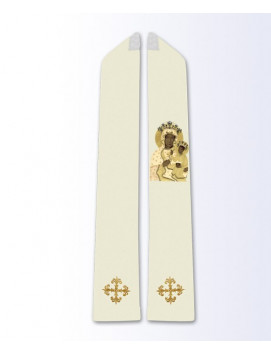
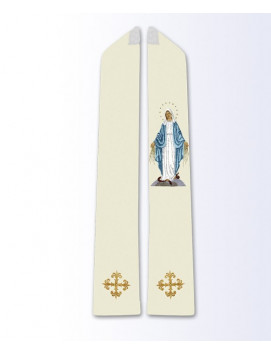
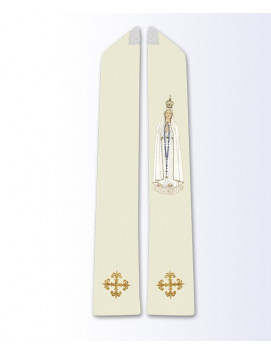
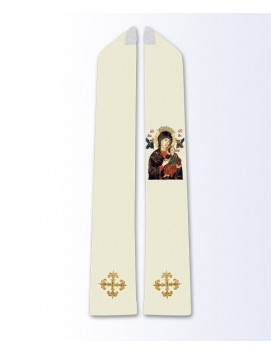
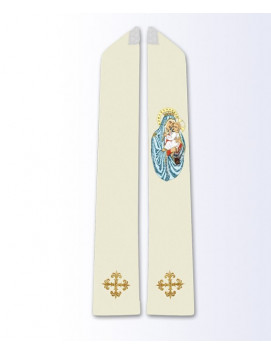
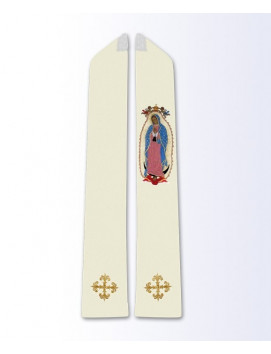

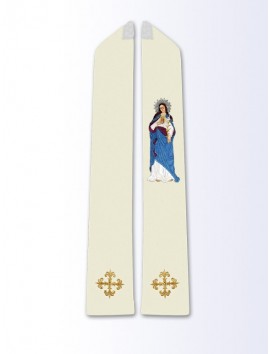
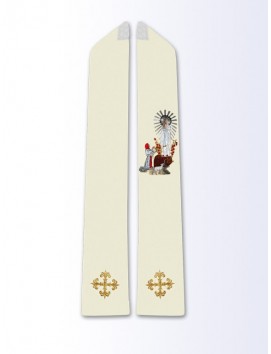
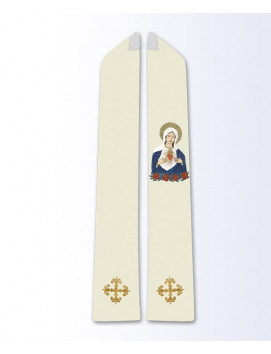
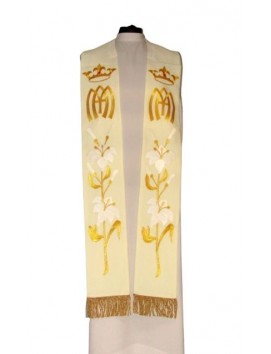
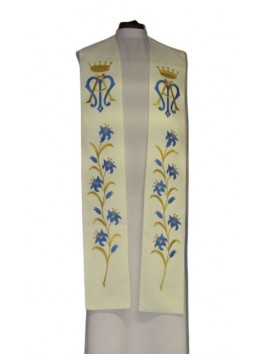
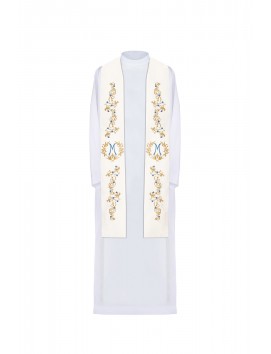
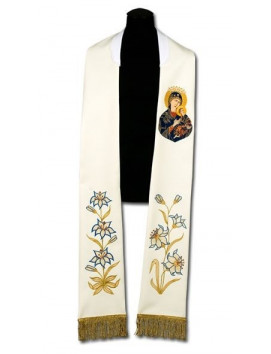
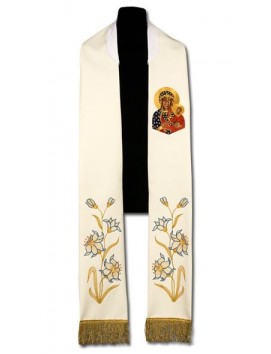
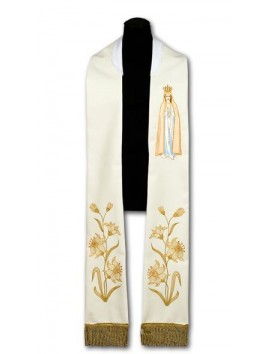
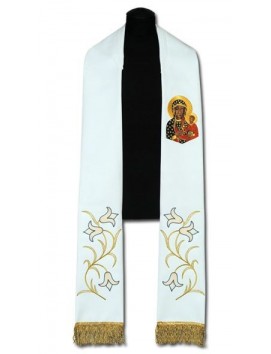
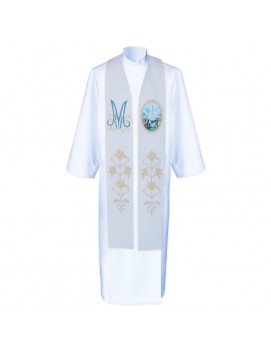
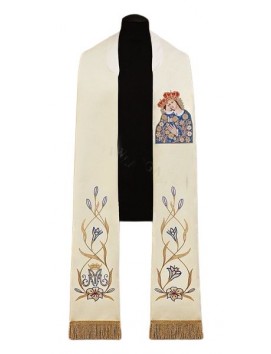
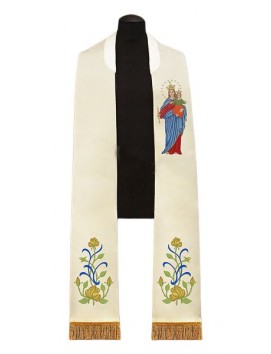
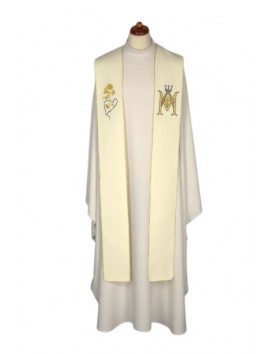
What makes a stole "Marian" compared to other liturgical stoles?
A Marian stole is unique because it’s crafted to honor the Virgin Mary. While all stoles are symbols of priestly authority and service, a Marian stole is instantly recognizable by its colors, symbols, and purpose. Here’s how you can tell the difference:
1. Distinctive Colors
Marian stoles are often blue and white, deeply associated with the Virgin Mary. Blue symbolizes purity and heavenly grace, while white represents innocence and holiness.
Other liturgical stoles follow the color calendar of the church—green for Ordinary Time, purple for Lent, red for martyrs, etc.—but Marian stoles break the mold with their Marian palette, especially during Marian feasts and celebrations.
2. Marian Symbols and Embroidery
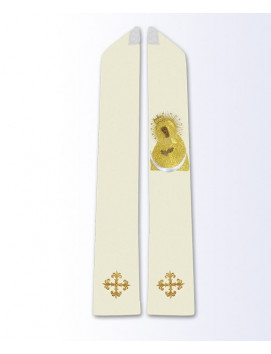
The embroidery makes a stole "Marian" compared to other liturgical stoles. Expect to see Marian monograms, crowns, lilies, stars, or images of Mary herself. These symbols aren’t just decorative—they’re powerful reminders of Mary’s role in Christian faith.
Regular stoles might feature crosses, wheat, or other general Christian symbols, but Marian stoles are laser-focused on Marian imagery.
3. Purpose and Liturgical Use
Marian stoles are worn during feasts and celebrations dedicated to the Virgin Mary—think Immaculate Conception, Assumption, or Marian processions.
Other stoles are worn according to the liturgical calendar and don’t have this specific Marian connection.
4. Fabric and Craftsmanship
Marian stoles are often made from high-quality silk or silk blends, with meticulous embroidery and sometimes gold or silver fringe for added distinction.
While all stoles can be ornate, Marian stoles go the extra mile in honoring Mary with luxurious materials and detailed craftsmanship.
5. Who Wears Them and When
Priests, deacons, and bishops wear Marian stoles only during Marian-themed liturgies. This is a visible sign of devotion and a way to set these celebrations apart from the rest of the liturgical year.
What is the history behind the Marian stole?
The stole itself is one of the oldest liturgical vestments in Christianity. Its roots trace back to the Roman Empire, where it began as a scarf of office worn by imperial officials—a symbol of authority and rank. As the Church grew in influence, clergy adopted the stole to signify their office and sacred duties. Over the centuries, it evolved from a practical garment to a powerful sign of spiritual authority and service.
The Evolution from Orarium to Stole
The early Christian stole likely descended from the orarium, a cloth used for practical purposes like wiping the face, which gradually took on religious significance. By the 7th century, the stole was firmly established in church tradition, with its shape and symbolism refined over time. The word “stole” comes from the Greek stolē, meaning garment or array.
Enter the Marian Stole
So, what is the history behind the Marian stole specifically? As devotion to the Virgin Mary grew throughout the Middle Ages, the Church set aside particular vestments during Marian feasts and celebrations. This is where the Marian stole comes in. Unlike regular stoles, Marian stoles are designed with symbols and colors that honor Mary—think blue and white fabrics, embroidered lilies, crowns, and images of Mary herself. These stoles became a visible sign of reverence for the Mother of God, especially during liturgies dedicated to her, such as the Immaculate Conception or the Assumption.
Marian Stoles in Modern Liturgy
Today, Marian stoles are a cherished part of Catholic liturgical tradition. Clergy wear them during Marian feasts, processions, and other celebrations linked to the Virgin Mary. The designs have become more diverse and elaborate, with options to personalize stoles to reflect specific Marian devotions or local traditions. High-quality materials like silk, satin, and brocade are common, and the embroidery often features Marian symbols or references to famous apparitions like Our Lady of Lourdes or Fatima.
What symbols are commonly embroidered on Marian stoles?
The most common symbols embroidered on Marian stoles honor the Virgin Mary and highlight her unique role in the Christian faith. These symbols aren’t chosen at random—they’re packed with meaning and instantly recognizable to anyone familiar with Marian devotion.
1. Images of the Virgin Mary
The centerpiece of many Marian stoles is a detailed image of the Mother of God herself. Popular depictions include Our Lady of Czestochowa, Our Lady of Fatima, Our Lady of Lourdes, Our Lady of Guadalupe, and the Immaculate Mother of God. These images make the stole unmistakably Marian and connect the wearer to a specific tradition or apparition.
2. Marian Monogram
The Marian monogram—an artistic “M” often intertwined with a cross or crown—is a staple on Marian stoles. This symbol represents Mary’s name and role as the Mother of God, making it a powerful sign of devotion.
3. Crowns
Crowns are frequently embroidered to signify Mary’s queenship in heaven. This motif emphasizes her status as Queen of Heaven and is especially popular on stoles used for major Marian feasts.
4. Flowers: Lilies and Roses
Lilies symbolize Mary’s purity and innocence, while roses are associated with her beauty and love. Both flowers are classic Marian symbols often included in the embroidery to highlight her virtues.
5. Hearts
The Immaculate Heart of Mary is another common motif. Often surrounded by flowers or rays, this heart represents Mary’s love, compassion, and sorrow for humanity.
6. Scenes from Mary’s Life
Some Marian stoles feature embroidered scenes from the Annunciation, Visitation, or the Assumption, visually telling the story of Mary’s role in salvation history.
7. National and Cultural Symbols
In certain regions, Marian stoles may include national emblems or flags, especially when honoring Mary as a patroness of a country (for example, the Queen of Poland).
Why These Symbols Matter
Instant Recognition: These symbols make it clear that the stole is dedicated to Mary, setting it apart from other liturgical vestments.
Spiritual Significance: Each symbol is meaningful—crowns for queenship, lilies for purity, monograms for identity, and hearts for compassion.
Liturgical Focus: The embroidery helps focus the celebration on Mary, especially during Marian feasts and special devotions.
Quick Reference: Common Embroidered Symbols on Marian Stoles
| Symbol | Meaning/Significance |
|---|---|
| Virgin Mary Images | Specific Marian apparitions and devotions |
| Marian Monogram | Mary’s name and divine motherhood |
| Crowns | Mary’s queenship in heaven |
| Lilies & Roses | Purity, innocence, beauty, and love |
| Immaculate Heart | Mary’s compassion and love |
| Scenes from Life | Key moments in Mary’s story |
| National Symbols | Mary’s role as the patroness of a nation |
What colors are most often used for Marian stoles and why?
The two colors you’ll see most often on Marian stoles are light blue and white. These aren’t just random picks—they’re loaded with meaning that goes straight to the heart of Marian devotion.
1. Light Blue: The Color of Mary’s Heavenly Grace
Light blue is the signature color for Marian stoles. In Christian tradition, blue represents heaven, divinity, and protection. Historically, blue pigments were rare and expensive, reserved for royalty and sacred art, which is why artists and the Church chose blue to honor Mary’s unique role as the Mother of God.
Blue is also tied to Old Testament references, where it symbolized holiness and priestly garments, reinforcing Mary’s role as the new Ark of the Covenant.
When you see a blue Marian stole, it’s a visual cue that the service is dedicated to the Virgin Mary, especially during feasts like the Immaculate Conception or the Assumption.
2. White: The Symbol of Purity and Joy
White is the second most common color for Marian stoles. It stands for purity, innocence, and holiness—qualities that the Church attributes to Mary above all others.
White vestments are used for celebrations of the Mother of God and are a universal sign of joy and exaltation in the Catholic liturgy.
In many cases, Marian stoles will combine white and blue, or feature white as the base color with blue embroidery and Marian symbols for added emphasis.
3. Gold and Silver Accents
While not primary colors, gold and silver are often used as accents on Marian stoles. They highlight Mary's dignity and royalty, emphasizing her status as Queen of Heaven.
Why Are Blue and White Used for Marian Stoles?
Blue is used because it represents Mary’s heavenly nature, her role as the Mother of God, and her spiritual royalty. Blue vestments are officially allowed for Marian feasts in some countries, especially those with Spanish or Portuguese heritage.
White is chosen for its universal symbolism of purity and joy, making it the go-to color for celebrations honoring Mary’s unique virtues.
The combination of blue and white in Marian stoles is a “teaching tool,” reminding worshipers of Mary’s faithfulness, humility, and grace every time the vestment is worn.
Quick Reference Table: Marian Stole Colors and Their Meanings
| Color | Symbolism | When Used |
|---|---|---|
| Light Blue | Heaven, divinity, protection, Mary’s royalty | Marian feasts, Immaculate Conception, Assumption |
| White | Purity, innocence, joy, holiness | Feasts of Mary, major Marian celebrations |
| Gold/Silver | Royalty, dignity | Decorative accents for special solemnities |
On, on which occasions or feasts is a Marian stole typically worn?
The Marian stole is not just another piece of liturgical clothing—it’s reserved for moments that honor the Virgin Mary. Here’s when you’ll see it in action:
1. Major Marian Feasts
Immaculate Conception (December 8th): Celebrates Mary's conception without original sin. This is one of the most significant Marian feasts and a prime occasion for wearing a stole.
Assumption of Mary (August 15th): Marks Mary’s being taken into heaven, body and soul. The Marian stole is a must for this feast.
Annunciation (March 25th): Commemorates the angel Gabriel announcing to Mary that she would bear Jesus. Clergy wear the Marian stole to highlight Mary’s “yes” to God.
Solemnity of Mary, Mother of God (January 1st): The first day of the year is dedicated to Mary’s motherhood and is celebrated with Marian vestments.
Purification/Presentation of the Lord (February 2nd): Also known as Candlemas, this feast remembers Mary presenting Jesus at the Temple.
2. Other Marian Celebrations and Devotions
Marian Processions: Any procession or public act of devotion to Mary is a fitting time for the Marian stole.
Marian Novenas and Special Services: During novenas, rosary rallies, or other prayer services dedicated to the Virgin Mary, clergy often wear Marian stoles to reinforce the Marian focus visually.
Feasts of Specific Marian Apparitions: Celebrations like Our Lady of Lourdes, Our Lady of Fatima, or Guadalupe also call for Marian stoles, often with custom embroidery reflecting the apparition.
3. Personal or Local Marian Devotions
Local Patronal Feasts: If Mary is the patroness of a parish, diocese, or country, her feast day is a significant event, and the Marian stole is front and center.
Special Dedications and Consecrations: When a church, altar, or community is consecrated to Mary, clergy often wear Marian stoles to mark the occasion.
Why Wear a Marian Stole on These Occasions?
Visual Devotion: The Marian stole is a sign of love and reverence for the Mother of God, making it perfect for any celebration focused on her life and virtues.
Liturgical Significance: The colors and symbols on the Marian stole—especially blue and white—set the tone for Marian feasts, distinguishing them from other liturgical celebrations.
Spiritual Connection: Wearing the Marian stole reminds both clergy and congregation of Mary’s role as intercessor and model of faith, deepening the spiritual impact of the feast or devotion.
Quick Reference: Occasions for Wearing a Marian Stole
| Occasion/Feast | Why the Marian Stole is Worn |
|---|---|
| Immaculate Conception (Dec 8) | Honors Mary’s sinless conception |
| Assumption (Aug 15) | Celebrates Mary’s entry into heaven |
| Annunciation (Mar 25) | Marks Mary’s acceptance of God’s will |
| Solemnity of Mary, Mother of God (Jan 1) | Focuses on Mary’s motherhood |
| Presentation of the Lord (Feb 2) | Remembers Mary presenting Jesus at the Temple |
| Marian Processions & Novenas | Highlights Marian devotion and prayer |
| Feasts of Marian Apparitions | Honors specific titles and appearances of Mary |
| Local Marian Patronal Feasts | Celebrates Mary as a patroness |
| Dedications/Consecrations to Mary | Marks special acts of Marian devotion |
How is a Marian stole worn differently by priests and deacons?
1. Priest: The Vertical, Double-Shoulder Look
A priest wears the Marian stole around the back of the neck, letting it hang evenly in front, over both shoulders. Think of it as a long scarf draping straight down the chest, symbolizing the priest’s authority and role in teaching, sanctifying, and leading the congregation.
Sometimes, especially during Mass, a priest may cross the stole over his chest, but the standard look is both ends hanging straight in front.
This style is about the priest’s pastoral authority and role acting in persona Christi—in the person of Christ.
2. Deacon: The Diagonal Sash
A deacon wears the Marian stole differently—over the left shoulder, drawn diagonally across the chest and back, and fastened at the right side near the hip.
This diagonal “sash” style is unique to deacons and instantly distinguishes them from priests. The tradition dates back to the early Church and reflects the deacon’s role as a servant and messenger, emphasizing service and mobility during liturgical functions.
The diagonal stole is practical, too—it stays out of the way as the deacon assists at the altar and serves the community.
Why Does the Difference Matter?
Visual Clarity: The way a Marian stole is worn tells everyone at a glance who’s serving as priest and who’s serving as deacon.
Symbolism: The priest’s straight, double-shoulder stole represents authority and leadership. The deacon’s diagonal stole highlights humble service and support.
Liturgical Tradition: This isn’t just about style—it’s a centuries-old tradition that keeps clergy roles clear and respected.
Quick Reference: How Priests and Deacons Wear the Marian Stole
| Role | How the Marian Stole is Worn | Symbolism |
|---|---|---|
| Priest | Around the neck, hanging straight down in front | Authority, leadership, “in persona Christi” |
| Deacon | Over left shoulder, diagonally across to right hip | Service, humility, support |
What is the significance of the Marian symbols on the stole?
1. Devotion to the Virgin Mary
The most direct significance of Marian symbols on the stole is to express deep devotion and respect for Mary, the Mother of God. When a priest or deacon wears a stole embroidered with Marian symbols, it signifies Mary’s virtues, her role as the Queen of Heaven, and her intercessory power for the faithful.
2. Spiritual Motifs with Deep Meaning
Common Marian symbols include the Marian monogram, crowns, lilies, roses, and images of Mary from various apparitions (like Our Lady of Fatima or Our Lady of Lourdes). Each motif carries its significance:
Monogram of Mary: Represents Mary’s identity and special place in salvation history.
Crowns: Symbolize her queenship and exalted status in heaven.
Lilies: Stand for purity and innocence, virtues strongly associated with Mary.
Roses: Indicate beauty, love, and sometimes the mysteries of the Rosary.
Images of Mary: Connect the stole to specific devotions, feasts, or apparitions, making the stole relevant to the liturgical occasion.
3. Liturgical and Community Significance
Wearing a Marian stole with these symbols reminds clergy and congregation of Mary’s presence and influence in the Church’s life. It sets the tone for Marian feasts or special occasions, visually marking the celebration as one dedicated to the Mother of God.
4. Connection to Tradition and Identity
The embroidery and motifs on a Marian stole connect the wearer to centuries of Christian tradition. They reflect the Church’s ongoing veneration of Mary and reinforce the identity of the clergy as spiritual leaders who honor her example and seek her intercession.
Why Do These Symbols Matter?
They teach and inspire. Every Marian symbol on the stole tells a story—about Mary’s virtues, her role in salvation, and her importance to the faithful.
They focus on devotion. Marian symbols help everyone present focus their prayers and attention on Mary, especially during feasts and celebrations.
They elevate the liturgy. The beauty and meaning behind each symbol enrich the liturgical experience, making Marian celebrations more profound and memorable.
Why is blue sometimes used for Marian vestments, and is it always allowed?
Blue is sometimes used for Marian vestments because it’s the color most closely associated with the Virgin Mary in Christian tradition. For centuries, blue has symbolized Mary’s heavenly royalty, purity, and unique role as the Mother of God. Historically, blue was a rare and precious pigment, reserved for royalty and sacred art. That’s why artists and the Church chose blue to honor Mary—she’s the Queen of Heaven, and blue visually sets her apart.
The tradition goes even deeper. In the Old Testament, blue was used in priestly garments to represent holiness and God’s presence. Over time, blue became the color of choice for Marian iconography, making it a powerful teaching tool in art and liturgy. When you see blue vestments, especially during Marian feasts, it’s a visual cue that the celebration is dedicated to Mary and her virtues—faithfulness, humility, and grace.
Is Blue Always Allowed for Marian Vestments?
Here’s the catch: blue is not a standard liturgical color in the Catholic Church. The usual colors are green, violet, red, white, black, and rose. Blue vestments can only be used by special privilege, and that privilege is rare and very specific.
When and Where Is Blue Allowed?
Special Papal Privileges: Certain Marian shrines and entire countries (like Spain) have received special permission from the Vatican to use blue vestments. For example, Pope Pius IX granted Spain the right to use blue on the feast of the Immaculate Conception and on all Saturdays when a votive Mass of the Blessed Virgin is permitted. This privilege was extended to Spanish territories, so you’ll also see it in places like Mexico and the Philippines.
Not Universal: In most of the world, blue vestments are not allowed for Marian feasts. Instead, white vestments with blue motifs or trim are used, and these do not require special permission. Only entirely blue vestments are restricted.
What About Other Countries?
In the United States and most other countries, priests will wear white or gold vestments with blue accents for Marian feasts, but not entirely blue vestments unless they are in a place with special privilege.
Some regions have petitioned for broader use of blue, but the Vatican has consistently restricted this to places with explicit papal approval.
Quick Reference: Blue Marian Vestments
| Where Allowed | When Allowed | Type of Vestment |
|---|---|---|
| Spain, Mexico, Philippines | Immaculate Conception, Saturdays for Mary | Fully blue vestments |
| Most other countries | Marian feasts | White with blue trim |
Why Is Blue So Powerful for Marian Vestments?
Symbolism: Blue represents Mary’s purity, heavenly royalty, and spiritual protection.
Tradition: Centuries of Christian art and liturgy have cemented blue as Mary’s signature color.
Privilege: Using blue vestments is a mark of honor, reserved for special places and feasts.
What is the price range for Marian stoles?
The price range for Marian stoles is broad, reflecting differences in quality, materials, embroidery, and customization. Here’s what I’ve found from top suppliers:
Budget/Entry Level:
Simple Marian stoles with basic embroidery and polyester fabric start around $35–$45. For example, a light blue Marian stole with printed motifs for special occasions can be found for about $40, and bulk orders can lower the price even further.Mid-Range:
Most well-made Marian stoles, featuring quality embroidery and better fabrics like satin or blended textiles, fall in the $75–$120 range. You’ll see options like ecru deacon stoles with Marian embroidery at $76.80 (discounted from $109.76), and embroidered white Marian priest’s stoles for about €111–€170 (roughly $120–$185).Premium/Custom:
High-end Marian stoles with intricate hand embroidery, premium fabrics (silk, brocade), and added embellishments (pearls, goldwork) can cost $180–$280 or more. Unique designs, such as those featuring specific Marian apparitions or custom inscriptions, push prices to the top end. For example, embroidered Marian stoles with detailed motifs can reach €205–€281 (about $220–$300).UK and European Market:
In the UK, Marian stoles typically range from £98 to £238 (about $125–$300), depending on the level of craftsmanship and detail.
What Factors Affect the Price of a Marian Stole?
Material: Polyester is most affordable; silk, satin, or brocade increase prices.
Embroidery: Machine embroidery is less expensive than hand-stitched or goldwork designs.
Customization: Adding names, dates, or Marian symbols raises costs.
Origin: European-crafted stoles, primarily from Italy or Poland, may cost more due to quality and import fees.
Quick Reference: Marian Stole Price Range
| Quality Level | Price (USD) | Typical Features |
|---|---|---|
| Entry/Budget | $35–$45 | Basic polyester, printed or simple embroidery |
| Mid-Range | $75–$120 | Satin/blend, quality embroidery, standard motifs |
| Premium/Custom | $180–$300+ | Silk/brocade, hand embroidery, custom details |
What materials are Marian stoles made from?
Marian stoles are crafted from various high-quality fabrics, each selected for its look, feel, and suitability for liturgical use. Here’s what you’ll find most often:
1. Silk and Silk Blends
Pure Silk: Top-tier Marian stoles are often made from 100% watered pure silk fabric. Silk is prized for its luxurious feel, elegant drape, and rich sheen, making it a favorite for high-end, Roman-style Marian stoles. These stoles often feature machine-made embroidery and real gold metal fringe or tassels for an exquisite finish.
Silk Blends: Some Marian stoles blend silk with other fibers to balance luxury, durability, and cost. Silk-cotton blends are standard, offering a soft texture and subtle shine.
2. Polyester and Polyester Blends
100% Polyester: Many Marian stoles are made from high-quality plain polyester. Polyester is stain- and crease-resistant, easy to wash and iron, and holds up well to frequent use, making it a practical choice for everyday liturgical wear.
Poly-Cotton Blends: Some stoles use a mix of polyester and cotton for added comfort and breathability while maintaining easy care.
3. Satin
Often made from polyester, Satin is another popular choice for Marian stoles. It offers a glossy, smooth finish that enhances the visual appeal of the stole, especially when paired with vibrant embroidery and decorative stones or pearls.
4. Brocade and Damask
Brocade: This richly patterned, woven fabric is used for premium Marian stoles. Brocade adds texture and depth, making the vestment look and feel more ornate.
Damask: Similar to brocade, damask is a reversible, patterned fabric that brings a classic, heritage look to Marian stoles. It’s often chosen for its elegance and historical significance.
5. Embroidery Materials
Metallic Threads: Gold and silver metallic threads are frequently used for embroidery, adding a regal touch that highlights Marian symbols and motifs.
Colored Sateen: Vibrant sateen threads bring Marian imagery to life, creating intricate designs that stand out against the fabric.
Semi-Pearls and Stones: Some Marian stoles are decorated with hand-inserted semi-pearls and stones for added beauty and dimension.
Why Material Choice Matters
Durability: Polyester and blends are ideal for frequent use and easy care, while silk and brocade are best for special occasions and high solemnity.
Aesthetics: Silk, satin, and brocade deliver a luxurious look, perfect for Marian feasts and major celebrations.
Symbolism: The quality and beauty of the fabric reflect the reverence due to the Virgin Mary and the importance of the liturgical event.
Quick Reference: Marian Stole Materials
| Material | Key Features | Best For |
|---|---|---|
| Pure Silk | Luxurious, elegant, drapes beautifully | Major feasts, solemnities |
| Silk Blends | Soft, subtle sheen, more affordable | Versatile, for all occasions |
| Polyester | Durable, stain-resistant, easy care | Daily use, travel, and large parishes |
| Poly-Cotton Blend | Breathable, comfortable, and easy to maintain | Everyday wear |
| Satin | Glossy, smooth, visually striking | Festive liturgies, special gifts |
| Brocade/Damask | Ornate, textured, classic look | Heritage celebrations, processions |
| Metallic/Colored Thread | Adds shine and detail to embroidery | All Marian stoles |
How should I care for and clean my Marian stole?
1. Proper Storage
Store in a Dry, Airy Place: Always keep your Marian stole in a clean, dry location, away from direct sunlight and extreme temperatures. Moisture and heat can damage delicate fabrics and embroidery.
Use Special Covers: Hang your stole on a padded hanger and, if possible, use a special garment cover to protect it from dust and creasing.
Avoid Folding: Folding can create permanent creases and damage embroidery, so always hang your stole when unused.
2. Cleaning Your Marian Stole
Follow Manufacturer’s Instructions: Always check the care label or instructions from the maker. Some stoles are “dry clean only,” while others can be hand-washed.
Hand Washing: If hand washing is allowed, use cool water and a gentle detergent for delicates. Never use bleach or harsh chemicals, which can damage fabric and embroidery.
Dry Cleaning: For premium fabrics like silk, brocade, or heavily embroidered stoles, professional dry cleaning is usually safest. Make sure to use a cleaner familiar with religious or delicate garments.
Machine Washing: Only use a gentle cycle and cold water if the manufacturer says it’s safe. Place the stole in a mesh laundry bag for extra protection.
3. Drying and Ironing
Dry Flat: Lay the stole flat on a clean towel to air dry. Avoid wringing, twisting, or scrubbing the fabric—this can distort the shape and ruin the embroidery.
Ironing: Use a low heat setting, preferably on the reverse side. If your stole has embroidery, place a cotton cloth between the iron and the stole to protect the threads. Never iron directly over metallic or raised embroidery.
4. General Tips for Longevity
Avoid Direct Sunlight: Sunlight can fade fabric and embroidery, so store and dry your stole away from windows.
Handle with Clean Hands: Oils and dirt from your hands can transfer to the fabric, so always handle your stole with clean, dry hands.
Regular Inspection: Check your stole for stains, loose threads, or damage. Address issues promptly to prevent bigger problems down the road.
Quick Reference: Marian Stole Care Guide
| Task | Best Practice |
|---|---|
| Storage | Hang on padded hanger, use garment cover, keep in a dry/airy place |
| Hand Washing | Cool water, gentle detergent, never bleach, rinse gently |
| Dry Cleaning | Use a professional familiar with liturgical/delicate garments |
| Drying | Lay flat on a towel, avoid wringing or twisting |
| Ironing | Low heat, iron on the reverse side, use cotton cloth over the embroidery |
| General | Avoid sunlight, handle with clean hands, and inspect regularly |