
Cart 0 (0)
No products
To be determined Shipping
$ 0 Total
Product successfully added to your shopping cart
Quantity
Total
There are 0 items in your cart. There is 1 item in your cart.
Total products
Total shipping To be determined
Total
Catholic Faith & Liturgy

Upcoming Jubilees & Holy Years: Guide to 2026–2033

A guide to the Catholic Church's upcoming jubilees and holy years: the Year of St. Francis (2026–2027), the Compostela Holy Year 2027, World Youth Day 2027, Guadalupe 2031 and the 2033 Jubilee of the Redemption. Read more...
Compostela Holy Year 2027: Año Santo Jacobeo Guide
The next Compostela Holy Year falls in 2027, when the feast of St. James on 25 July lands on a Sunday — a jubilee year of pilgrimage to Santiago de Compostela. Read more...
Year of St. Francis 2026–2027: 800 Years of the Transitus
The Year of St. Francis runs from 10 January 2026 to 10 January 2027, marking 800 years since the Transitus of St. Francis of Assisi — a jubilee with a plenary indulgence for pilgrims to Franciscan churches. Read more...
Agnus Dei on Vestments: Meaning of the Lamb of God Symbol (2026)

Chi-Rho (PX) Symbol on Vestments: Meaning and History (2026)

What Does IHS Mean on Vestments and Altar Linens? (2026)

Low Mass vs High Mass: Differences in Vestments and Ceremony (2026)

How Much Do Liturgical Vestments Cost? A Practical Budget Guide (2026)
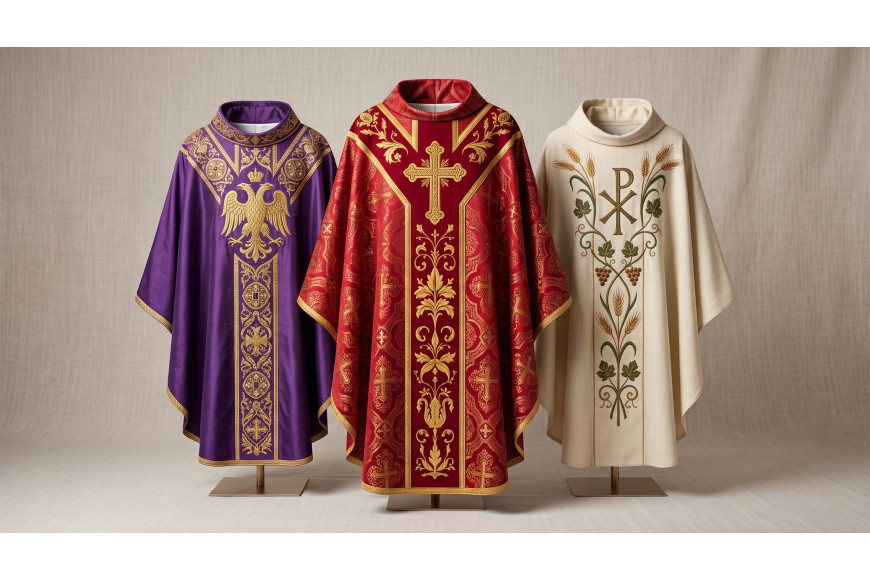
Liturgical vestment prices in 2026: entry, mid-range and premium chasubles, stoles, albs, copes and full sets. What affects cost and how to budget. Read more...
Chasuble vs Dalmatic: What's the Difference and Who Wears Each? (2026)
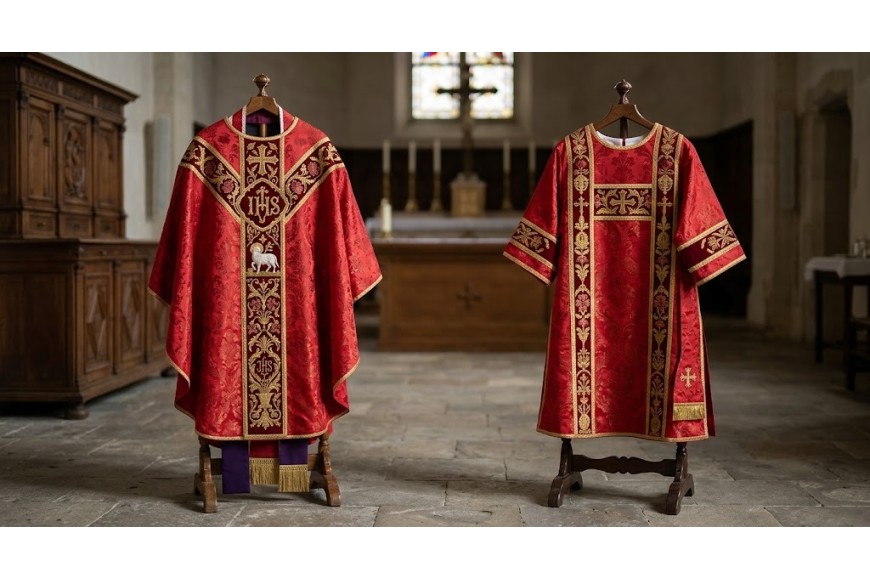
Chasuble vs dalmatic compared: who wears each, how they differ in shape and symbolism, and how to choose the right one for your liturgy. Read more...
What Does a Priest Wear Under the Chasuble? The Vesting Order Explained (2026)
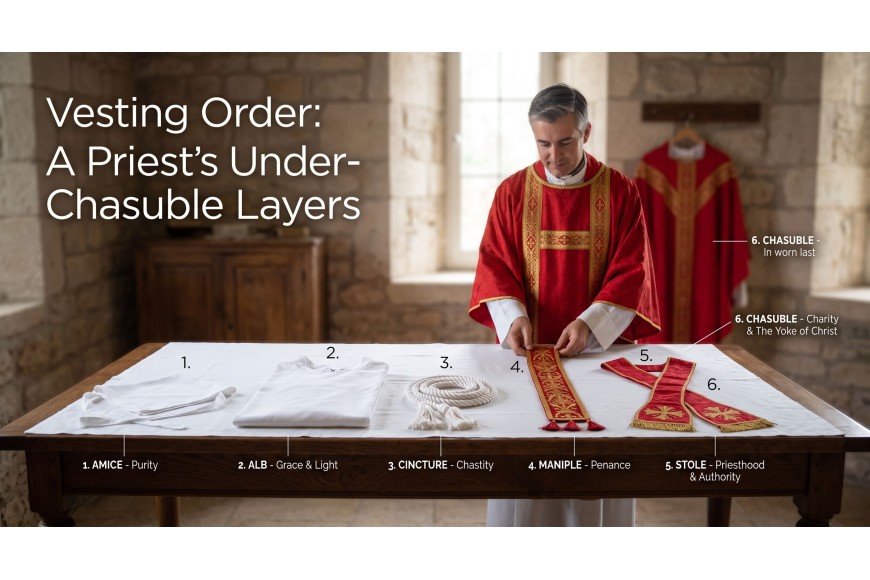
The vesting order explained: amice, alb, cincture, stole and chasuble. What each garment is, what it symbolises and the traditional vesting prayer. Read more...
How to Build a Priest's Vestment Wardrobe: What to Buy First (2026)

Build a complete priest's vestment wardrobe: which albs, stoles and chasubles to buy first, in which colours, and what to add as your budget grows. Read more...
The Complete Guide to Catholic Vestments: Chasuble, Stole, Alb, Cope and More (2026)
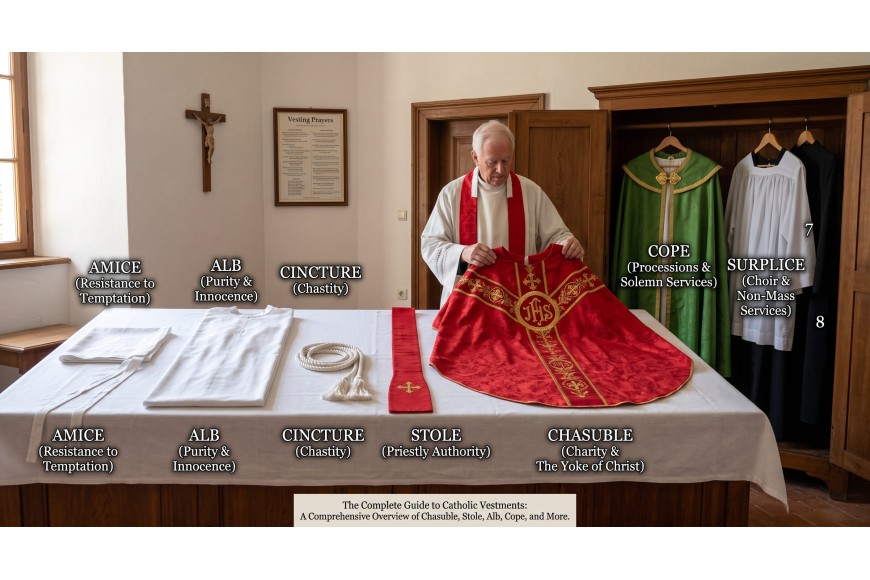
Every major Catholic vestment explained: chasuble, stole, alb, surplice, cope, dalmatic, cassock and biretta. Who wears each, when, and how to choose. Read more...
What is the peregrinantes in spem

The motto appears prominently in green on the official Jubilee logo and various Jubilee items, including ceremonial vestments and candles designed especially for this extraordinary holy year. The Jubilee 2025 will be an Ordinary Jubilee, which occurs every 25 years in the Catholic Church, offering the faithful opportunities for spiritual renewal, pilgrimages (especially to Rome), and plenary indulgences. Read more...
Gifts for Priests: Christmas & Occasions

Honour the spiritual leaders in your life with a thoughtful gesture. Finding the perfect gift for priests can be challenging but rewarding. From traditional religious artifacts, such as a stole or holy water sprinkler, to modern, personalised keepsakes, the options are many. Delve into this guide to find a meaningful present. Read more...
Is It Disrespectful to Wear a Hat in Church?

Traditionally, removing one's hat or head covering in church is a sign of respect and humility. It is a cultural practice that has been observed for centuries in many different faith traditions. Removing your hat shows reverence for God and acknowledges that you are in a sacred space. In some religious traditions, it is also a sign of submission to God's will and a way of demonstrating that you are willing to accept His authority. Read more...
- 1
- 2
Showing 1 to 15 of 24 (1 Pages)


