
No products

Roman stole
A Roman stole is a liturgical vestment—think of it as the “uniform” for clergy in the Roman Catholic tradition. It’s a long, narrow strip of cloth, usually made from silk or another delicate fabric, that’s worn around the neck and hangs down the front. The stole isn’t just for show; it’s a badge of office, signaling that the wearer has been ordained and carries specific responsibilities within the Church.
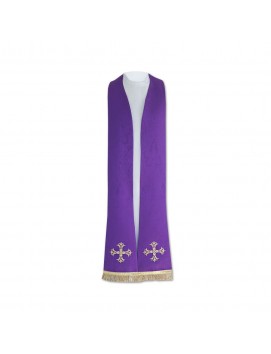
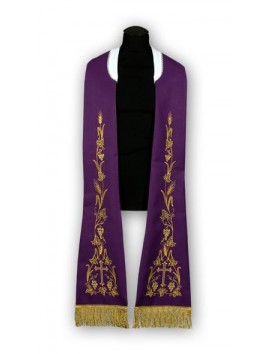
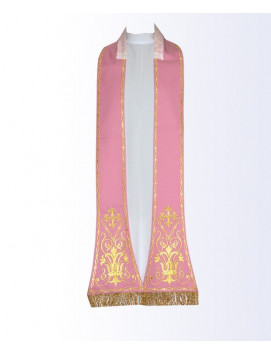
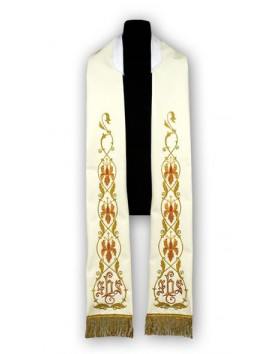
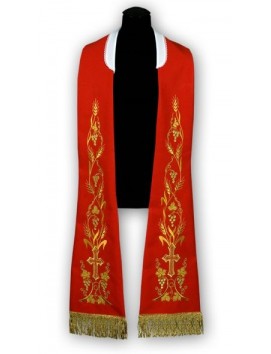
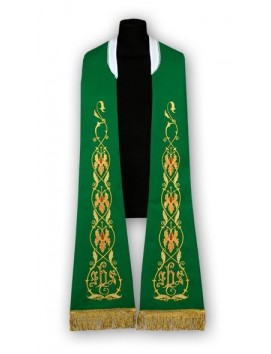
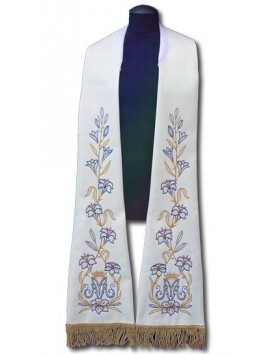
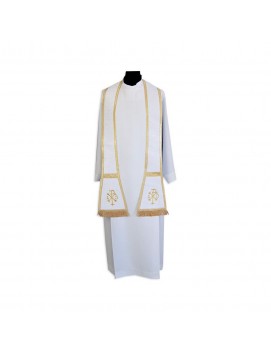
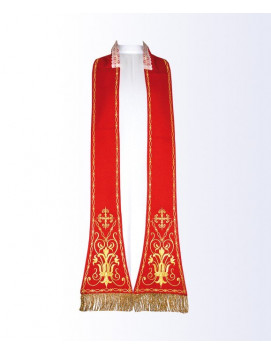
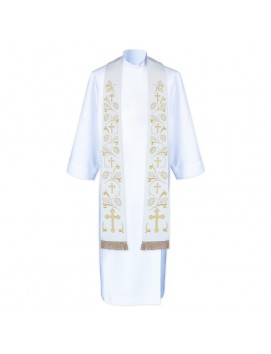
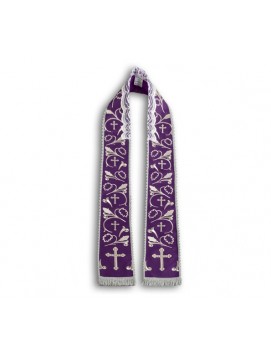
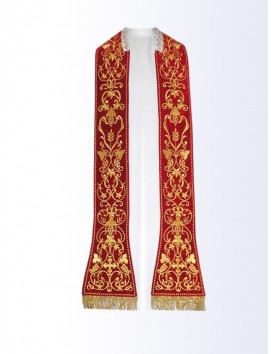
How is a Roman stole different from other liturgical vestments?
The Roman stole stands out because it’s the badge of the ordained. It’s a long, narrow strip of cloth—usually silk—worn around the neck and hanging down the front for priests and bishops, or over the left shoulder and across the chest for deacons. Unlike other vestments, the stole is a unique symbol of priestly authority and service. It’s not just decorative; it’s the sign that the wearer has received Holy Orders and is authorized to perform sacraments.
Key Differences: Roman Stole vs. Other Vestments
Let’s get straight to the point with a quick comparison:
| Vestment | Main Purpose | Who Wears It | How It’s Worn | Symbolism |
|---|---|---|---|---|
| Roman Stole | Sign of ordination, authority | Deacons, Priests, Bishops | Around the neck (priests/bishops), over the shoulder (deacons) | Authority, service, yoke of Christ |
| Chasuble | Outer garment for Mass | Priests, Bishops | Over all other vestments | Charity, “yoke” of Christ, celebration |
| Alb | Baptismal purity | All clergy | Full-length white robe | Purity, new life in Christ |
| Cincture | Secures the alb | All clergy | Rope belt around the waist | Chastity, readiness for service |
| Maniple | (Mostly obsolete) | Priests | Over the left arm | Service, labor |
| Dalmatic | Deacon’s outer vestment | Deacons | Over the alb and stole | Joy, service |
What Makes the Roman Stole Unique?
Exclusive to the Ordained: Only deacons, priests, and bishops wear the Roman stole. It’s conferred at ordination and marks the wearer as a minister of sacraments.
Distinct Wearing Style: Priests and bishops wear it straight down; deacons wear it diagonally. No other vestment has this rule.
Symbolic Weight: The stole represents the yoke of Christ, the authority to preach, and the duty to serve. Other vestments have different meanings, like the chasuble for charity or the alb for purity.
How did the Roman stole evolve from ancient Rome to Christian liturgy?
The Roman stole didn’t just appear out of nowhere. It has deep roots in both Roman society and the early Christian church. Initially, the stole was a secular symbol—a scarf or cloth called the orarium or orarium—worn by Roman officials as a badge of rank and authority. This wasn’t just a fashion statement but a visible sign that you held a particular office or responsibility in the empire.
As Christianity grew within the Roman Empire, the church adopted and adapted elements from Roman culture, including clothing. The orarium gradually shifted from being a civil badge to a liturgical vestment. By the 4th century, it was already used in the Eastern churches as a vestment for deacons (often called the orarion). Eventually, priests wore a similar garment—the epitrachelion.
Key Stages in the Evolution of the Roman Stole
Here’s how the transformation played out:
Roman Empire Origins:
The stole began as a scarf of office, signifying rank among Roman officials. It was sometimes used in religious rituals even before Christianity, as seen in the ancient Umbrian Iguvine Tablets, where priests wore a stole during sacrifices.Early Christian Adoption:
As church leaders became more organized, they started using the stole to mark clergy. By the 4th and 5th centuries, deacons in the East wore the stole as a vestment, and the practice spread westward.Western Church Development:
The stole appears in Western records by the 6th and 7th centuries, but it became a standard vestment in Rome only by the late 8th or early 9th century. The term “stole” (from the Greek stolē, meaning “garment”) came into use in Gaul and spread to Italy by the 10th century.Liturgical Significance and Symbolism:
Over time, the stole became more than just a badge—it symbolized the ordained's authority, responsibility, and service. By the Middle Ages, it was conferred at ordination and considered essential for any priestly function. The way it was worn—draped around the neck for priests and bishops, over the shoulder for deacons—became standardized.Design and Decoration:
The stole evolved from a simple cloth to a richly decorated band, often made of silk and embroidered with religious symbols. Colors began to reflect the liturgical calendar, and the stole’s appearance became a key part of church tradition.
What does the Roman stole symbolize in Christian traditions?
Key Symbolisms of the Roman Stole
Priestly Authority: The Roman stole marks the wearer as someone who has received Holy Orders. It’s the badge of office for priests, deacons, and bishops, showing they’re authorized to lead worship and administer sacraments.
Service and Humility: For deacons, the stole is worn diagonally, symbolizing service to the community. For priests and bishops, it hangs straight down, representing their role as leaders and shepherds.
The Yoke of Christ: The stole is often described as the “yoke of Christ.” It’s a reminder that ministry is about carrying Christ’s mission—serving others, spreading the Gospel, and living out humility and obedience.
Bonds of Christ’s Passion: The stole and other vestments recall the cords that bound Jesus during His Passion. It’s a sign of the burdens and responsibilities that come with ministry and the grace and strength to carry them.
Immortality and Commitment: In the Roman Catholic tradition, the stole symbolizes immortality and the commitment to the faith. It’s conferred at ordination and constantly reminds of the priest’s promise to serve God and the Church.
Why the Roman Stole Matters
The Roman stole isn’t just tradition for tradition’s sake. It’s a symbol that instantly communicates the wearer’s role, authority, and the sacred trust placed in them by the Church. It’s worn during every significant sacramental moment—Mass, baptisms, weddings, confessions—central to Christian worship and community life.
Colors and Embellishments: More Than Decoration
The color of the Roman stole changes with the liturgical season—white for celebration, purple for penance, red for martyrdom, green for hope. Embroidered crosses, religious symbols, and fine materials add layers of meaning, reinforcing the stole’s role as a sign of sacred duty and spiritual authority.
When and during which ceremonies is the Roman stole worn?
The Roman stole is worn by deacons, priests, and bishops during any function that requires their ordained ministry. That means you’ll see the Roman stole whenever a clergy member performs a sacrament or leads a liturgical function that only an ordained minister can do.
Key Ceremonies and Moments for the Roman Stole
Celebration of Mass:
The Roman stole is always worn during the celebration of the Mass. Priests and bishops wear it around the neck with the ends hanging down in front, while deacons wear it over the left shoulder, fastened at the right side.Administering the Sacraments:
Whether baptism, confession, the Eucharist, anointing of the sick, or marriage, the Roman stole is necessary. The stole marks the celebrant as authorized to perform these sacred rites.Ordination Ceremonies:
The stole is central at ordinations. During the ordination of deacons and priests, the bishop places the stole on the candidate, marking their entry into ordained ministry.Distribution of Holy Communion:
When a priest or deacon distributes Holy Communion outside Mass, the stole is worn over the alb or surplice.Preaching and Leading Prayer:
While preaching during Mass or leading specific liturgical prayers, clergy often wear the stole, especially if the act is tied to their sacramental or teaching authority.Paraliturgical Celebrations:
For non-sacramental liturgical functions—like Stations of the Cross or Benediction—the stole is typically worn, usually over the surplice or alb and under the cope.
When Is the Roman Stole Not Worn?
The Roman stole is not worn for every church event. For example, it’s generally not used during processions or at Vespers, unless the local custom or specific liturgical rules say otherwise. The stole is reserved for functions requiring an ordained minister's unique authority.
Why the Roman Stole Is Worn at These Times
The stole is a sign of the clergy's sacramental function and teaching authority. It’s not just tradition—a visible sign that the person wearing it has the authority to act in the name of the Church and Christ. The color and decoration of the stole also change with the liturgical season, adding another layer of meaning to every ceremony.
What are the typical colors and decorations found on a Roman stole?
The Roman stole is all about meaning. Its colors and decorations aren’t random; they’re chosen to match the liturgical calendar, the occasion, and the message the Church wants to send. Let’s break down what you’ll see.
Typical Colors of the Roman Stole
White:
White symbolizes joy, purity, innocence, and splendor. You’ll see white Roman stoles during Christmas, Easter, celebrations of the Lord (except His Passion), Marian feasts, feasts of angels, and non-martyr saints. It’s the color of celebration and new beginnings.Red:
Red represents the Holy Spirit and the blood of martyrs. Priests wear red Roman stoles on Pentecost, Palm Sunday, Good Friday, feasts of martyrs, and other events honoring sacrifice and passion.Green:
Green is the color of hope, renewal, and ongoing growth. It’s worn during Ordinary Time, the “regular” weeks outside of major feasts and penitential seasons.Purple (Violet):
Purple stands for penance, preparation, and sorrow. Roman stoles in purple are worn during Advent and Lent and for confessions and funerals. It’s the color of reflection and repentance.Black:
Black is used for mourning and is sometimes seen at funeral Masses or All Souls’ Day. It’s less common today, but it still carries deep meaning.Rose:
Rose is a rare but joyful color, worn only twice a year—on Gaudete Sunday (Advent) and Laetare Sunday (Lent)—to signal a break in the season’s penitential tone.Gold and Silver:
Gold and silver are reserved for the most solemn occasions, like major feast days or Midnight Mass. They can be used instead of white, red, or green to emphasize celebration and importance.
Typical Decorations on a Roman Stole
Embroidery:
Most Roman stoles are richly embroidered, often with crosses, religious symbols, or scenes from Scripture. Embroidery highlights the sacred nature of the vestment and can be specific to the feast or season.Orphreys:
Decorative bands called orphreys may run down the length of the stole, adding visual interest and emphasizing its importance.Fringe, Tassels, and Bells:
Some stoles feature fringe or tassels at the ends; in earlier centuries, little bells were sometimes attached. These details add a sense of dignity and tradition.Crosses:
It’s customary for Roman stoles to have a cross embroidered at the center and at each end, symbolizing the centrality of Christ in the ministry.Rich Materials:
Roman stoles are typically made from delicate fabrics like silk or velvet, often in vibrant colors and with gold or silver thread, underscoring the dignity of the office.
How has the design of the Roman stole changed over time?
The Roman stole started as a practical and symbolic garment in ancient Rome. Initially, it was a kind of shawl or scarf—wide, draped over the shoulders, and falling down the front. This early stole was worn by both officials and, in some cases, women, often as a sign of status or authority.
Key Phases in the Evolution of the Roman Stole
Ancient Roots:
The stole’s design was inspired by the orarium or scarf of office worn by Roman officials. It marked rank and was sometimes used in pre-Christian religious rituals. The stole was much broader and less ornate in its earliest forms.Early Christian Adoption:
The design began to shift after the Church of Rome adopted the stole in the 7th century. It became narrower and more structured, moving away from the wide shawl look to a long, slim band of cloth. The stole was now reserved for clergy, marking ordination and spiritual authority.Medieval and Renaissance Refinement:
As centuries passed, the Roman stole became even more ornate. Embroidery, fringe, tassels, and even little bells were added for decoration and symbolism. By the 16th century, it was customary to have a cross embroidered in the center and at each end, reinforcing its religious meaning.Modern Variations:
Today, the Roman stole is typically a long, narrow band made from luxurious materials like silk or velvet. Designs can vary: some stoles have straight ends, while others feature “spade” or “shovel” shapes. The neck can be pointed or straight, and the stole is often richly embroidered with religious symbols, contrasting trims, and vibrant colors specified by the liturgical calendar.
Design Details That Have Changed
Shape:
From wide shawl to narrow band, ends may be straight, spade-shaped, or even feature unique cuts.Materials:
Early stoles were simple cloth; modern stoles use silk, velvet, and metallic threads for embroidery.Decorations:
Early stoles were plain or minimally adorned. Over time, intricate embroidery, crosses, orphreys (decorative bands), and sometimes fringe or tassels became standard.Functionality:
The stole’s design now includes practical elements for comfort and appearance, like the Roman method of folding the stole for a better fit with other vestments.
Who can wear a Roman stole in the church?
The Roman stole is worn exclusively by ordained clergy. That means only deacons, priests, and bishops are authorized to wear a Roman stole in the church. This rule isn’t just tradition—a sign of their unique authority and responsibility within the Christian community.
Breakdown by Role:
Deacons:
Deacons wear the Roman stole draped over the left shoulder and fastened at the right side, like a sash. This distinctive style sets them apart and marks their service role in the liturgy.Priests:
Priests wear the Roman stole around the neck, with both ends hanging straight in front. This is the classic look at Mass, confessions, baptisms, and other sacraments. In the past, priests would cross the stole over their chest, but today it’s usually worn straight down.Bishops:
Bishops wear the Roman stole in the same way as priests—around the neck, ends hanging down—but never crossed over the chest, since bishops already wear the pectoral cross.
Who Cannot Wear a Roman Stole?
Subdeacons, Lay Ministers, and the Congregation:
The Roman stole is strictly reserved for those who have received Holy Orders. Laypeople, subdeacons, and other non-ordained ministers do not wear the stole. Using it without ordination is a serious breach of church order and tradition.
Other Denominations
While the Roman stole is most closely associated with the Roman Catholic Church, it’s also worn by ordained clergy in Anglican, Lutheran, Methodist, Presbyterian, and other Christian denominations. In all these traditions, the rule is the same: only those ordained, male or female, depending on the denomination, can wear the stole as a sign of their consecration and authority.
What materials are used to make a Roman stole?
The Roman stole is crafted from tradition, artistry, and practicality. Let’s break down the most common materials you’ll find in a high-quality Roman stole:
Main Fabrics for the Roman Stole
Silk:
Silk is the classic choice for a Roman stole. It’s prized for its natural sheen, durability, and association with dignity and celebration. Many ornate and traditional stoles are made from pure silk or silk blends, making them suitable for major feasts and solemn occasions.Velvet:
Velvet stoles are known for their rich texture and luxurious appearance. They’re often used for special occasions or high-ranking clergy, and they take embroidery beautifully, giving the stole a deep, elegant look.Damask and Brocade:
Damask and brocade are woven fabrics with intricate patterns, often featuring religious symbols. These materials are heavy, durable, and perfect for stoles that need to make a visual impact. Damask is especially popular for its subtle sheen and pattern, while brocade adds metallic threads for extra richness.Satin:
Satin is commonly used as a lining for Roman stoles, providing a smooth, comfortable feel against the neck and helping the stole drape properly. Sometimes, satin is also used for the outer fabric, especially in lighter-weight stoles.Linen and Cotton:
Linen is valued for its lightness, breathability, and ease of embroidery. It’s less common for the outer layer, but it is sometimes used for linings or stoles for warmer climates. Cotton may also be used for lining or interfacing, adding structure without bulk.Polyester Blends:
Modern Roman stoles often incorporate polyester or polyester blends for durability, wrinkle resistance, and affordability. These fabrics are easy to care for and mimic the look of more expensive materials.
Decorative Elements
Embroidery:
Fine yarns, metallic gold or silver threads, and intricate motifs are standard. Embroidery adds visual appeal and symbolic meaning, with popular choices for crosses, religious scenes, or orphreys (decorative bands).Fringe and Tassels:
For a touch of tradition and elegance, many Roman stoles are finished with fringe or tassels at the ends, often in gold or matching liturgical colors.Orphreys and Appliqué:
Orphreys—ornamental bands—are sometimes sewn onto the stole, often made from silk or brocade, and may feature additional embroidery or appliqué work.Interlining and Felt:
A layer of soft felt or canvas interfacing is often used between the outer fabric and the lining to give the stole structure and fullness.
Practical Additions
Sweat Guards:
A piece of white linen or lace may be stitched onto the back of the collar as a sweat guard. This protects the stole and can be replaced as needed, extending the life of the vestment.
How should a Roman stole be cared for and stored?
Cleaning Your Roman Stole
Dry Clean Regularly: Most Roman stoles are made from delicate fabrics like silk, brocade, or velvet. The safest bet is professional dry cleaning, especially if the stole is ornate or embroidered. Aim for dry cleaning every six months, or after heavy use.
Spot Clean Between Uses: Use a soft cloth, mild soap, or a gentle remover for minor stains. Always test on a hidden area first, and never use bleach or harsh chemicals.
Hand Wash With Care: Hand wash gently in cold water with a mild detergent if the manufacturer allows. Avoid wringing or scrubbing, especially on embroidered areas.
Avoid Ironing: Don’t iron your Roman stole directly. If you must, use a low temperature and a protective cloth to prevent damage to the fabric and embroidery.
Storing Your Roman Stole
Keep It Clean and Dry: Always store your stole only when it’s spotless and dry. This prevents mold and mildew from developing.
Use Padded Hangers: Hang your stole on a padded hanger to avoid creases and wrinkles. This also helps maintain its shape and prevents stretching.
Avoid Sunlight: Store the stole in a dark, cool place away from direct sunlight, which can fade colors and weaken fibers over time.
No Plastic Bags: Never store your Roman stole in plastic. Plastic traps moisture, which can lead to mildew or fabric damage. Use a breathable fabric garment bag or muslin cover instead.
Acid-Free Tissue Paper: Place acid-free tissue between folds if you must fold the stole. This prevents creasing and protects delicate embroidery.
Climate Control: Keep the storage area climate-controlled—cool, dry, and well-ventilated. Humidity and heat are the enemies of fine vestments.
Protect From Pests: Use cedar blocks or sachets to deter moths and insects, but don’t let them touch the fabric directly.
Extra Tips for Longevity
Repair Promptly: Fix any loose threads, tears, or damage immediately. Take your stole to a professional with experience in liturgical fabrics.
Handle With Clean Hands: Always handle your stole with clean, dry hands to avoid transferring oils or dirt.
Avoid Overcrowding: Don’t cram your stole in with other vestments. Give it space to breathe and hang freely.